Drawing hands in poker
In this article, we'll break down what a draw is in poker, what types of draws exist, how to assess their strength, and when aggression with a draw becomes profitable.
In poker, we rarely flop ready-made strong combinations. More often we get hands that are missing something — one card to a flush, one card to a straight, or two cards to a backdoor combination.
And in these situations many beginning players make one of two mistakes: either they passively call everything in the hope of getting there, or they aggressively play even the weakest draws, losing chips over the long run.
In this article we'll break down what a draw is in poker, what types of draws exist, how to evaluate their strength, and when aggression with a draw becomes profitable.
What is a draw in poker
A draw is an incomplete hand that has the potential to improve to a made combination on later streets. The term applies to straights, flushes, and higher combinations — straight flushes and royal flushes.
The main characteristic of a draw is its outs. Outs are the cards that improve our hand to a made combination. The more outs, the higher the probability of improving and the more valuable the draw.
You can learn more about the basics of poker math in this article. Click through and read.
It's important to understand: a draw is not a made hand. We can't win the pot at showdown if we haven't completed our combination. But we can win it earlier — through a bluff or semi-bluff. It's precisely this double opportunity that makes draws so valuable.
Types of draws and their strength
All draws are divided into several categories by the number of outs and the probability of improving.
1. Backdoor draws
This is a situation where we need two cards in a row to make our combination.
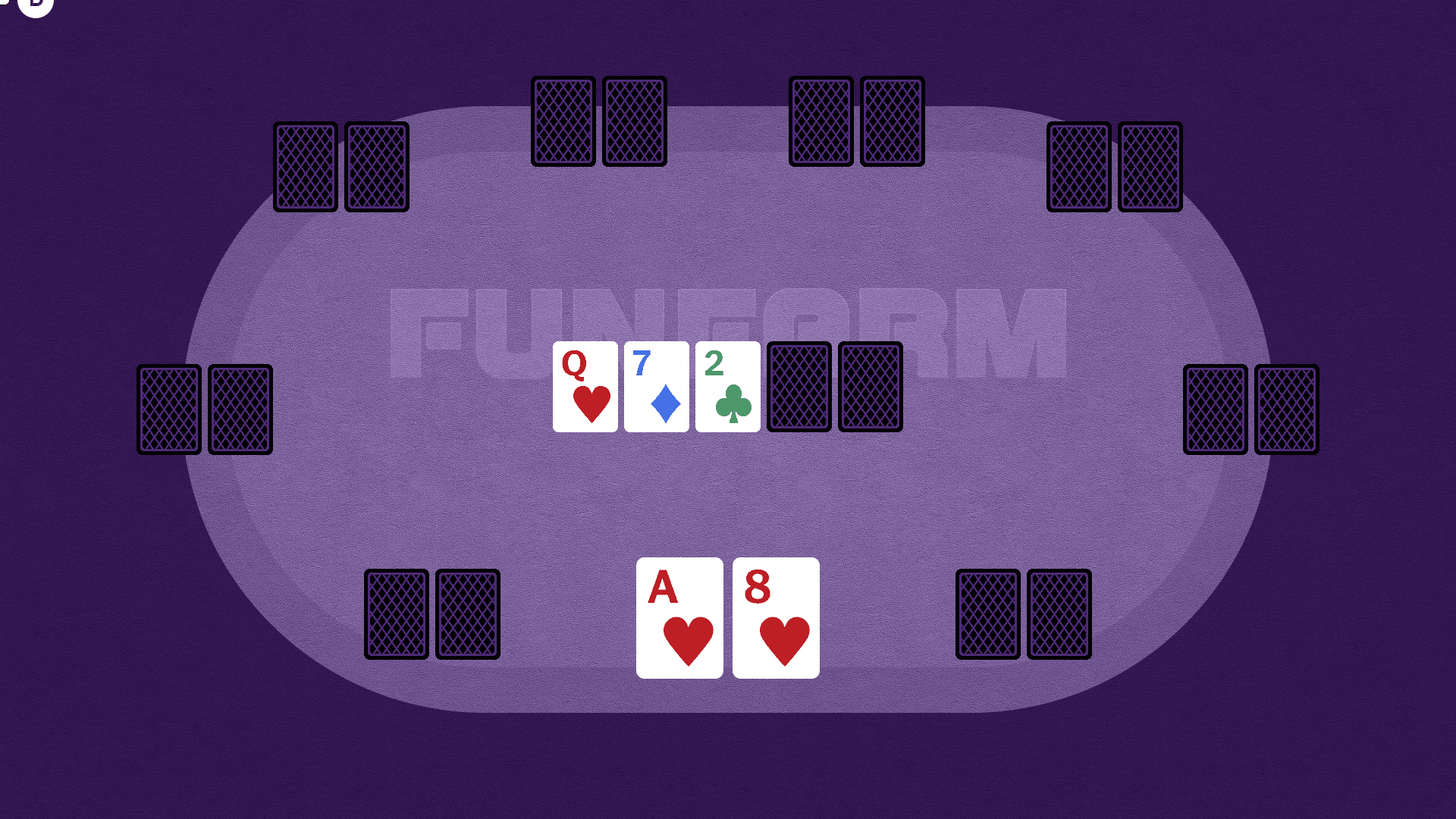
For example, we have two heart cards in hand, and there's one heart on the flop — we need hearts to come on both the turn and the river. The probability of completing a backdoor flush from flop to river is about 4%. That's a very low figure.
Backdoor draws are played only in two cases: when the opponent's bet is very small — or there isn't one — or when we already have another made hand — for example, top pair, which on its own gives a chance to win. A backdoor draw by itself is not a reason to call.
2. Gutshot
A gutshot is a straight draw with one gap, i.e. when you need one specific card inside the sequence.
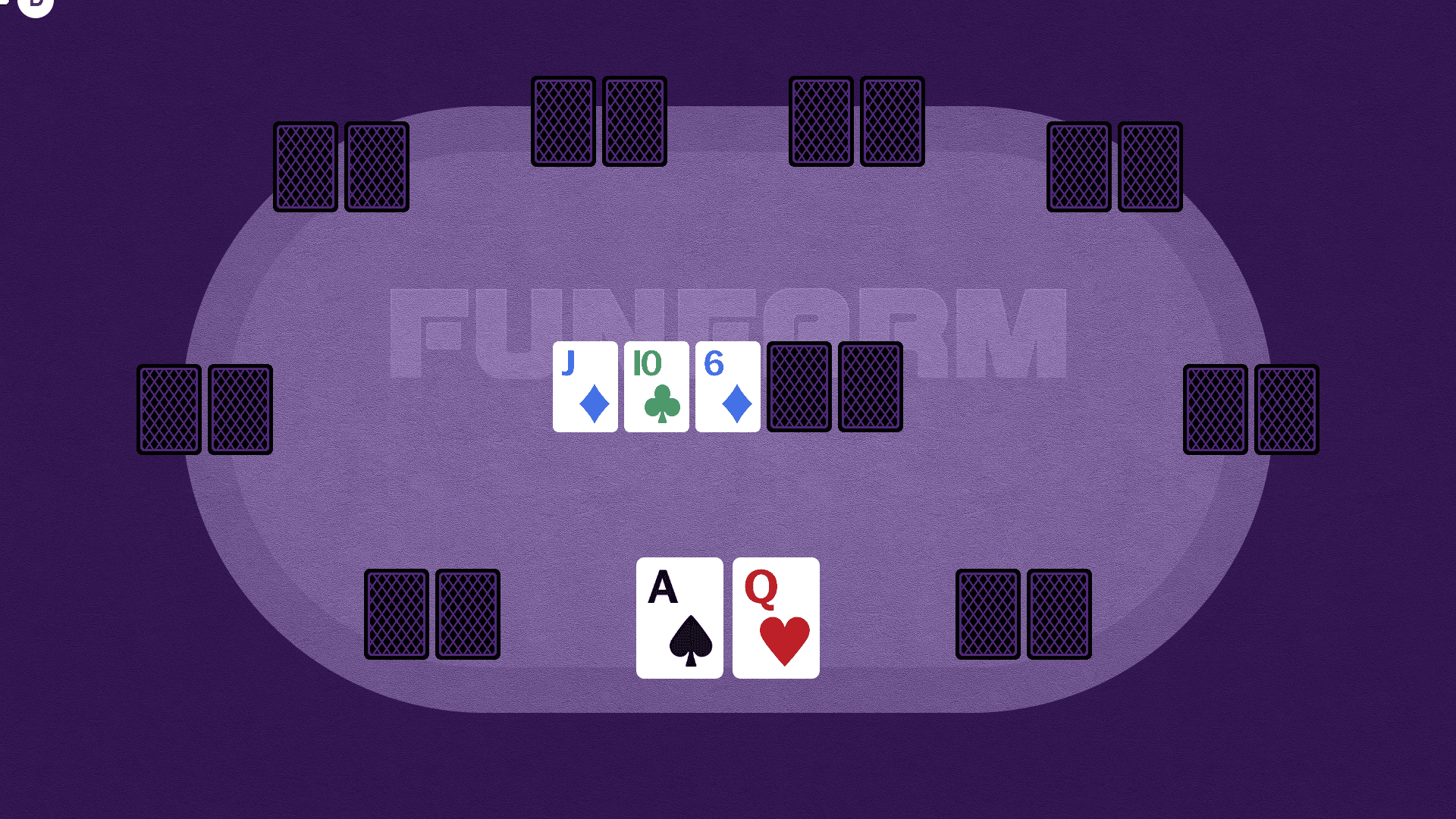
For example, we have A♠️ Q♥️, and the board is J♦️ T♣️ 6♦️. To make a straight, we need a king. There are four of them in the deck. The probability of completing a gutshot from flop to river is about 16.5%, from turn to river about 8.5%.
3. Open-ended straight draw (OESD*)
An open-ended straight draw is a situation where we have four sequential cards and can complete the straight from either end.
*OESD (Open Ended Straight Draw) means a two-way straight draw.
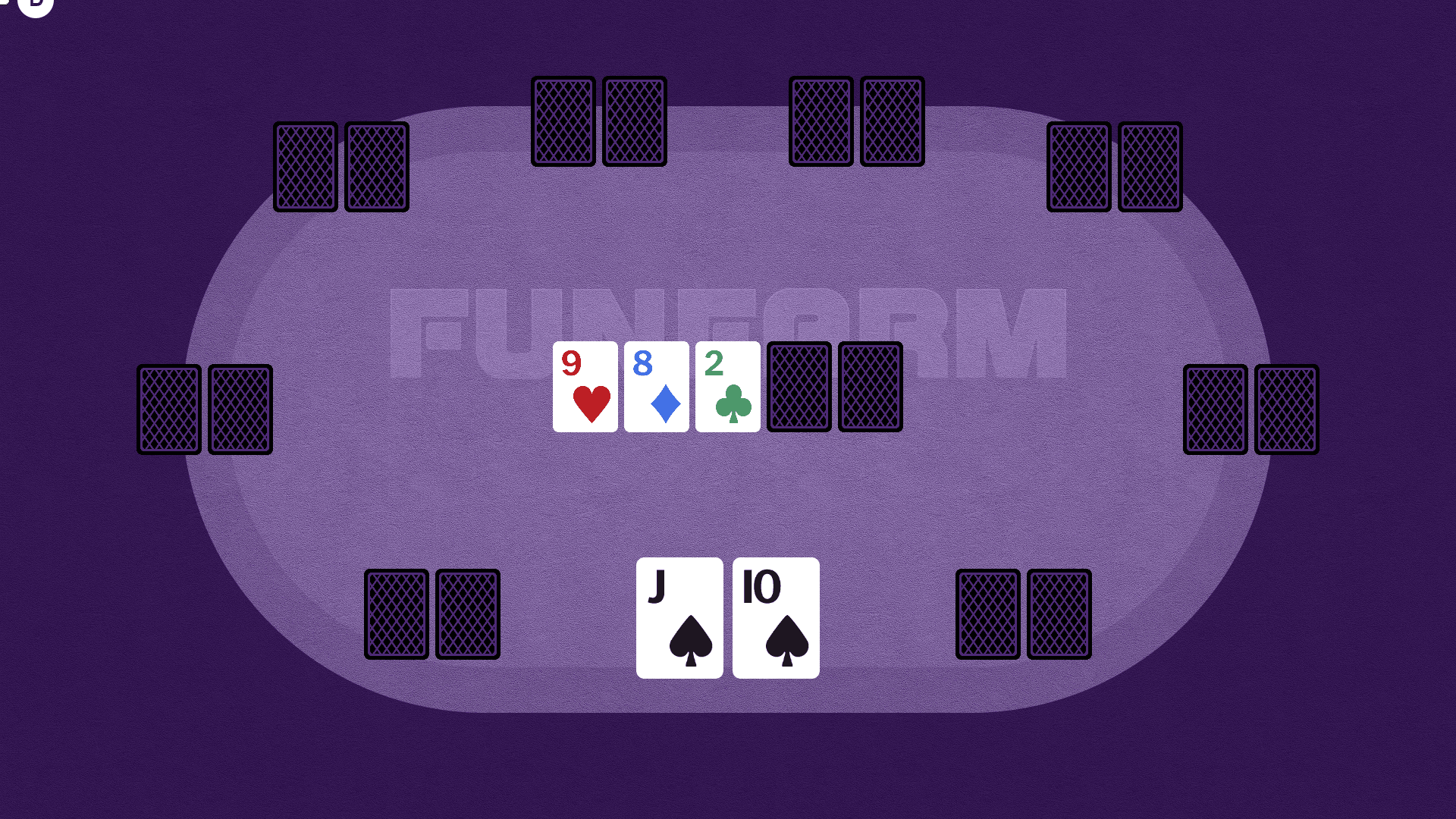
For example, we have J♠️ T♠️, and the flop is 9♥️ 8♦️ 2♣️. We need a 7 or a Q — 8 outs. The probability of completing an OESD from flop to river is about 31.5%, from turn to river about 17%.
This is a strong draw. It's second only to flush draws and combo draws. An OESD can and should be played aggressively — especially in position and against opponents who know how to fold.
4. Flush draw
A flush draw is a situation where we have four cards of the same suit.
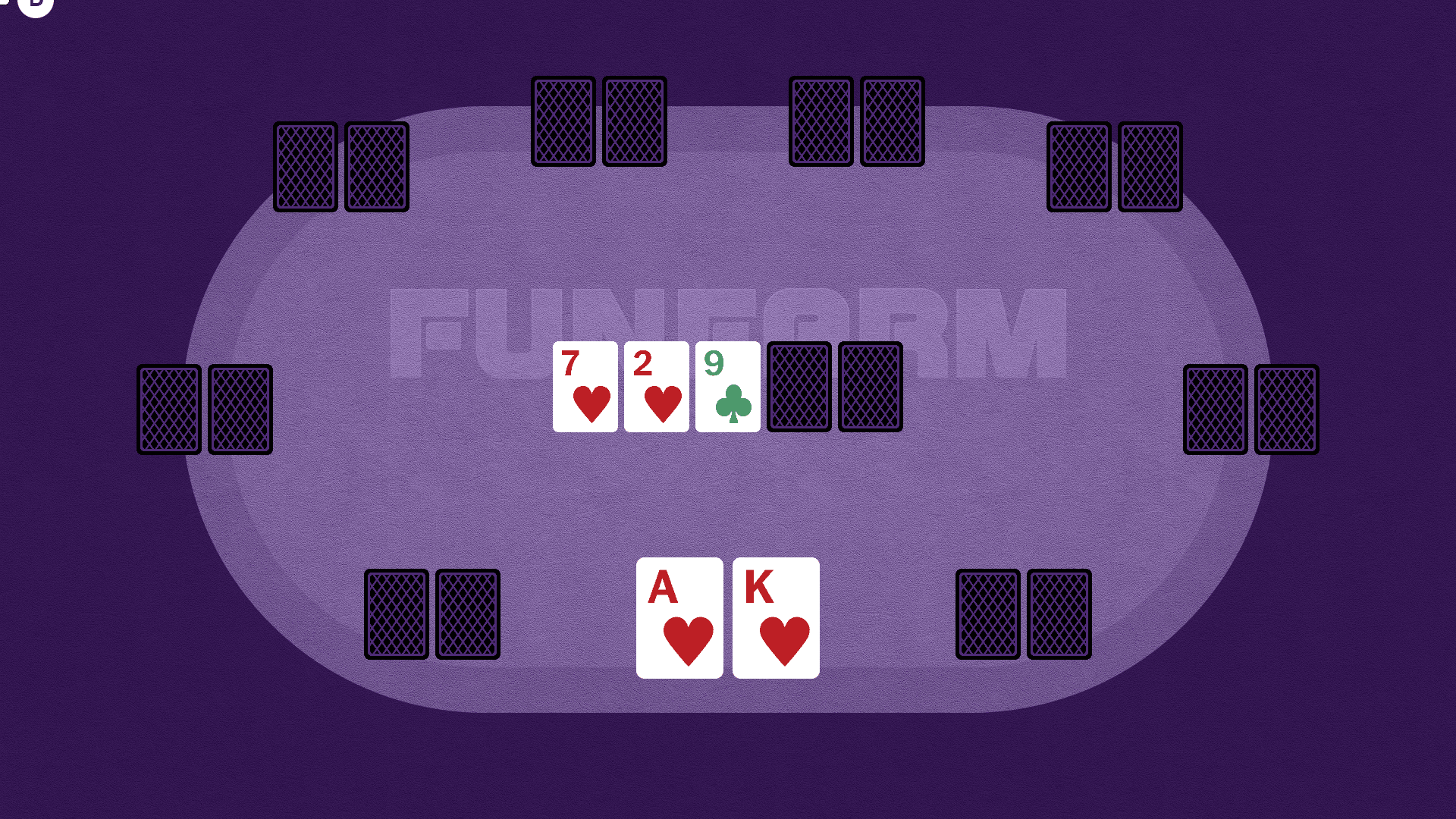
For example, we have A♥️ K♥️, and the flop is 7♥️ 2♥️ 9♣️. We need any heart — 9 outs (13 cards of the suit minus 2 in hand and 2 on the board). The probability of completing a flush draw from flop to river is about 35%, from turn to river about 19%.
This is one of the strongest draws in poker. The nut flush draw is especially valuable — when our highest card of the suit is the ace. In that case, even if the opponent also completes a flush, ours will be higher. We play flush draws aggressively — most often through a check-raise or a continuation bet on the flop.
5. Combo draws and monster draws
A combo draw is a situation where we have a flush draw and a straight draw at the same time.
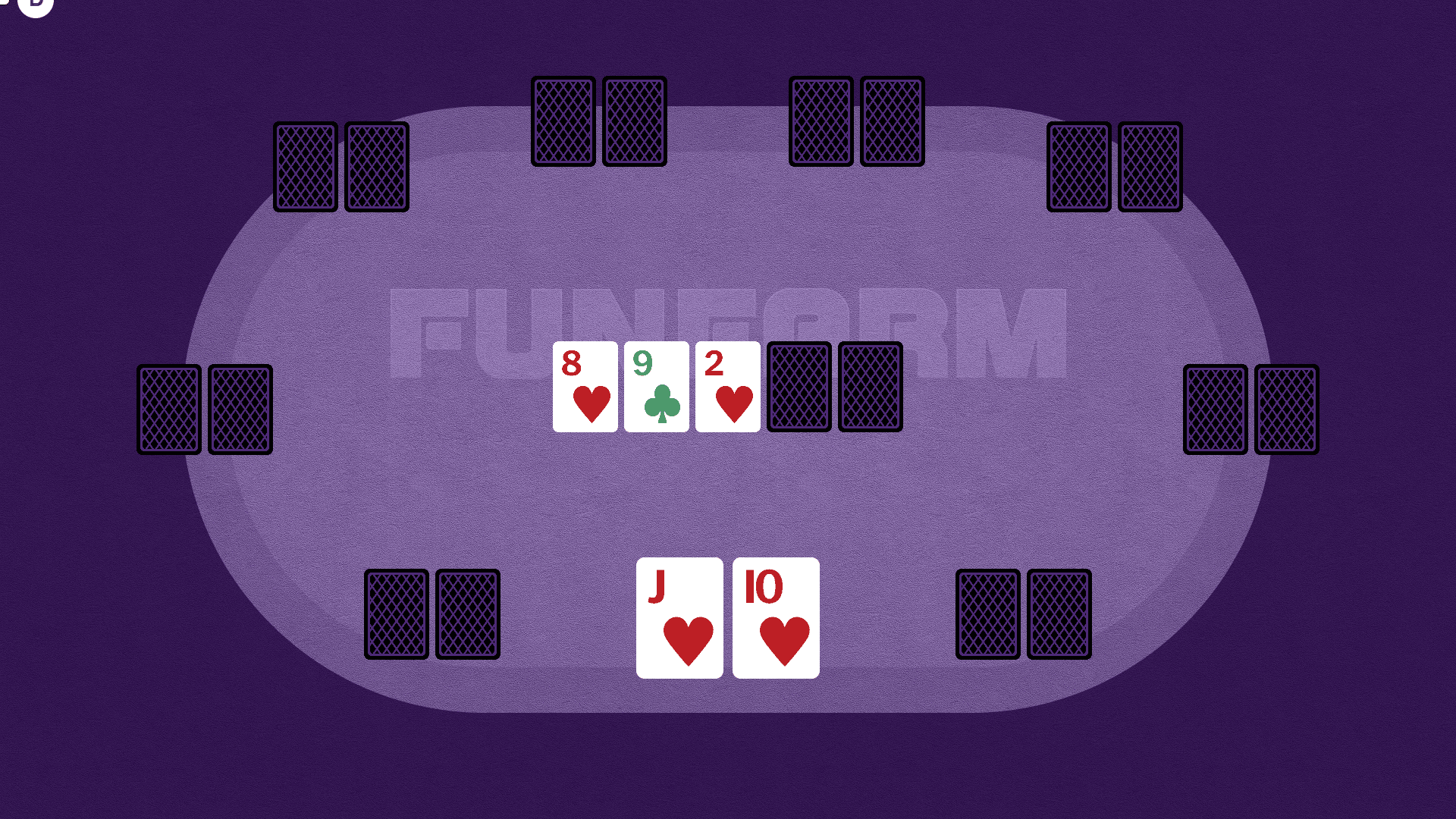
For example, we have J♥️ T♥️, and the flop is 8♥️ 9♣️ 2♥️. We're drawing to a flush (9 outs) and a straight (8 outs), but two cards overlap — Q♥️ and 7♥️ give both a flush and a straight at once. That's 15 outs total. The probability of completing a combo draw from flop to river is about 54%.
This is no longer a draw in the classic sense. It's a hand that is a favorite against most made hands. We play combo draws as aggressively as possible — through a check-raise and a big continuation bet on the flop.
Probabilities for the main types of draws
Let's memorize the key values. We'll need them for quick decisions at the table.
A flush draw gives 9 outs. From flop to river we improve 35% of the time. From turn to river, 19%.
An open-ended straight draw gives 8 outs. From flop to river, 31.5%, from turn to river 17%.
A gutshot gives 4 outs. From flop to river, 16.5%, from turn to river 8.5%.
A combo draw (flush + straight) gives 12–15 outs. From flop to river, 45–54%.
How to decide whether to call with a draw
The most frequent question: when do you call with a draw, and when do you fold? The answer comes from comparing the pot odds with the probability of improving.
Pot odds are the price of a call relative to the size of the pot. The formula: the size of the call, divided by the sum of the pot before the call, the bet, and the call.
If the opponent bets 50 into a pot of 100, the pot odds = 50 / (100 + 50 + 50) = 50 / 200 = 25%. We need at least 25% equity for a break-even call.
If our draw gives 35% to improve (flush draw), and the pot odds require 25% — the call is profitable. If our draw gives 16% (gutshot), and the pot odds require 25% — the call is unprofitable.
We discussed pot odds in more detail in this article. Click through and read.
Playing a draw as a semi-bluff
A semi-bluff is a bet or raise with a hand that is not yet a made combination but has the potential to improve. We have two paths to winning: the opponent folds now, or we complete our draw and win at showdown.
Which draws are suitable for a semi-bluff? Flush draws, open-ended straight draws, and combo draws. They have enough outs that even when called we stay in the hand. A gutshot is poorly suited to semi-bluffing — too few outs, and when called we most often lose.
Position matters. A semi-bluff in position is more effective — we see the opponent's action before our decision and can adjust the sizing or back off from aggression. A semi-bluff out of position requires more precise calculation and confidence in fold equity.
The bet size when semi-bluffing should be the same as a value bet with a strong hand. If we bet smaller with a draw and bigger with a made hand, opponents will quickly notice this and stop believing us.
Flush draw: features and strategy
The flush draw is the most popular draw in poker. It comes up often and gives good chances to improve. But there are several important nuances.
The first is rank. If we have a flush draw with a queen, and the opponent has one with an ace, then even after completing the flush we lose. That's why the nut flush draw is valued much higher. With it we can play aggressively on any textures.
We covered the topic of the nuts in more detail in this article. If you're interested in learning what this situation in poker is and how to play it correctly, follow the link.
The second is paired boards. If there's already a pair on the board, then a flush can lose to a full house. On such textures the flush draw loses part of its value, especially if the opponent aggressively plays his sets.
The third is the opponent's bet size. On a 50% pot bet we need 25% equity. A flush draw gives 35% — the call is profitable. But if the opponent bets 100% of the pot, we need 33% equity. A flush draw gives 35% — the call is still profitable, but the margin is smaller. On a 150% pot bet the pot odds require 38% — calling with a flush draw becomes unprofitable.
Straight draws: open-ended and gutshot
The open-ended straight draw (OESD) is almost as good as a flush draw. 31.5% to improve from flop to river is a serious figure.
An OESD can be played aggressively through a semi-bluff, especially on dry textures where the opponent has few hands to continue with.
A gutshot is a weak draw. 16.5% to improve means that in 5 out of 6 cases we won't complete the straight.
A gutshot is worth calling only with very good pot odds (a bet of 25–33% of the pot) or when there are additional outs — for example, overcards or a backdoor flush draw.
Typical mistakes when playing draws
1. Overestimating the gutshot
A player sees the chance to make a straight and calls a big bet without counting the odds. A gutshot gives 16% equity. On a 50% pot bet (25% pot odds) the call is unprofitable. On a 33% pot bet (20% pot odds) the call is borderline.
2. Passive play of a combo draw
A player with 15 outs and 54% equity checks and calls, hoping to complete the draw for free. This is a loss of value. With a combo draw we bet and raise, because we're already a favorite against most hands. Our task is to build the pot now.
3. Calling without accounting for implied odds
A player sees that the pot odds formally allow calling with a flush draw, and calls the bet. But he doesn't look at the opponent's stack. If the opponent has few chips left, even after completing the flush we'll win little. Implied odds are the potential winnings on later streets. When the opponent's stack is short, the implied odds are close to zero.
In such a situation, calling with a flush draw can be unprofitable even with the correct pot odds. We risk our chips, and the potential reward is too small.
4. Playing backdoor draws as full ones
A backdoor draw gives about 4% to improve from flop to river. That means out of 25 such situations we win one. But some players see a backdoor flush and start calling bets, hoping for a miracle. Over the long run this is a disaster.
Backdoor draws can be played only in two cases: when the opponent's bet is absent (we check and see a free card) or when we already have a made hand of medium strength (for example, top pair), and the backdoor draw is a pleasant bonus, not a reason to call. A backdoor draw by itself never justifies a call.
Conclusion
To reinforce, let's lock in the key principles of working with draws:
count the outs, memorize the probabilities of improving, compare them with the pot odds
distinguish weak draws (gutshot, backdoor) from strong ones (flush draw, OESD, combo draw). Play strong draws aggressively, weak ones — only with good odds.
If you want to systematically get to grips with poker math, learn to evaluate pot odds in real play, and make the right decisions with draws on any street — submit an application to FunFarm.
FAQ
1. How many outs does a flush draw and an open-ended straight draw have?
A flush draw has 9 outs (all cards of the needed suit). An open-ended straight draw has 8 outs (two cards from each end of the sequence). The probability of improving from flop to river is 35% and 31.5% respectively.
2. When is it profitable to call with a draw?
When the probability of improving is higher than the required pot odds. If the opponent bets 50% of the pot, the pot odds require 25% equity. A flush draw (35%) and an OESD (31.5%) qualify, a gutshot (16.5%) does not.
3. What is a monster draw and how do you play it?
A monster draw is a combination of a flush draw and a straight draw at the same time. 12–15 outs, probability of improving 45–54%. We play it aggressively, like a made strong hand. With a monster draw we are often a favorite against most made hands.
4. Why is a gutshot considered a weak draw?
A gutshot has only 4 outs. The probability of completing a straight from flop to river is 16.5%. That means in 5 out of 6 cases we won't improve.
5. Do you need to play draws aggressively out of position?
Aggression with a draw out of position is harder, but possible. We use a check-raise to seize the initiative. But out of position we more often call with strong draws and less often bluff with a gutshot, because the opponent may bet on the turn, putting us in front of a difficult choice.
Read next
Straight Flush in Poker: What It Is and Why It's Almost Unbeatable
Four of a Kind in Poker: How to Make It and Play It Right

How to Beat Microstakes and Start Growing in Poker