What Is a Kicker and When It Decides Everything: Breaking It Down with Examples
No-limit Texas Hold'em became the industry leader in the 1960s. Before that, another type of poker dominated Las Vegas casinos — seven-card stud. NL Hold'em overtook its competitor thanks to the simplicity of its rules. Hold'em is much easier to master than stud. However, NL Hold'em rules do have their own nuances. Let's discuss what a kicker is and see how it works.
What is a kicker
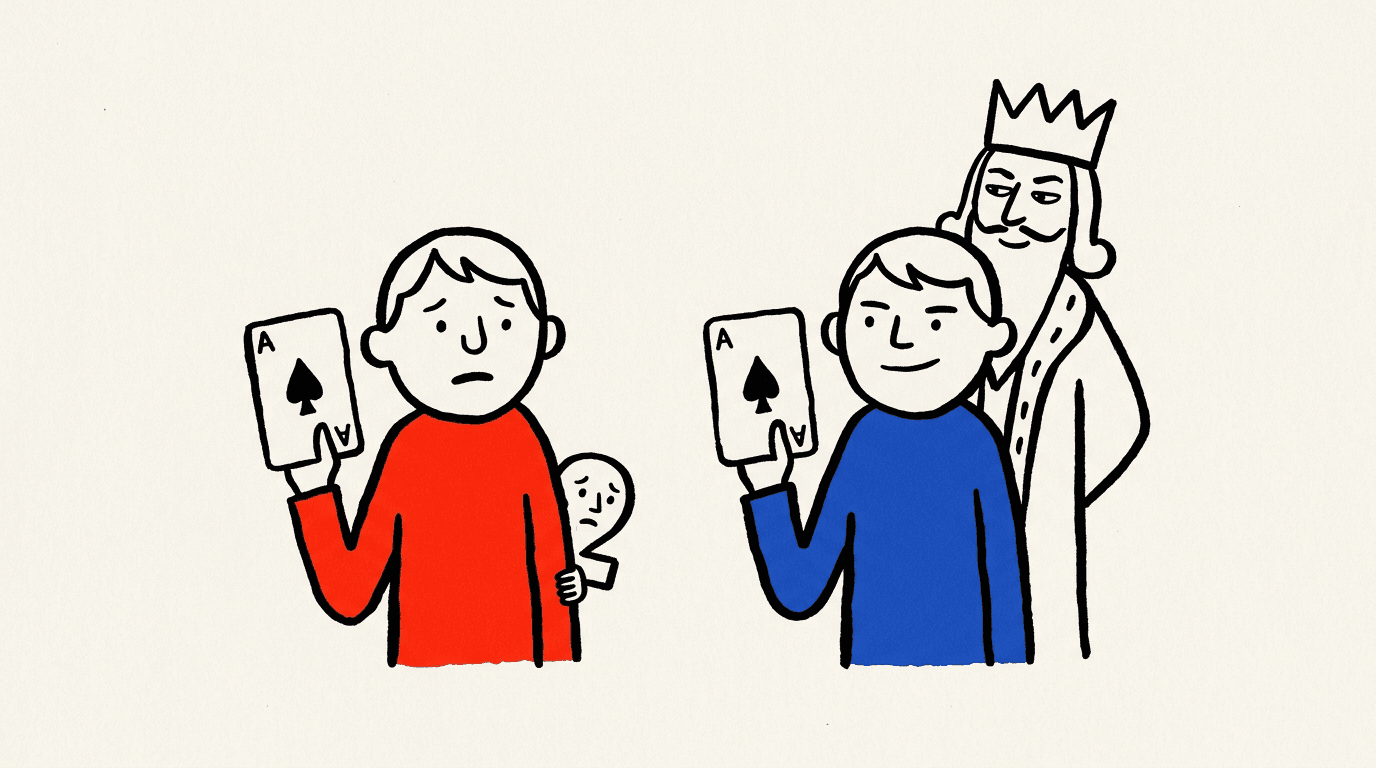
A kicker is a card that helps determine the winner of a hand when combinations are equal.
In Hold'em, opponents regularly show the same combinations at showdown. Often the kicker decides the outcome of the hand
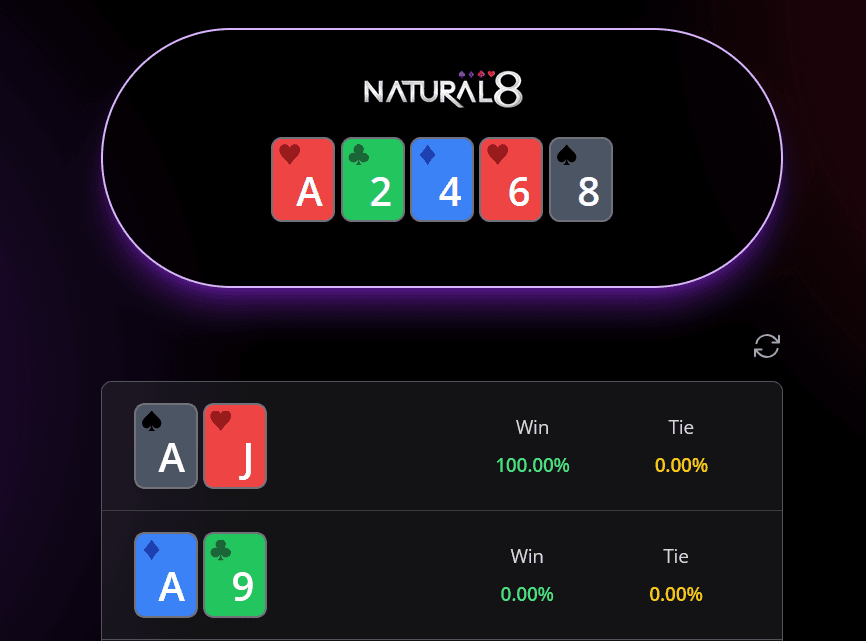
Let's explain with an example. Suppose player A was dealt AJ preflop, and player B got A9. On a board of A2468, the opponents both made the same combination — a pair of aces. Will the opponents split the pot in half if they have equally strong combinations? No, player A takes the whole pot thanks to the jack. Player A's final five-card combination is AJ864, and player B's is A9864. The higher kicker allowed player A to win the pot. In poker, a player who loses because of a worse kicker is said to have been "dominated."
The kicker rule makes No Limit Texas Hold'em more interesting. The community cards on the board regularly create hands where opponents show the same combinations at showdown. A large number of ties reduces the intensity of the contest. We shouldn't discount the emotions of spectators either. Constant split pots reduce interest in broadcasts. The kicker cuts down the number of compromise situations. As a result, a hand almost always has a winner and a loser.
In No Limit Holdem, the kicker rule applies when there is a tie of: pairs, two pairs, trips, and quads. The higher rank also brings victory in hands where opponents haven't even made a pair. In hands with flushes the rule doesn't apply, but the ranks of the suited cards are still worth considering.
The rule is also applied in other types of poker. However, in Pot-Limit Omaha the kicker's role is smaller. The reason is the value of combinations: in PLO opponents rarely reach showdown with a high card, pair, or set. Usually a stronger combination wins the hand. There is a hypothetical chance of taking the pot thanks to the kicker in draw poker too. In practice, the probability that two opponents are dealt identical combinations is extremely small.
How the kicker helps determine the winner: examples
Let's go through each kicker situation using example hands of Daniel and Phil. We'll go from the lowest to the highest combination.
High card. When no one has even made a pair, the player with the highest card wins. If the highest ranks match, the next ones are compared. For example, Daniel was dealt AsJh, and Phil got AhTs. The community board looks like Kc9h6d3s2c. Neither has a made combination. Both have an ace as their high card. We compare the second ranks: Daniel has a jack, Phil has a ten. The jack is higher: Daniel wins.
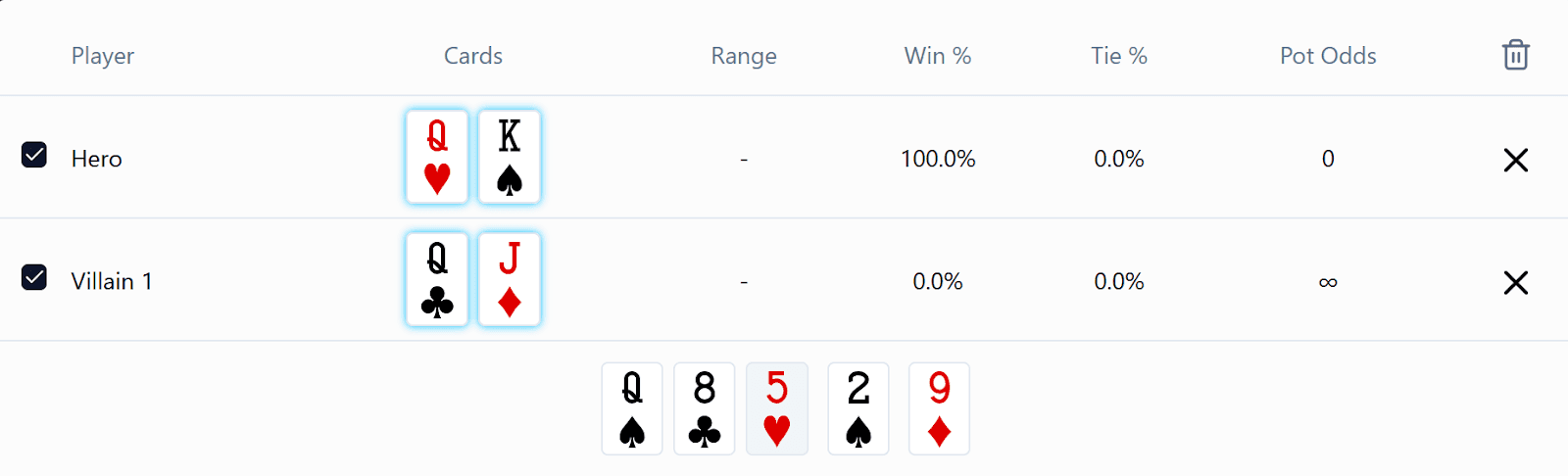
Pair. With identical pairs, the winner is determined by the kicker. Suppose Daniel got QhKs preflop, and Phil got QcJd. The board came QsBc5h2s9d... On the table came Qs8c5h2s9d. Both players made a pair of queens, but Daniel takes the pot. The higher kicker — the king — brought him the win.
A more careful starting-hand selection will significantly increase your profit over the long run
Two pair. In a two-pair situation, the higher pairs are compared first, then the lower ones. If both players' pairs match, the kicker comes into play. Suppose Daniel entered the hand with AsTd, Phil with Ah9c. The dealer put AJJ84 on the board. The opponents' final combinations: two pair, aces and jacks. However, the ten is higher than the nine: the pot goes to Daniel.
Trips. In Hold'em players can make a combination of three identical ranks. For example, Daniel entered the hand with Th9d, Phil with 9h8h. The community cards: Js9c9s6d2c. Both players made trips, 999, on the flop. The opponents' first kicker is also shared — the jack. However, Daniel's fifth card is higher, so he takes the money.
Quads. In the rarest situations, the dealer lays four identical ranks on the table. As a result, each opponent makes quads. The fifth card determines the outcome of the hand. For example, Daniel got AJ at the start, Phil got KT. The dealer put QQQQ4 on the board. Daniel's final combination is QQQQA, Phil's is QQQQK. The ace is higher than the king, so Daniel wins the pot.
How to get dominated less often in poker
The best poker players regularly give up pots to opponents. Losses are an integral part of the game. However, losing because of a kicker is worse than losing preflop with AA. Losing in an "AA against 22" situation is bad luck. Going to showdown with a dominated hand is a player's conscious choice. To lose to a kicker less often, you need to:
Follow a starting-hand chart. The right choice of cards preflop often predetermines the fate of the hand. Most poker coaches recommend starting your training by building ranges. A good starting-hand chart means a player enters the hand with strong combinations. One of the most important groups in a player's range is broadway: AK, AQ, AJ, AT, KQ, and so on. If you can't build a chart on your own, sign up for the FF Start program. We'll explain the basics for free and give you ranges.
Control the pot size. Playing strong starting hands will protect you from most problems. However, top combinations in NL Holdem are dealt rarely. The mandatory bets and rising blind levels won't let you wait for them. That's why you need to get into the fight with less strong combinations too. When you hit a top pair with a questionable kicker, caution won't hurt. Don't neglect checks in suitable situations. With a weaker hand the opponent won't pay much anyway.
Watch your opponents. Aggressive opponents get dealt good hands too. However, they often overvalue the strength of their combinations. In hands against them the danger of losing because of a low kicker is lower. Against careful, tight players the situation is the opposite. They set high requirements for their starting hands and often hit top pairs with top kickers. To choose the right plan for a hand, watch your opponents. Online, statistical software will help you identify an opponent's tendencies. Read more about trackers in the article about useful programs.
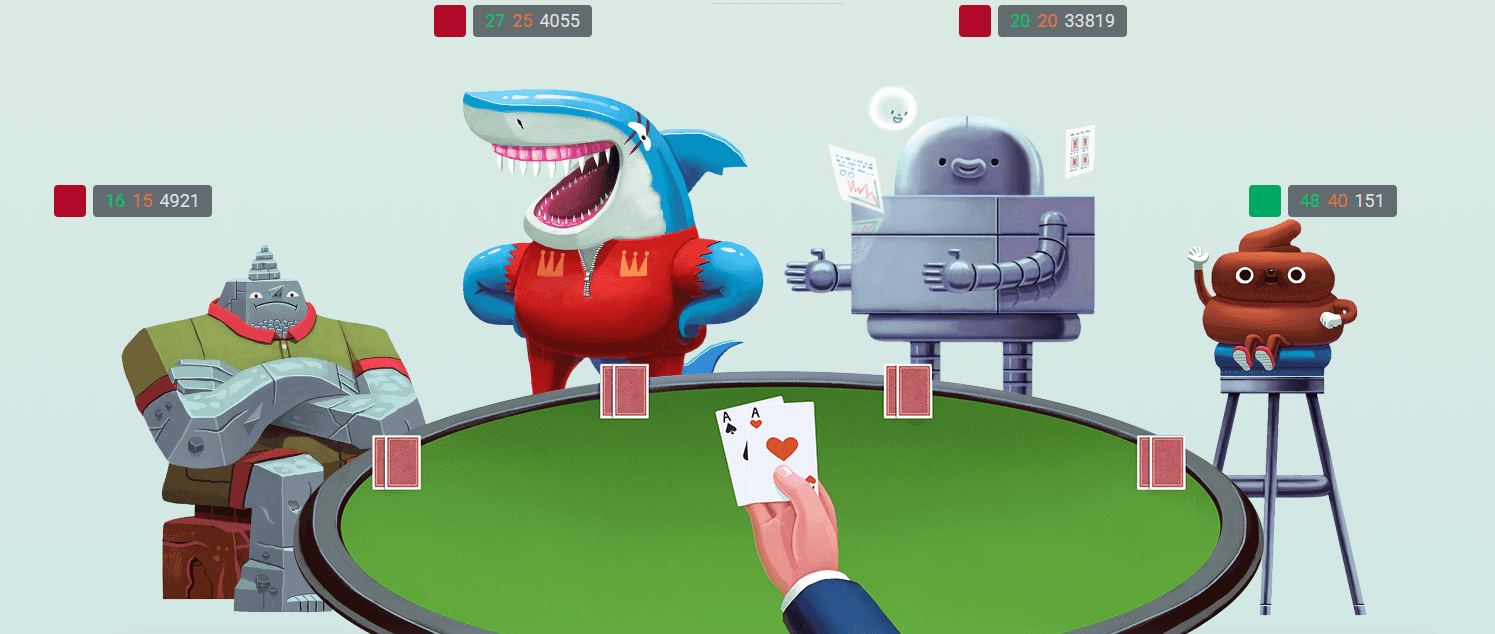
A poker tracker will help you recognize the type of opponent at the table
Know when to fold. If an unknown player shows strength, then often the best decision is a fold. To catch opponents bluffing, you need convincing arguments. Many beginning players don't understand this and give away money.
How to learn to play poker
Beginners start in poker from a common point — the rules. Without knowing the combinations, positions, and betting order, a player won't be able to assess the situation at the table. After that, a player independently chooses their direction and method of learning. The following will help you study poker: books, videos, software, working with other players, lessons with a coach, professionals' streams. Let's discuss each option in more detail.
Books. Strategy from printed editions becomes outdated quickly. Often techniques lose relevance even before the manual is released. Books are great for forming a foundation. For example, "Easy Poker Math" by Roy Rounder will teach you to count outs and pot odds. The two volumes of "The Poker Mindset" by Jared Tendler will introduce you to tilt and offer effective recipes for fighting it. We talked about useful editions in more detail in the article "Top 5 poker books for beginners and pros".
Videos. Educational materials with fresher concepts can be found on YouTube. The platform holds tens of thousands of videos about poker for players of any level. In recent years the language barrier has disappeared too: modern browsers translate and voice over videos in real time decently. There's a FunFarm channel on YouTube too. It features: interviews with popular players, breakdowns of winning tournaments, and reviews of useful programs.
Software. Training in poker programs will let you raise your skill level. Trackers and calculators will help you analyze your game, find and fix mistakes. For example, regularly reviewing hands in Flopzilla will teach you to think in ranges. Solvers will introduce you to balanced strategy. Trainers will teach you to make the right decisions in difficult situations. Multi-tabling programs will improve the comfort of playing several tables.
Working with other players. Systematic hand analysis is an effective way to become stronger. However, the benefit increases significantly if you review hands with colleagues in the trade. An outside view helps you see hidden mistakes. You can discuss hands in a Telegram chat or on a specialized resource. Some poker portals offer sections for hand reviews.
Professionals' streams. Many top players stream their games on Twitch or Kick. Viewers not only follow the course of the session and the player's thinking, but also ask questions about strategy. FunFarm coaches also do live streams — join in.
Lessons with a coach. A personalized and fast path to growth. A good mentor will: analyze your game, point out the gaps, and draw up a plan to eliminate them. Choosing a coach is hard. How do you assess a mentor's real skill level? Does their teaching style suit the player? Does the coach provide up-to-date knowledge? To hire a mentor, you need to answer each question. We shouldn't discount the high cost of training either. A good specialist charges decent money for an hour-long lesson.

FF Start covers kickers too
A variety of learning methods doesn't always work in your favor. Many beginners study poker chaotically. As a result, the speed and quality of learning suffer. A good solution would be the free FF Start program. A systematic approach and a clear course structure will let you lay a solid foundation. The student will learn the key things about: poker math, adapting strategy to different types of opponents, key aspects of ICM, push/fold, and final-table tactics. A trainer will help reinforce the skills.
After studying the basics and successfully passing the exam, we'll invite you to FunFarm for the training program — Player Path. It was developed for more experienced players. The program helps you get off "dead center" and systematize your learning. A structured approach to studying, individual and group lessons let you raise your skill level meaningfully. Along the way your ABI and income grow too. If you want to build a career in poker, join the Player Path.
FAQ
What is called a kicker in poker?
A kicker is a card that helps determine the winner of a hand when combinations are tied at showdown. The rank itself doesn't take part in forming the made combination.
In what situations do players compare kickers?
The kicker is looked at when there is a tie of: pairs, two pairs, trips, and quads. The outcome of the hand depends on the higher rank in hands where opponents haven't even made a pair too.
How do you stop getting dominated?
The most effective option is to build a starting-hand chart properly. If a player plays strong combinations, the chance of losing with a worse kicker drops. Watching your opponents will reduce the risk too. Often a poker tracker will suggest the decision.
Read next
Women in Poker: Top 5 Most Successful Female Players
# Variance in Poker: A Mathematical Explanation of "Bad Luck"
What Is "Fold Equity" and How Does It Make a Bluff Profitable?