Heads-Up Poker: Rules and How to Play One-on-One
Let's discuss what Heads-Up is and how the number of opponents changes the rules and strategy.
The number of players at the table is an important parameter in poker. It determines how fast the blinds move and the dynamics of the game. In cash, the most popular format is 6-max. In tournament poker, 8-handed tables dominate. In Spin & Go, a tournament starts when three participants register. However, you can also play poker with just two people. Let's discuss what Heads-Up is and how the number of opponents changes the rules and strategy.
Key information about two-player poker
Poker can be played with two people. The duel format is called Heads-Up.
Heads-up rules differ slightly from 6-max or 9-max formats.
In two-player poker, the player on the button combines the traits of the BTN and the SB. They post half the big blind and act first preflop. Postflop, they act last.
The format implies more aggressive play with a wide range.
The final of any MTT is played Heads-Up.
Many online poker rooms offer the chance to gain HU experience: PokerStars, RedStar Poker, Winamax Poker, Pokerdom, TigerGaming.
What is heads-up
Heads-up is a format of playing poker one-on-one. To win at Heads-Up, a poker player must adapt their strategy. Directly copying approaches from 6-max and 9-max tables won't bring success in HU.
The literal translation of Heads-Up conveys the main idea of one-on-one duels. Opponents study each other carefully and barely glance down at their cards
In HU you can't wait for premium hands and frequently fold to raises, otherwise the mandatory bets will eat your stack. Every hand, the duel participants put the small and big blinds into the pot. Other features of the format look like this:
Button = small blind. In classic poker, the BTN acts last and knows the other players' decisions. In heads-up, they post the small blind and act first preflop. Postflop, the player on the BTN regains the positional advantage. They make their decision after the opponent on the BB. That's why the Button must also act aggressively in Heads-Up poker.
Players constantly pay blinds. At a 9-max table, a poker player can wait and not get involved in a hand with trash cards. The blinds come around slowly — there's time to catch a premium hand. In heads-up, you can't wait for the right moment: every hand the opponents post mandatory bets. If you fold 80% of hands, the blinds will eat your stack in 15-20 minutes.
You need to drastically widen your range. A player with 17/15 stats won't survive in one-on-one poker. The specifics of Heads-Up require playing up to 80-90% of starting hands. Only absolute trash, like 72o and 83o, gets folded. Everything else is suitable for a raise. For example, T♣️4♣️ at a 9-max table is almost always thrown away. In heads-up on the button, you make a min-raise with it.
Attention matters more than math. At a full table, it's hard to study every opponent. Building a profile is easier in Heads Up poker. A player can: match the opponent's hands at showdown with their lines, track decision speed with made hands and bluffs, note bet-sizing tendencies. If we know the opponent has a weak hand, we don't need to calculate pot odds or work out GTO call frequencies.
In the past, most online poker rooms offered Heads-Up tables. One-on-one duels were held in every lobby tab. HU Cash allowed you to maximize a skill edge. Sit&Go trained players for the finals of multi-table tournaments. PokerStars organized full-fledged MTTs in the Heads Up format. Now heads-up poker has lost ground. Many platforms have abandoned dedicated tables for one-on-one play. The success of Spin&Go caused an outflow of players from Sit&Go. HU suffered too.
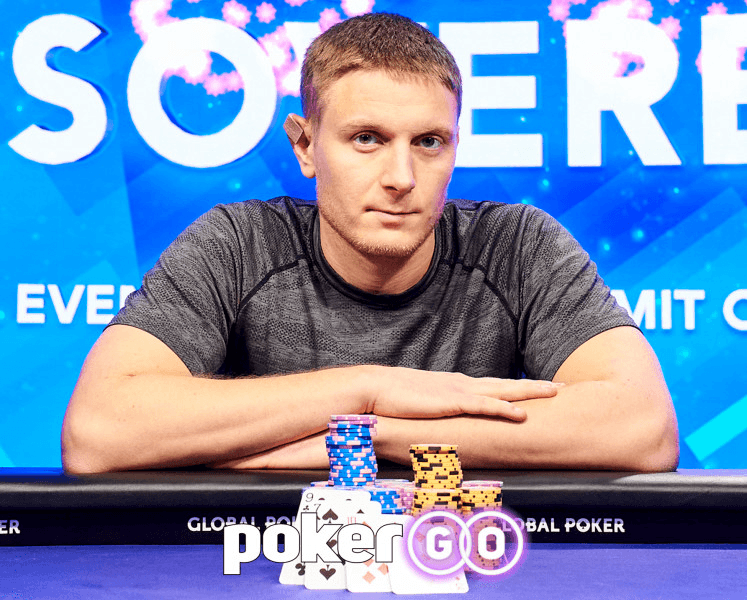
The return of the National Heads-Up Poker Championship gives optimism to fans of one-on-one matches. Perhaps the format will get a new impulse and recover its position
A duel between two players can make a great show. The most vivid emotions are stirred by the National Heads-Up Poker Championship, revived in 2025. The championship featured 64 of the world's top poker players. The entry cost $25,000. The matches were broadcast on the Peacock streaming service. The tournament was won by Sam Soverel. He was paid $500,000.
How to play poker with two players
Heads-up poker doesn't reinvent the rules of Texas Hold'em or Omaha, but it offers a few differences. Let's go through a hand from preflop to showdown and look at them in more detail.
Before the first hand, you need to determine the players' positions. Usually each opponent is dealt one card and the holder of the higher rank takes the BTN seat. For example, Kristen got A♠️, Alex got K♦️. The ace gave Kristen the positional advantage in the first hand. If the opponents catch cards of equal strength, the procedure is repeated. The size of the mandatory bets also depends on positions. Kristen will post 0.5 big blinds preflop, Alex — 1 big blind. In the second hand, Alex takes the BTN seat.
Preflop. In Hold'em, opponents get 2 hole cards each, in Omaha — 4. At a heads-up table there are 2 positions: Small Blind (SB) and Big Blind (BB). The button is assigned to the SB, so the position is often labeled BTN. Unlike 6-max, 8-max or 9-max, in Heads-Up the button has no advantage preflop. Before the flop, they act first. The BTN can raise, call the BB's bet or fold their hand. The opponent on the big blind can declare: check, call or 3-bet. The rules of the game don't forbid opponents from going all-in on the first hand of the tournament.
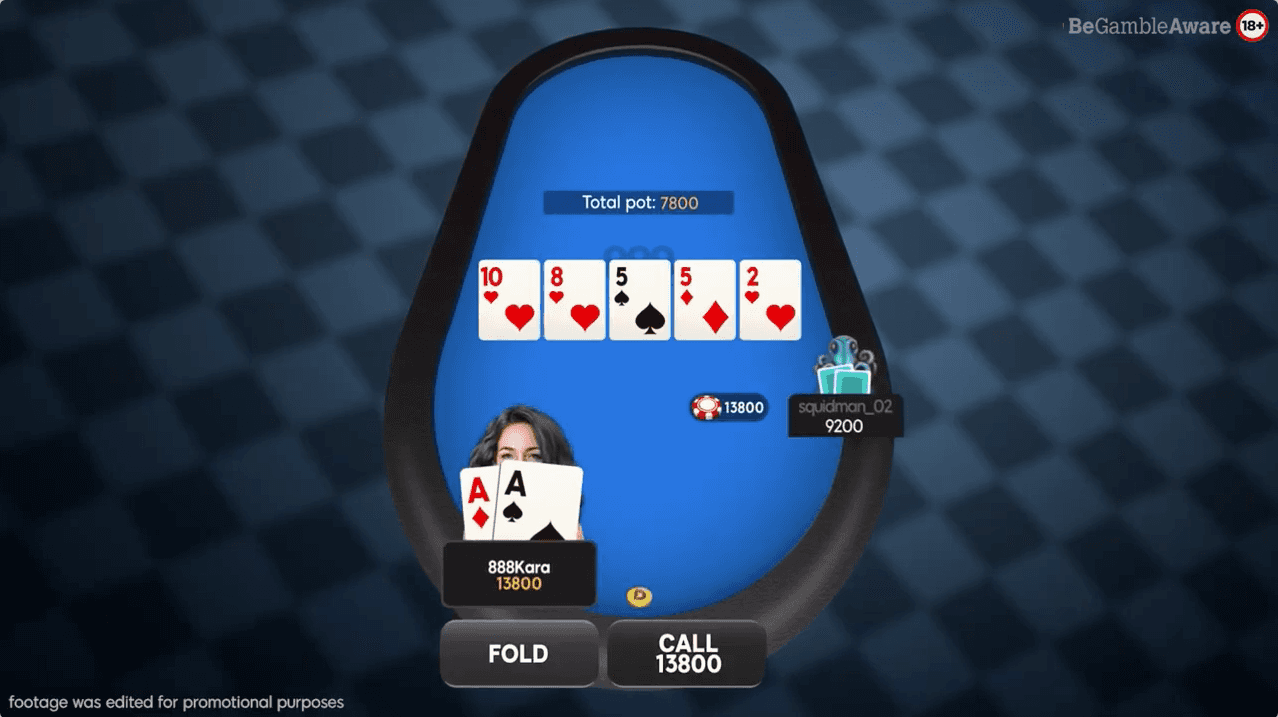
Preflop, the player on the small blind acts first, postflop — last
Flop. Three community cards come onto the board. Opponents assess the prospects of the hand and betting follows. Postflop, the advantage returns to the player on the BTN — they act after the BB.
Turn. Players see the fourth community card. A new round of betting starts. The BB declares their decision first.
River. The last community card is placed on the board. Opponents make their final bets. If no one has left the hand, the showdown follows. The opponents show their final hands and determine the winner.
After the hand, the roles swap: the BTN seat passes to the second player. The former button posts the full blind in the second hand. Example: in the first hand Kristen had the BTN seat. She posted the mandatory bet of 0.5 BB. In the second hand, Kristen moves to the BB and invests 1 BB.
Which types of poker can be played with two players
The Heads-Up format can be adapted to any type of poker. Simple rules and high popularity have made No-Limit Hold'em the #1 choice for two-player play. Most online HU tournaments are played under NL Hold'em rules. Other card games are harder to find online.
Pot-Limit Omaha is the second most popular type of poker, but PLO duels are played less often. High variance and more complex rules reduce Omaha's potential for heads-up poker. On the other hand, in PLO opponents make strong hands more often. Hands with straights, flushes and full houses add emotion to the game.
Five-card poker is a good option for home games. Two rounds of betting increase the dynamics. Choosing lowball can make the battle more interesting. The original ranking of hands brings variety to the gameplay.
Seven-card stud will please fans of hand reading. The exposed cards stimulate the thought process. However, the complex betting rules will scare off many players.

Most one-on-one duels are played under Hold'em rules
Short Deck combines the advantages of Hold'em and Omaha. Short-deck play copies the rules of NL Hold'em, but removing the lowest cards allows for stronger hands. That's why short deck is a great fit for two-player poker.
Chinese poker. An alternative to the classic types of poker is pineapple. Players don't oppose each other directly, but assemble hands. The holder of the best combination of three rows wins the hand.
Typical beginner mistakes in heads-up
Heads-Up is the most difficult poker format. To win in a one-on-one confrontation, a poker player must be flexible and adapt their strategy to the opponent. In heads-up there are no universal recipes. Success is determined by the player's level of skill. A step in the right direction is eliminating crude mistakes. These include:
A tight range. In one-on-one poker, players pay mandatory bets every hand. So a cautious strategy doesn't work in HU. The blinds eat your stack before the premium cards arrive. In Heads-Up, a player must open a wide range. Many trash hands are suitable for a raise in heads-up.
Low aggression. Some HU beginners widen their range with passive limps and calls. Saving chips preflop creates difficult situations postflop. Forgoing raises doesn't reduce losses, but increases them. You won't knock an opponent out of the pot with a limp or a call. Low aggression makes it hard to win big pots. A passive player's bets and raises often indicate a strong hand. The contrast is easy to read, so the opponent won't pay and will exit the hand.
Ignoring position. Playing wide ranges against a single opponent "dilutes" the advantage of having the last word. It reduces the value of the BTN seat and the obligation to act first preflop. However, position lets you win many small and medium pots in Heads-Up. That's why it's profitable for players to raise and bet more from the BTN.
Tilt. Losing extra money due to losing your psychological balance isn't a feature unique to heads-up poker. However, doing stupid things against one opponent is easier than at a 9-max table. The format creates favorable conditions for losing control. Tilt in Heads-Up leads to enormous losses, so it's important to recognize the problem in time and avoid catastrophic consequences.
Playing without adaptation. The ability to rebuild your strategy to fit a specific opponent is the most important skill in HU. The better a player understands the opponent's thought process, the higher their income. For example, does the opponent like to go to showdown? We bet more with made hands. Does the opponent bluff often? We widen our calling range.
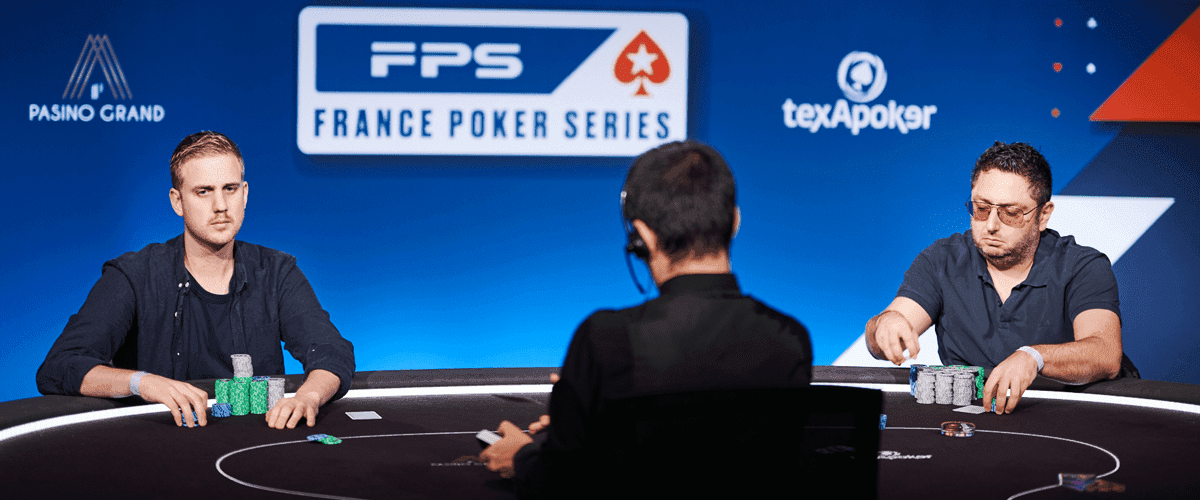
Compared to cash and tournaments, in Heads-Up poker players play very wide ranges. It takes time to rebuild your thinking
Let's also mention universal mistakes, like ignoring bankroll management or the lack of systematic learning. Playing without a safety margin will sooner or later lead to bankruptcy, while neglecting work on strategy won't let you progress.
Where you can play Heads-Up poker
At the dawn of online poker, heads-up occupied a prominent place in the lobby of most rooms. Over time, the format was squeezed out by other directions. Take PokerStars. In the past, the platform attracted HU players from all over the world. Users were offered several types of HU Sit&Go: Regular, Turbo, Hyper Turbo, NBI. The rise of Spin&Go tournaments hit HU Sit&Go: first PokerStars removed the one-on-one format, then the Sit&Go tab. The heads-up cash tables were removed even earlier. They were killed by the outflow of weak players and the actions of regulars. Top HU specialists took up all the tables at a given limit and blocked play.
Currently, one-on-one poker is offered by:
Room | Cash | Sit&Go | MTT |
Pokestars | no | no | Tournaments with buy-ins from $3.30 to $16.50. All in Zoom format. 10 MTTs are held per day. |
RedStar Poker | from NL2 to NL4000 | from €0.5 to €5,000 | no |
Winamax Poker | from NL2 to NL400 | from €0.5 to €500 | no |
Pokerdom | Fast poker tables with stakes from 1 ₽/2 ₽ to 250 ₽/500 ₽. | from 50 rubles to 25,000 rubles | no |
TigerGaming | no | From $0.25 to $100 | no |
The lobbies of POKEROK and PokerKing indicate the low interest in the format. The industry's leading rooms ignore heads-up in any form.
Heads-Up tournaments are often included in the schedule of major live festivals. For example, at the World Series of Poker in 2025, a heads-up MTT with a $25,000 buy-in was held. The champion took home $1,532,800.
How to learn to play heads-up poker
Heads-Up in its pure form has lost popularity. However, the skill of playing one-on-one comes to the fore in the final of any tournament. The payout for second place is significantly lower than the champion's reward. For example, the winner of the Pokerking tournament — The Venom — received $532,918, the holder of second place — $453,040. A similar approach to prize money is used at the WSOP Main Event: the 2025 champion left with $10,000,000, the runner-up with $6,000,000. Four million is a compelling argument to practice your Heads Up game.
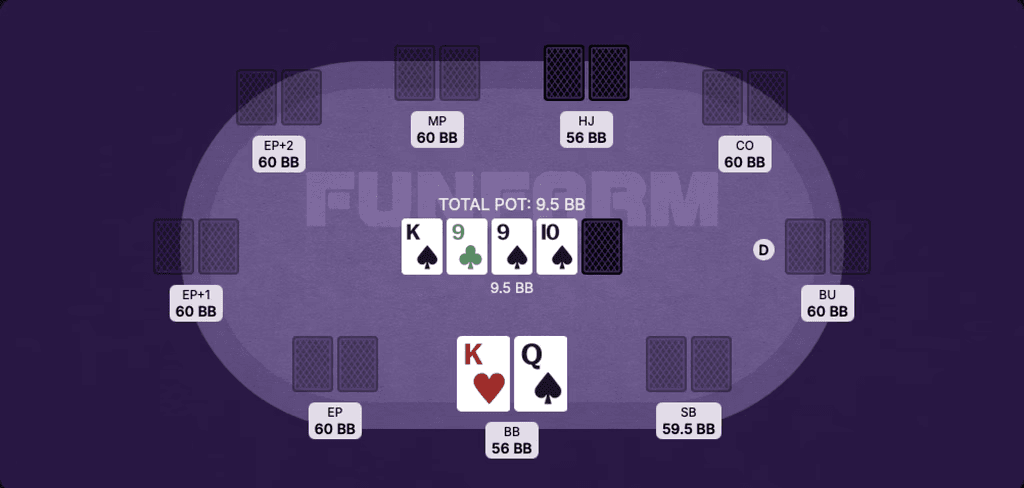
The FF trainer will help you hone your playing skills
You can improve your heads-up level through: reading books, watching videos, reviewing hands in software, discussing strategy with colleagues, working with a coach. However, studying materials without a system creates chaos in your head. That's why we recommend paying attention to FunFarm's training programs. FF Start offers 30 lessons and builds the foundation. Player Path includes 15 levels of training and helps you take your first steps as a poker professional. Both courses also cover heads-up poker. Want to earn from playing — join FF.
FAQ
Can you play poker with two people at home without chips?
Yes, you can play poker with two people even without chips. The main thing is to choose an alternative way of counting. Any small objects will do: matches, coins, buttons or paper clips. Before chips were introduced, poker was played with paper money. The rules don't forbid using banknotes even now.
Who bets first in two-player poker?
At an HU table, the player on the SB bets first. They post half a blind. Their opponent on the BB invests a full blind. Postflop, the order of action changes: the BB makes the decision first. The player on the SB has the advantage on all postflop streets.
Which type of poker is better for playing with a friend?
Most heads-up is played under No-Limit Texas Hold'em rules. NL Hold'em's advantage is its simple rules. In Omaha, players make strong hands more often, which makes hands more interesting. Some poker players prefer the higher dynamics of short deck.
Read next
Drawing hands in poker
Straight Flush in Poker: What It Is and Why It's Almost Unbeatable
Four of a Kind in Poker: How to Make It and Play It Right