The Perfect Poker Setup: How to Choose a Monitor, Mouse, and Hardware for Maximum Profit
The complete hardware guide for multi-tabling. Which processor you need for a fast HUD, why 16 GB of RAM is the minimum, and which monitor to choose to play 10+ tables comfortably.
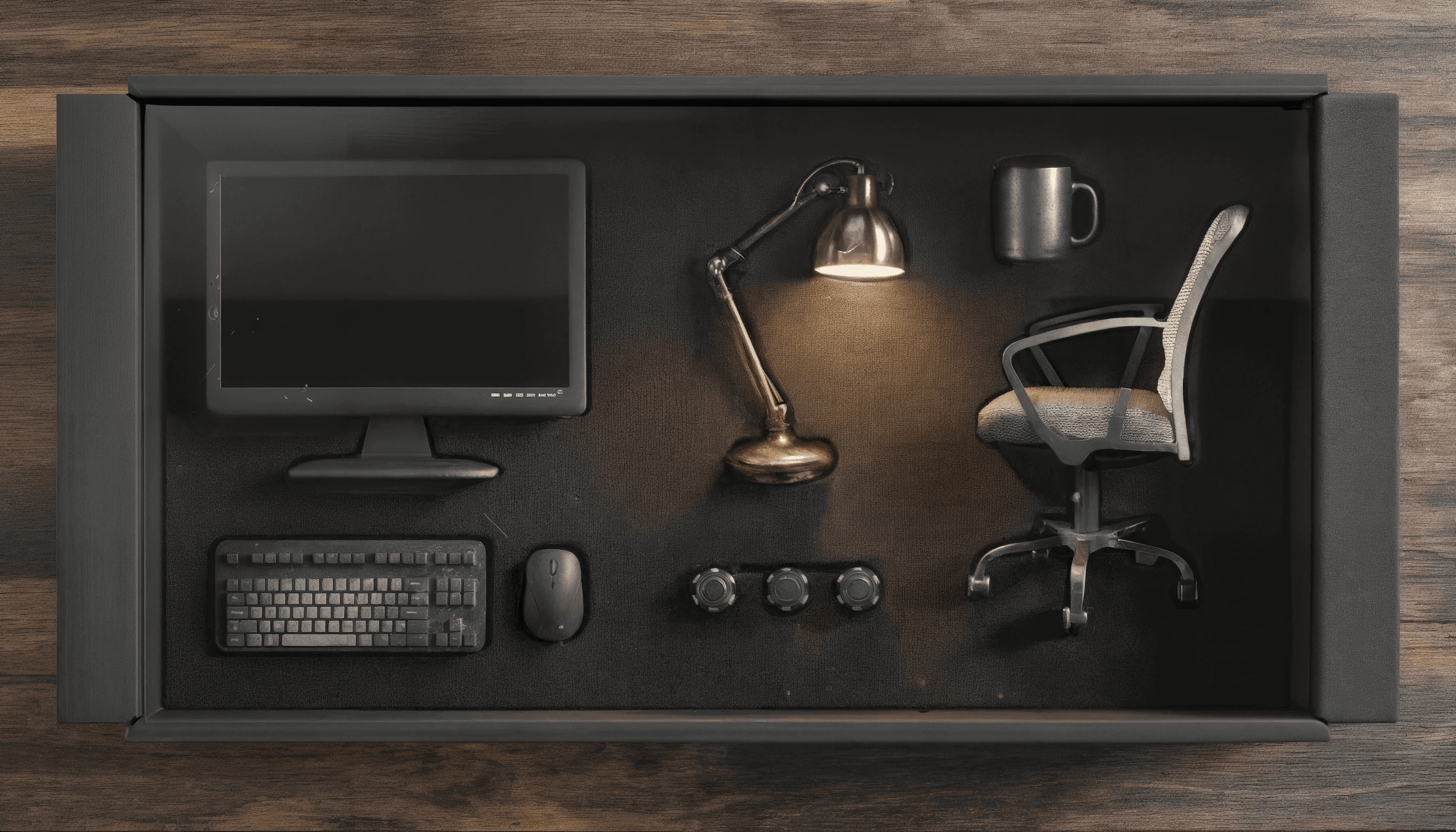
The world of modern online poker is a marathon, not a sprint. Your ability to win money depends directly on your endurance, concentration, and comfort during multi-hour sessions. Your setup isn't just a computer and a desk. It's your working tool, and your performance — and consequently your profit — depends on it.
In this guide, we'll dissect the ideal poker player's workspace, starting from a setup with minimal money requirements, but without forgetting about comfort — nobody likes freezes and lags.
Preface
Many people mistakenly believe that poker requires a very powerful computer. This is a fatal misconception. The hardware should indeed be powerful, but the entry threshold isn't as high as it seems. This is largely thanks to GTO Wizard — the era of hardware-demanding solvers is over, and now all calculations happen in the cloud, so your computer's specs have no impact on this.
Processor
A powerful processor isn't needed for the beauty of poker tables, but for fast processing of databases by your poker tracker (Hand2Note or HoldemManager3). A CPU that's too weak means a freezing HUD, slow hand imports, and missed profit.
Budget option for the grinder: AMD FX-8350
This is an old but still powerful processor that's plenty for playing 10 tables. Its main drawback is low single-core performance (IPC), which is one of the key metrics for comfortable operation of Hand2Note and poker clients. It's equally important to note that this processor uses the outdated AM3+ socket, and it's now hard to find a motherboard that works with it. If you do find one, you'll run into the fact that such a motherboard can only take DDR3 RAM. Modern DDR4/DDR5 is much faster and more energy-efficient. Nonetheless, for a small budget and a used build, this processor is still a decent option. If your budget allows — look toward the Ryzen 5 series or Intel i5 11-13 gen.
Optimal choice: Intel i5-13600K / AMD Ryzen 7 7700X
A powerful processor that guarantees the absence of even minor hangs.
Hand2Note, like any poker tracker, demands high single-core performance (IPC).
All HUD calculations, filters, and real-time stat display aren't the parallel work of 16 threads, but fast, sequential tasks where the speed of each individual core is what matters.
With such a processor, the HUD updates without delays even when playing 15 or more tables, filters and reports in Hand2Note load almost instantly, and poker clients don't hang even if you have all possible poker room clients open at once, with Telegram and Discord running.
RAM
If the processor is the computer's brain, then RAM is its short-term memory. The more you have, the less the system hangs when you have dozens of tables, poker clients, and a tracker open. 16 gigabytes of RAM is the lower bar for comfortable play, at which minor hangs are still possible. To avoid all possible slowdowns, you'll need 32 gigabytes of DDR4/DDR5. It's better to get two 16-gigabyte sticks so they run in dual-channel mode — the performance boost compared to a single stick is quite noticeable.
Graphics card
Many people think: "but I don't play games, why do I need a powerful graphics card?" — and they're wrong. Modern poker clients (especially if you use multiple monitors) actively use the GPU to render the interface, so you'll need 6 gigabytes of video memory. You don't need the newest graphics card, but the necessary minimum is a card at the level of an Nvidia GTX 1060. If your budget allows, consider options from the Nvidia GTX 1650 / RTX 3050 or AMD RX 6600.
Monitor
Your monitor is the most important element of visual comfort. Its size and resolution determine how many tables you can comfortably fit without straining your eyesight or losing information.
The "gold standard" for poker: This is a 27-inch monitor with 2K resolution (2560x1440). It provides the ideal balance between physical size and pixel density, allowing you to fit 6-9 tables without overlap and with readable fonts.
One large Ultrawide vs. two standard monitors
This is a key choice every grinder faces. Both approaches have their pros and cons, and the choice depends on your playing style.
Criterion | One Ultrawide monitor (34") | Two standard monitors (2×27") |
Playing space | Seamless, no bezels. Perfect for 6–10 tables. | More total area. Easy to fit 12–16+ tables. |
Additional info | Room lobby, chats, and software have to be placed on top of the tables. | One monitor for play, the other for the lobby and game schedule. |
Cost | Usually more expensive than two standard monitors. | A more budget-friendly solution for maximum area. |
Mouse and keyboard
Any mouse and keyboard will do for playing poker; choose them based on your taste and budget. Many professional players eventually switch to a vertical mouse to ease the strain on their joints.
FAQ
Do I need a powerful graphics card for poker?
No. To display poker tables, a graphics card at the level of an Nvidia GTX 1060 is enough. If your budget allows, consider options from the Nvidia GTX 1650 / RTX 3050 or AMD RX 6600.
Which chair is best to choose?
The gold standard is considered to be ergonomic office chairs like the Herman Miller Aeron, which provide ideal back support. It's an expensive but possibly the most important investment in your health.
Is a 4K monitor better than 2K for poker?
Not always. On a 27-inch 4K monitor, all interface elements (fonts, bet sliders) become very small. You'll have to use Windows scaling, which doesn't always work well with poker software. 2K at 27 inches is a proven and balanced option.
Is an SSD mandatory, or can I get by with a hard drive?
Mandatory. Classic hard drives (HDD) have long been outdated in terms of performance. Solid-state drives (SSD) work on the principle of instant memory access, which provides a multiple-fold increase in speed. When you install a poker tracker and room clients on an SSD, the difference is so noticeable that it's better to forget about the hard drive.
Read next

# Poker Software: A Complete Guide to the Programs the Pros Use

Top 3 Free Poker Programs That Will Improve Your Game
# Limping in poker: why it's a mistake and how to punish limpers