Poker Hand Rankings by Strength: All 10 Combinations with Examples
Knowing the hand rankings is the foundation on which getting acquainted with poker begins. They are exactly what determines who wins the pot at showdown, so the first thing any beginner studies is the poker hands ranked by strength.
In this article, we'll take a detailed look at all poker hands in order of rank, show examples of each hand, and explain how the winner is determined at showdown.
This is fundamental knowledge, without which it's impossible to move forward — toward understanding ranges, poker math, and building a profitable game strategy.
Poker hand rankings chart
Below are all poker hands by rank, from weakest to strongest.
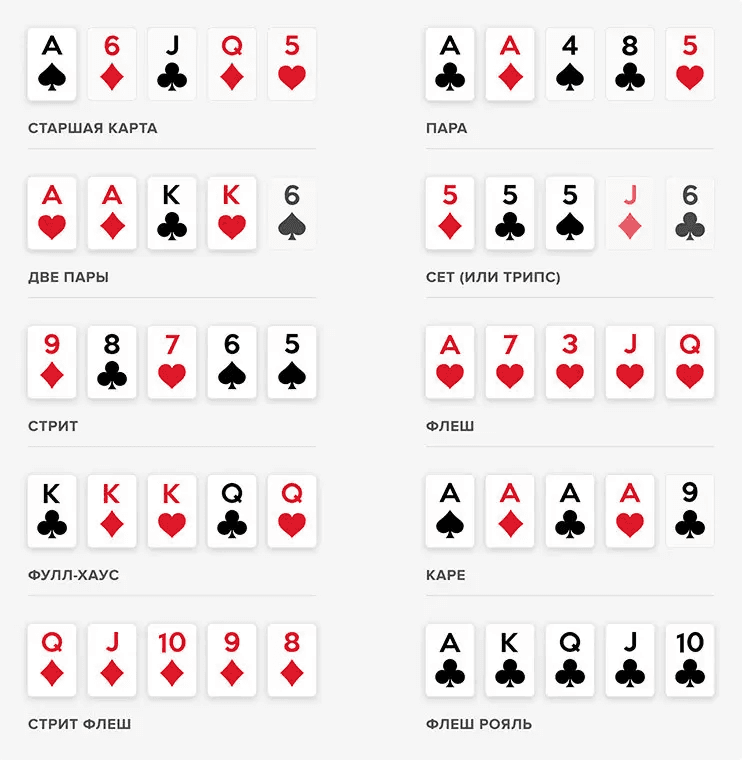
Now let's talk about each hand individually.
What each poker hand means
We'll look not only at the definitions, but also at real in-game examples, so it's clear exactly how hands are formed and how the winner is determined at showdown.
It's important to remember one basic rule: in Texas Hold'em, a player's final hand always consists of the five best cards that can be made from the two hole cards and the five cards on the board.
Sometimes both hole cards go into the hand, sometimes only one, and sometimes a player uses exclusively the cards on the table.
High Card
The weakest possible hand in poker is high card or kicker. We get it when none of the available cards can make any other hand: no pair, no straight, no flush.
In that case, hand strength is determined by the highest card, and if several players share it — the next cards are compared in descending order.
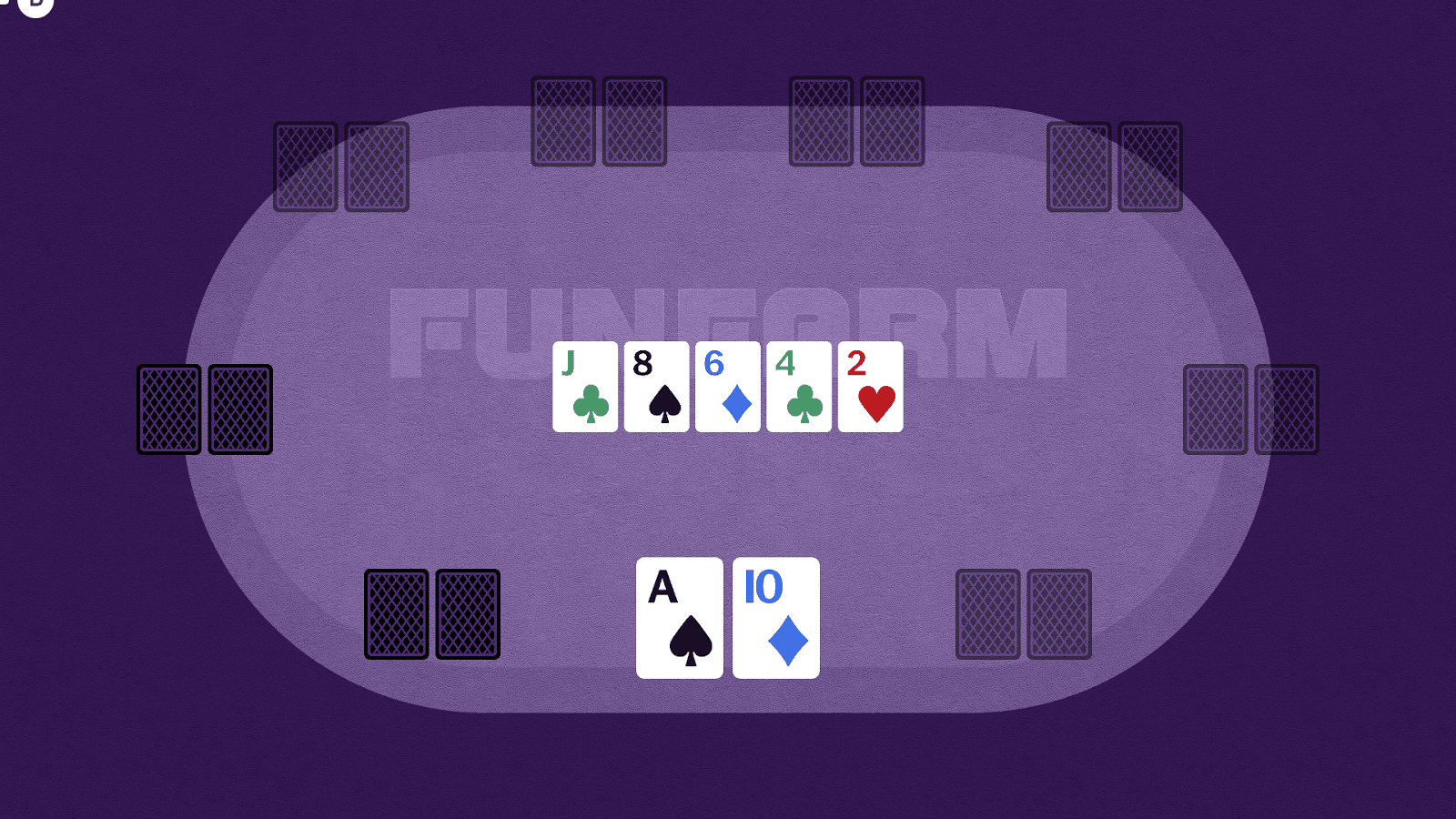
In this situation we have neither a pair nor any other hand, so our hand is ace high.
Although such a hand seems weak, in practice it sometimes wins the pot — especially if no player improved on the postflop*.
If the opponent has, for example, K♣️Q♣️, we win the hand because the ace beats the king.
*Postflop in poker is the stage of play that begins after three community cards (the flop) have already been dealt on the table.
You can learn more about the betting rounds in poker in our article. Go take a look and read it.
What a kicker is in poker
A kicker is a card that isn't part of the main portion of the hand, but is used to determine the winner when players have the same type of hand.
We run into kickers quite often, because many poker hands can be shared by several players at the same time. In such situations, the extra cards help determine whose hand is stronger.
Let's look at an example.
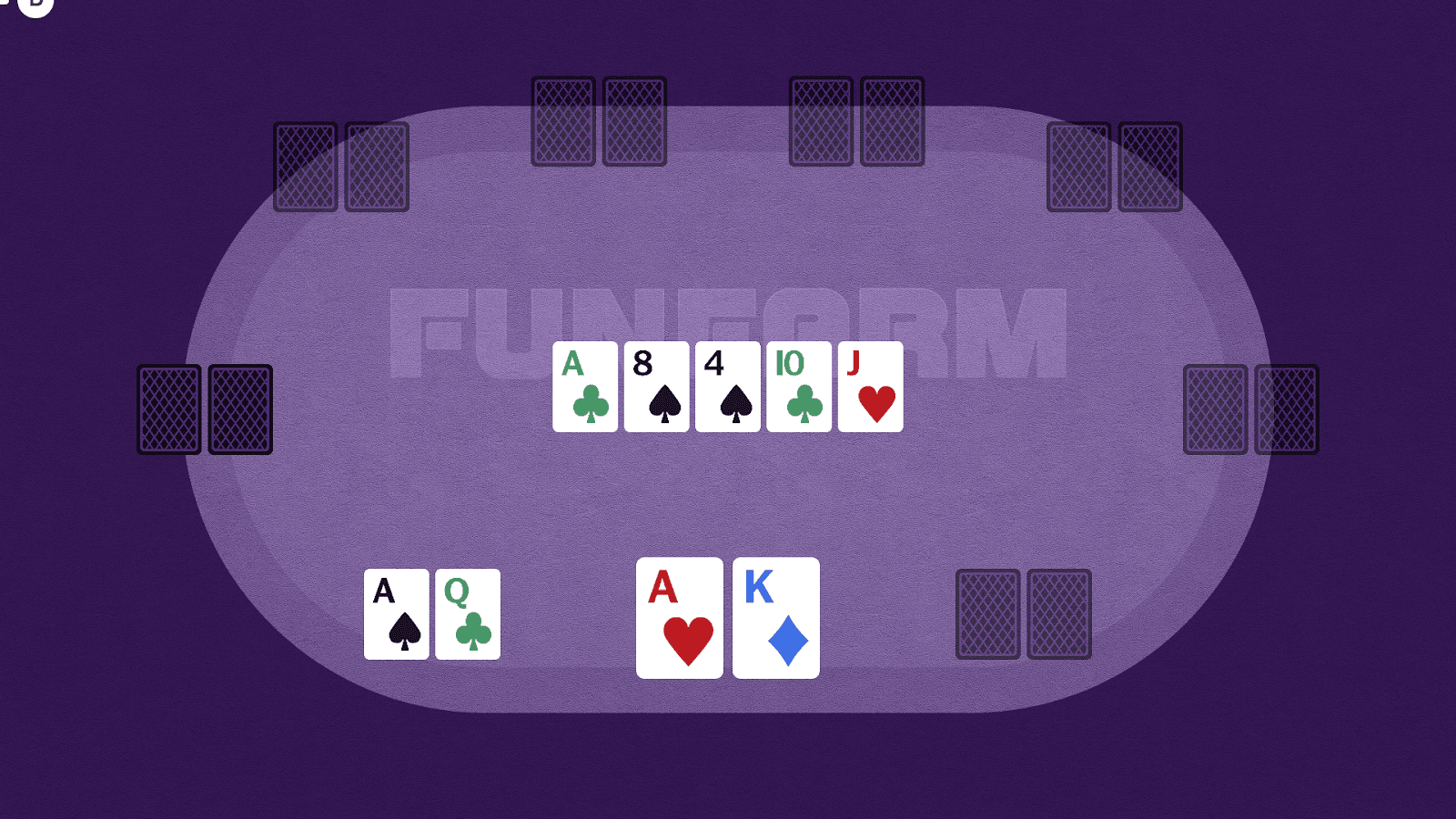
In this case both players have the same hand — a pair of aces. However, the first player's higher kicker is a king, and the second player's is a queen.
Therefore the player with the higher kicker wins the pot.
One Pair
A pair is one of the most common hands in poker. It consists of two cards of the same rank and three additional cards.
We get a pair quite often — roughly in every other hand at least one of the players has such a hand by showdown.
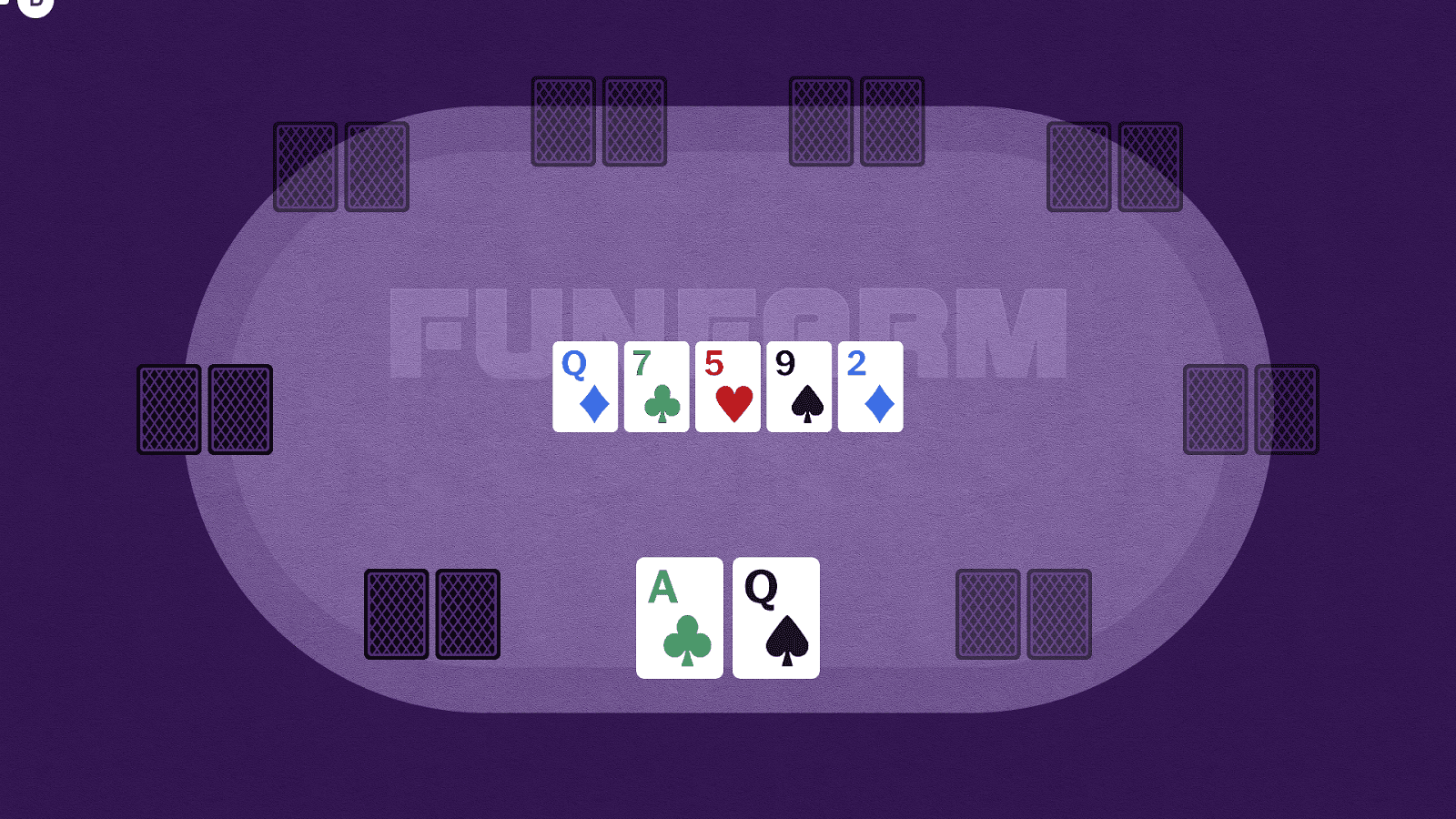
In this case we have a pair of queens with a strong kicker* — an ace. If the opponent also has a pair of queens, then the kickers determine the winner.
In our hand the higher kicker is an ace, so we win the hand if the opponent doesn't have a stronger hand or the same hand.
A pair often looks like a not-too-strong hand, but in practice it's precisely the one that quite frequently becomes the winning hand at showdown.
*A kicker is a card that doesn't directly take part in forming a player's poker hand, but nonetheless allows the winner to be determined in a situation where several players have the same hands at showdown.
Two Pair
Two pair is formed when we have two different pairs of matching cards and one additional card.
This hand occurs less often than one pair, but still appears in play fairly frequently.
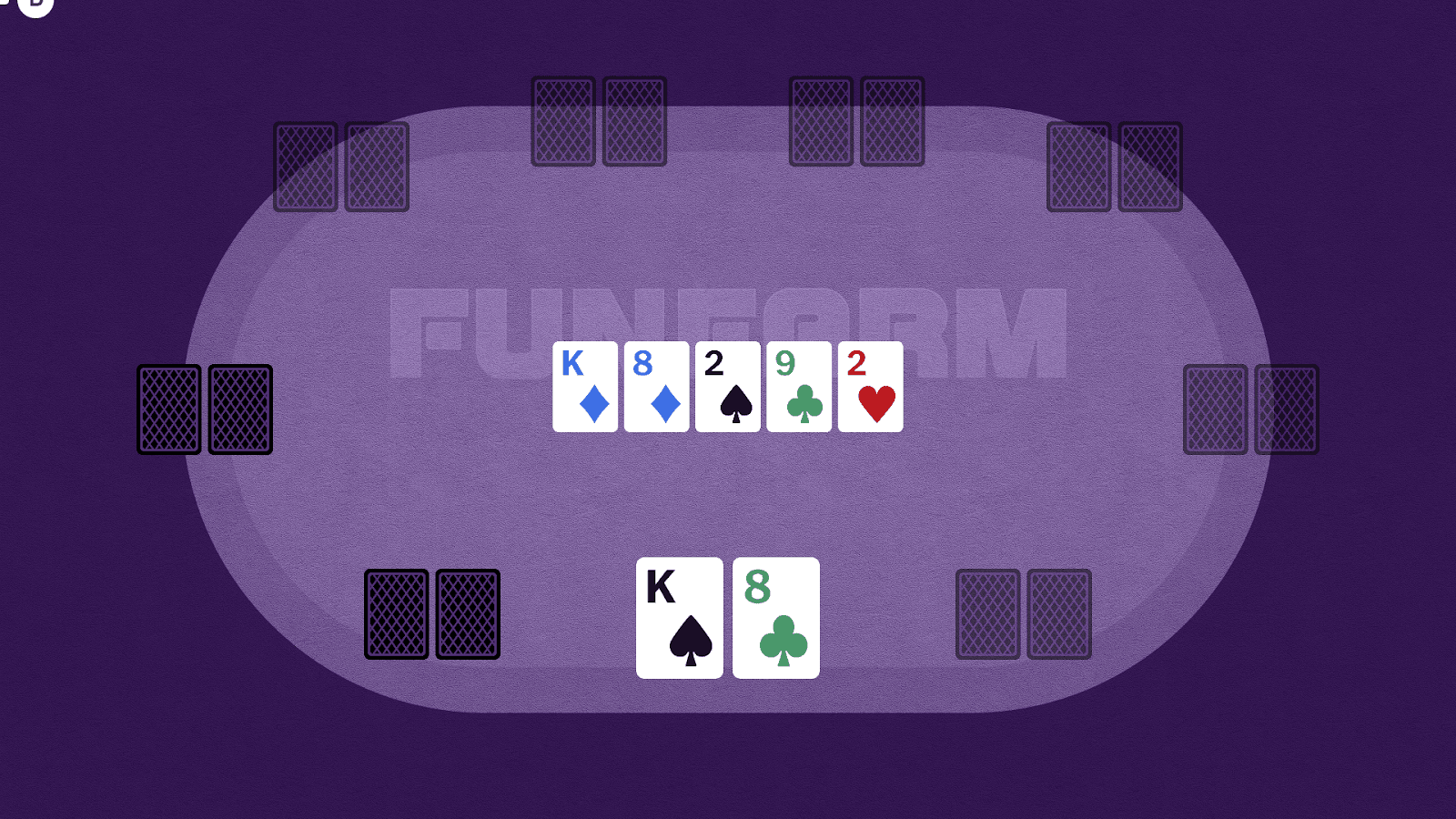
In this example we have two pair — kings and eights. When two players have the same "two pair" hand, we determine the winner by which of the pairs is stronger.
For example, two pair of kings and eights is stronger than two pair of kings and deuces.
Three of a Kind
Three of a kind is a hand of three cards of the same rank. In poker terminology we distinguish two variants of three of a kind:
A set — when we have a pocket pair and the third card appears on the board.
Trips — when one card is in our hand and two matching cards are on the table.
From the rules' standpoint it's the same hand, but from a strategy standpoint they're played differently.
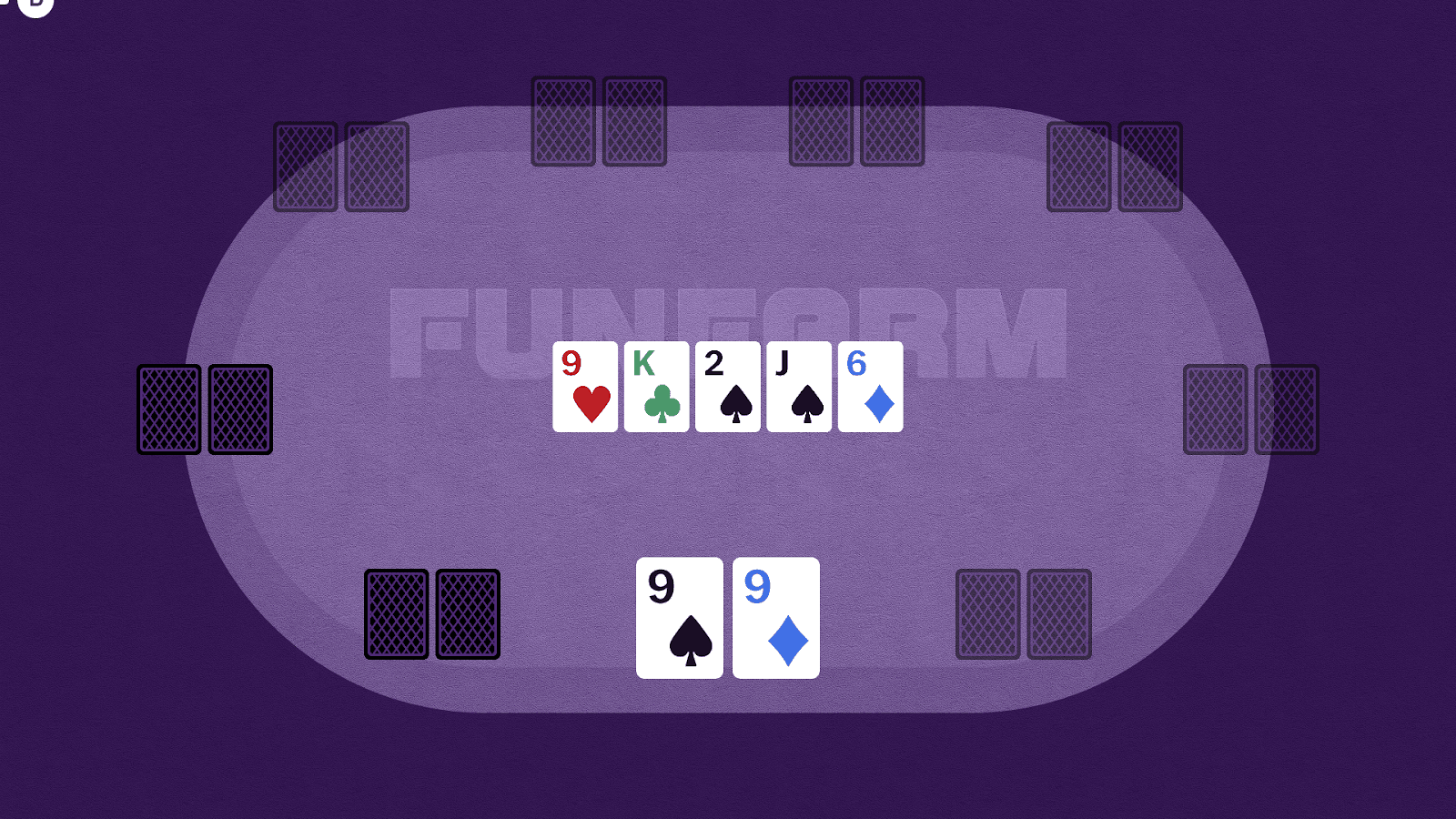
In the example above we have a set of nines. A set is considered a very strong hand, because it's hard for opponents to suspect that we have exactly three cards of the same rank.
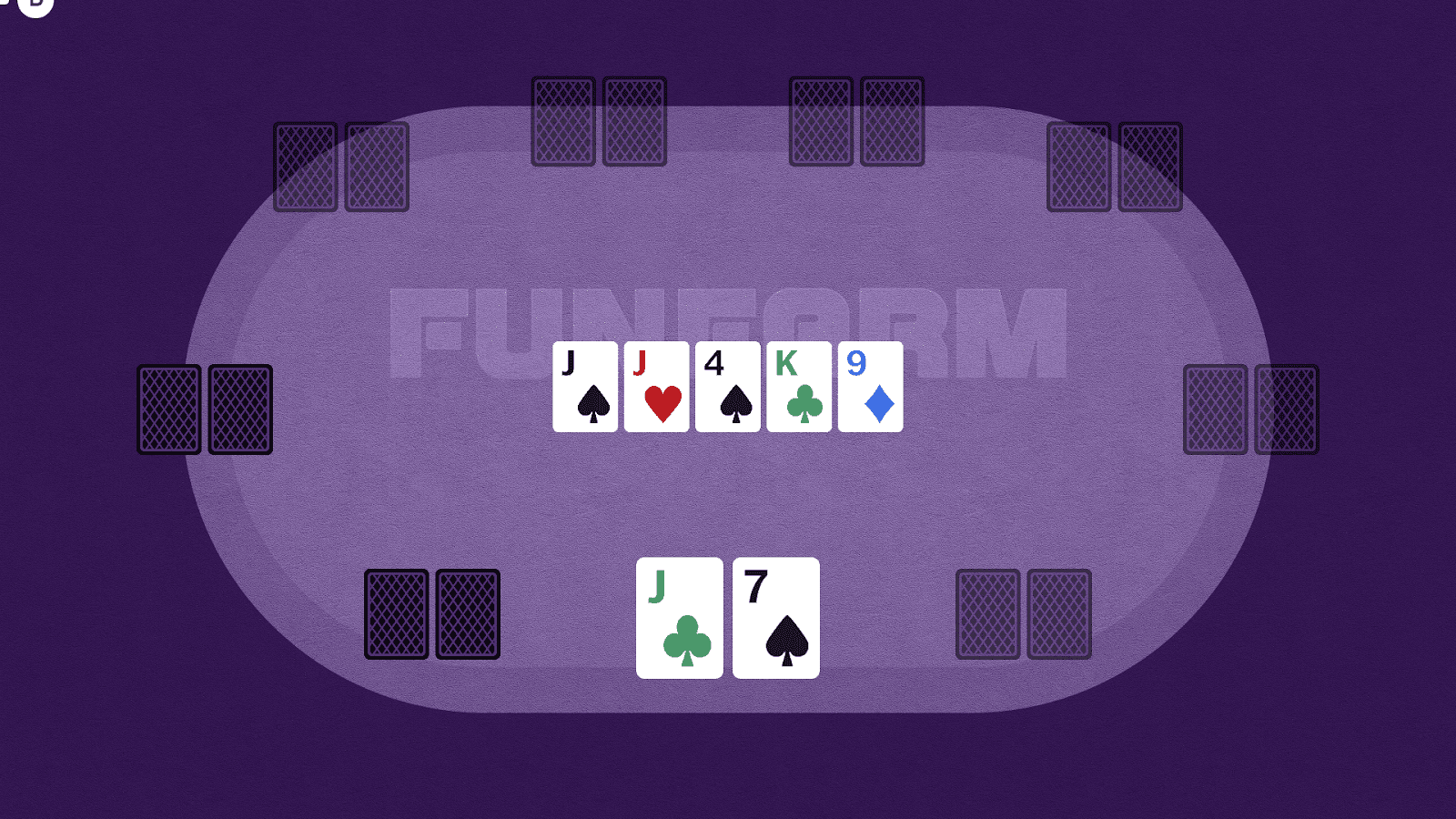
In this case we have trips of jacks. If two players show three of a kind, we compare the rank of the trips itself. For example, three jacks are always stronger than three nines, and if the trips are the same, the winner is determined by the kicker.
Straight
A straight is a sequence of five cards in order. Suits don't matter in this case. The main condition is that the cards must run in succession.
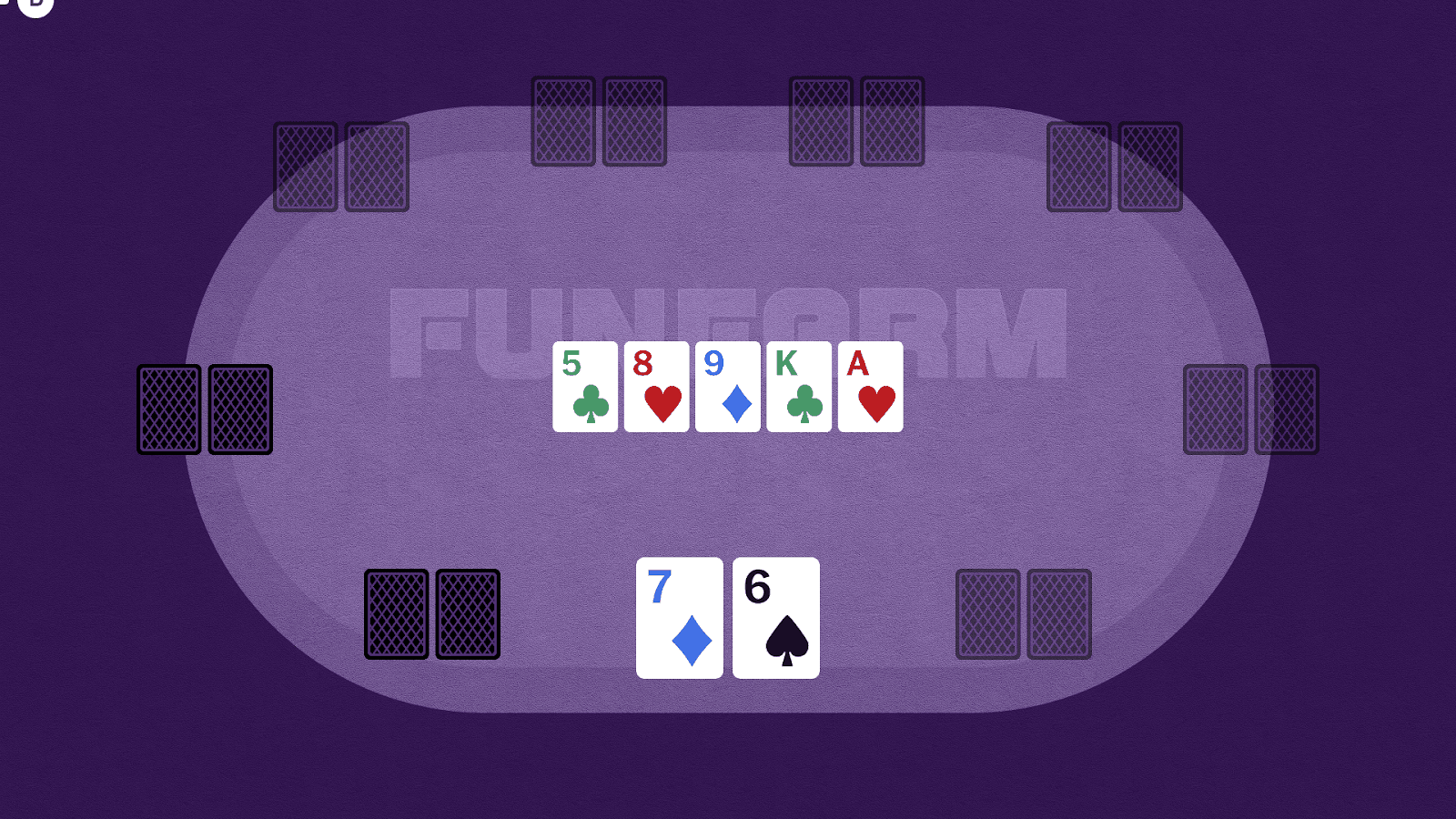
In this example we made a straight to the nine. An interesting feature of the straight is that the ace can play a double role.
It can be both the highest card and the lowest.
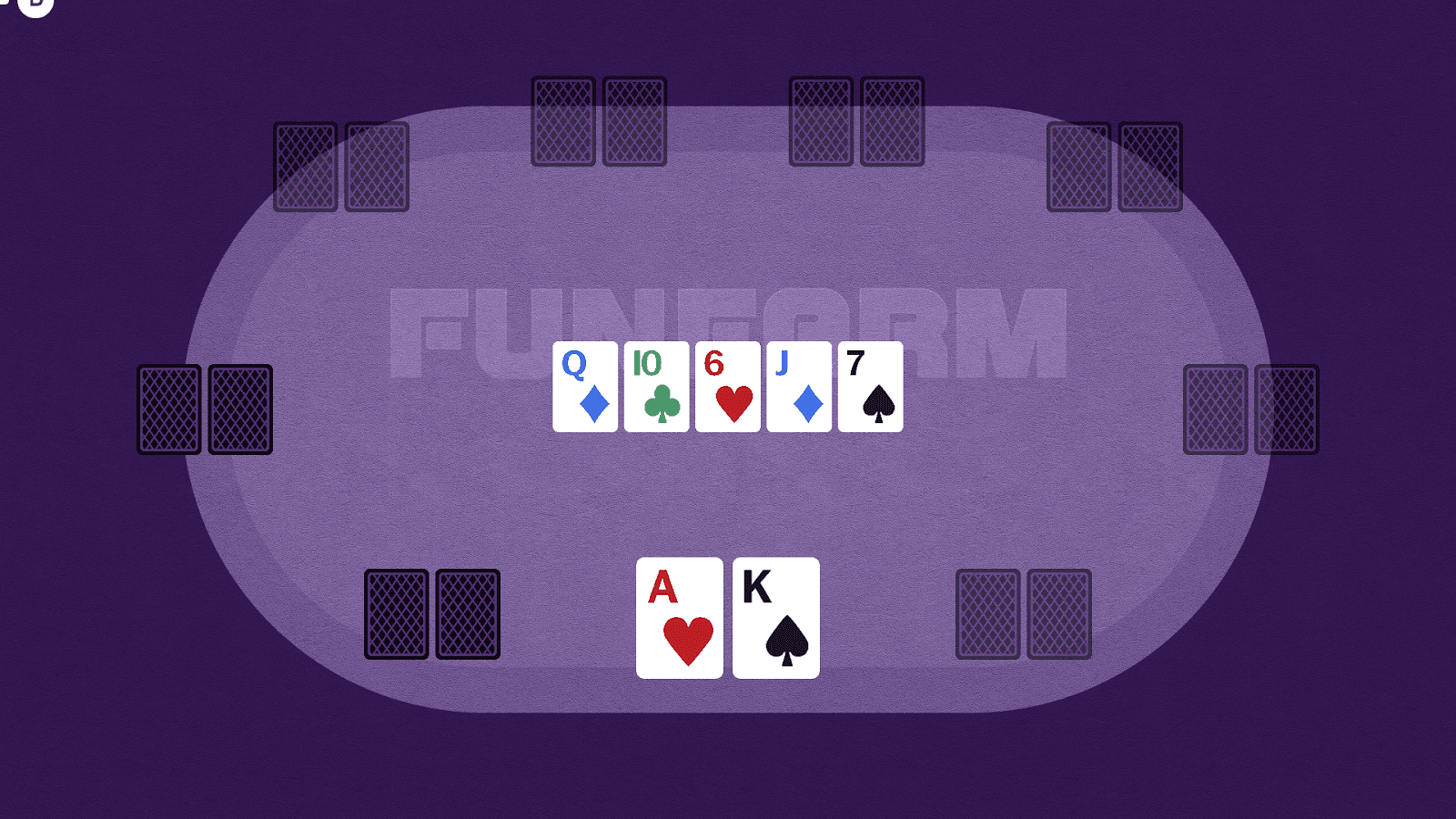
In the case above we made a straight from ace to ten.
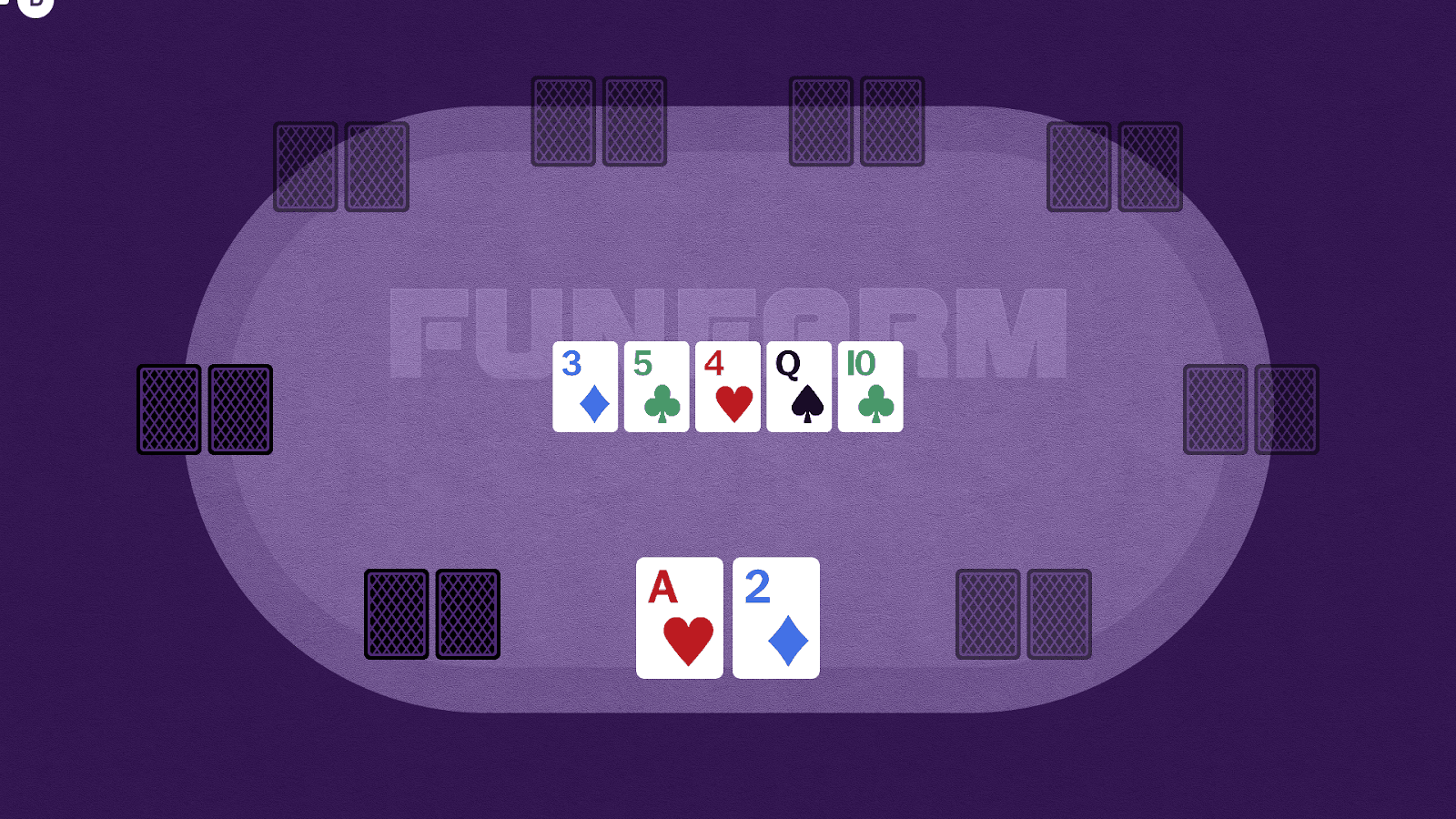
And in this case we made a straight from ace to five.
If two players have a straight, the winner is determined by the highest card of the sequence.
Flush
A flush is a hand of five cards of the same suit that don't form a sequence. It's a fairly strong hand that often wins big pots.
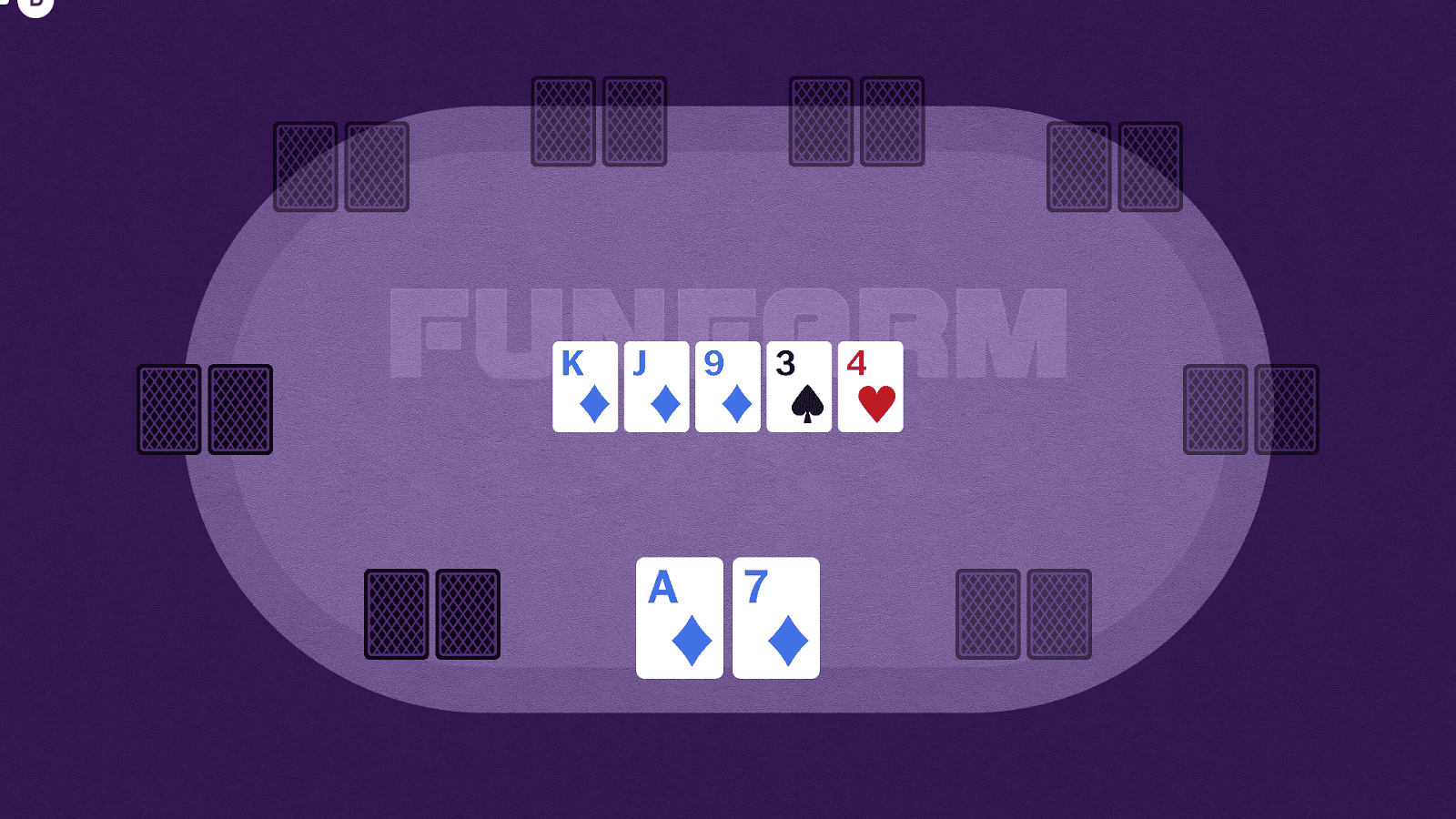
In this case we made a flush to the ace. If two players have a flush, the suits aren't compared. We look at the ranks of the cards within the hand.
First the highest card of the flush is compared, then the next one.
For example, A♦️K♦️J♦️9♦️7♦️ is stronger than Q♦️J♦️T♦️8♦️3♦️
Sometimes players mistakenly consider a low flush to be invulnerable, but in practice the opponent can make a higher flush.
Full House
A full house is a hand consisting of three of a kind and a pair. It occurs relatively rarely and is usually a very strong hand.
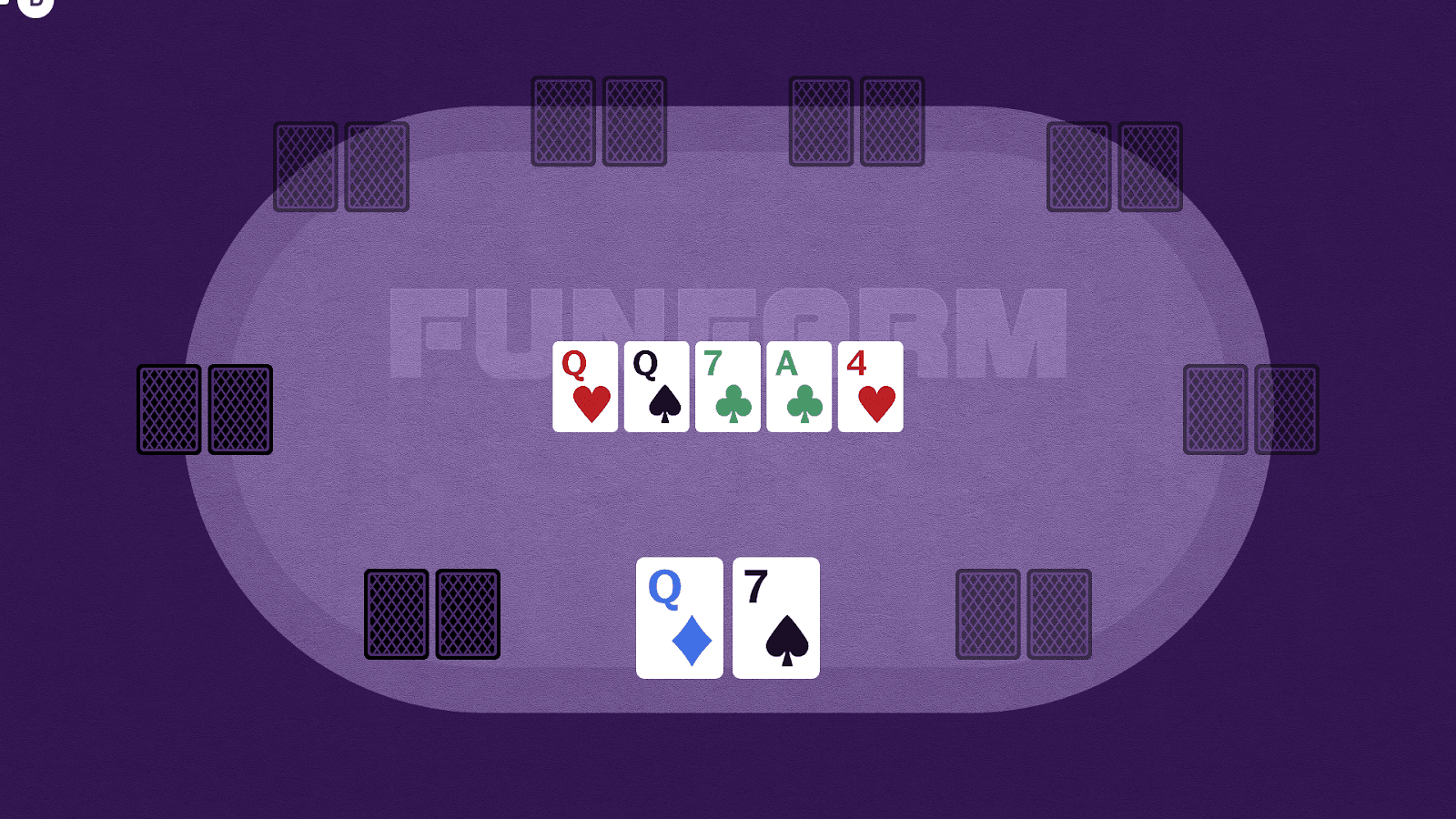
For example, a full house consisting of three queens and two sevens. When two players have a full house, we compare the three of a kind, and then the pair.
If one player's three of a kind is stronger, he wins. If the three of a kinds are the same, then the strength of the pair is assessed: the player whose pair is stronger takes the pot.
Four of a Kind
Four of a kind is a hand of four cards of the same rank and one additional card. It's one of the rarest and strongest hands in poker.
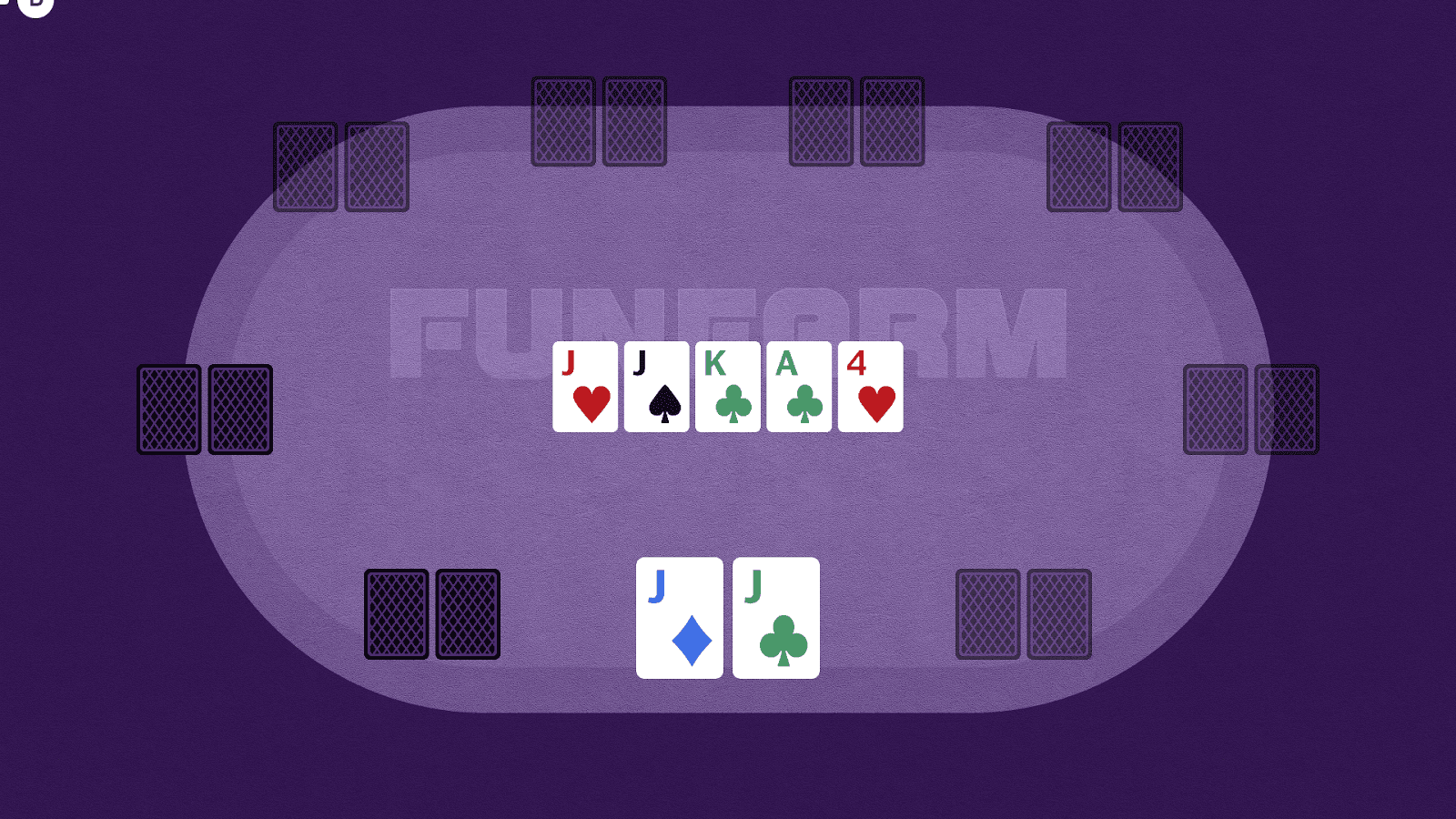
In this example we have four of a kind, jacks. If two players show four of a kind, the winner is determined by the rank of the four cards.
For example, four aces are stronger than four kings.
If the four cards are on the board, the kicker determines the winner.
Straight Flush
A straight flush is a hand in which the conditions of both a straight and a flush are met simultaneously: five sequential cards of the same suit. It's an extremely rare and strong hand.
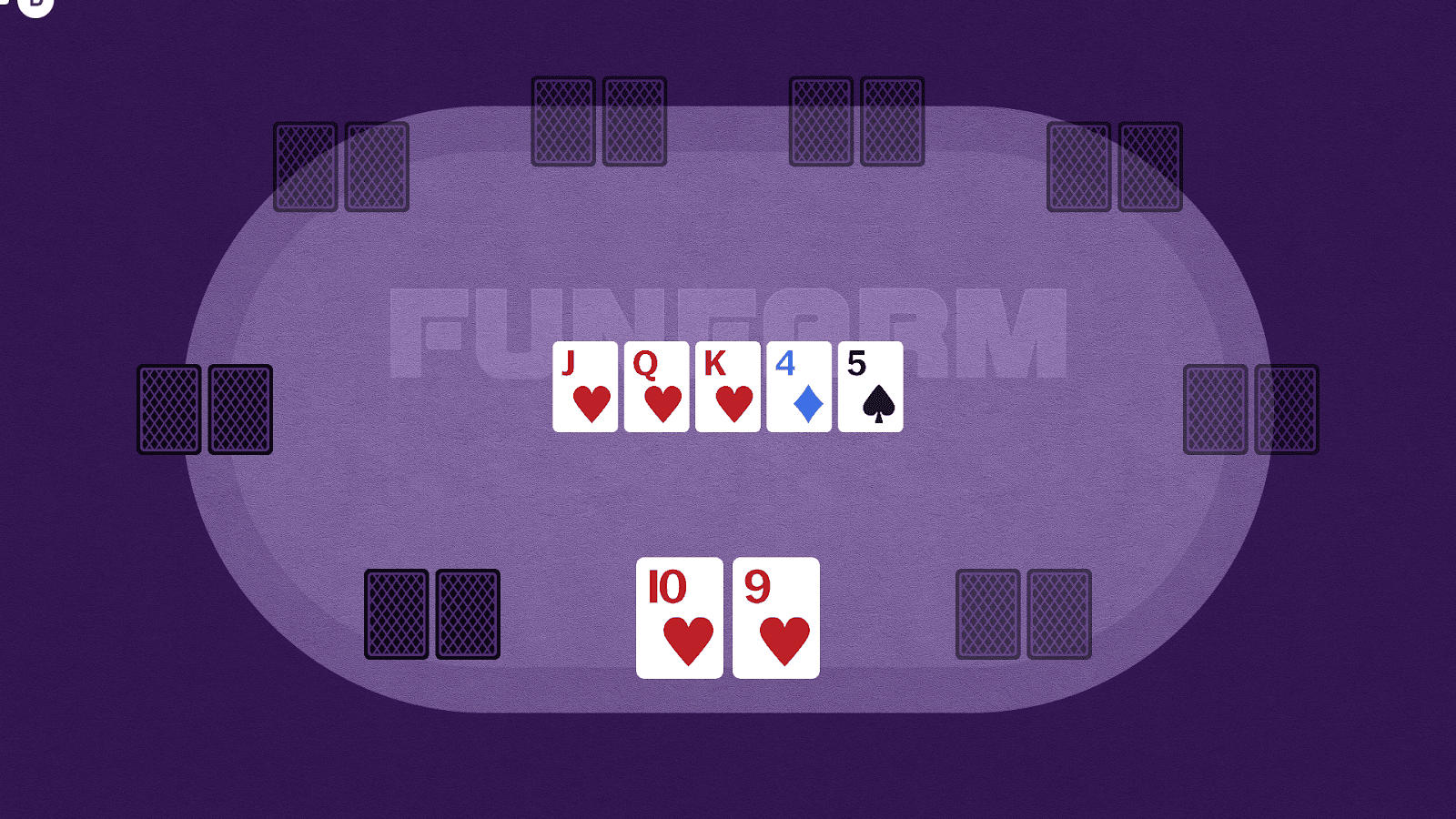
In this hand we have a straight flush to the king. If two players make a straight flush, the winner is determined by the highest card of the sequence.
Royal Flush
A royal flush is the strongest hand in poker. It looks like this:
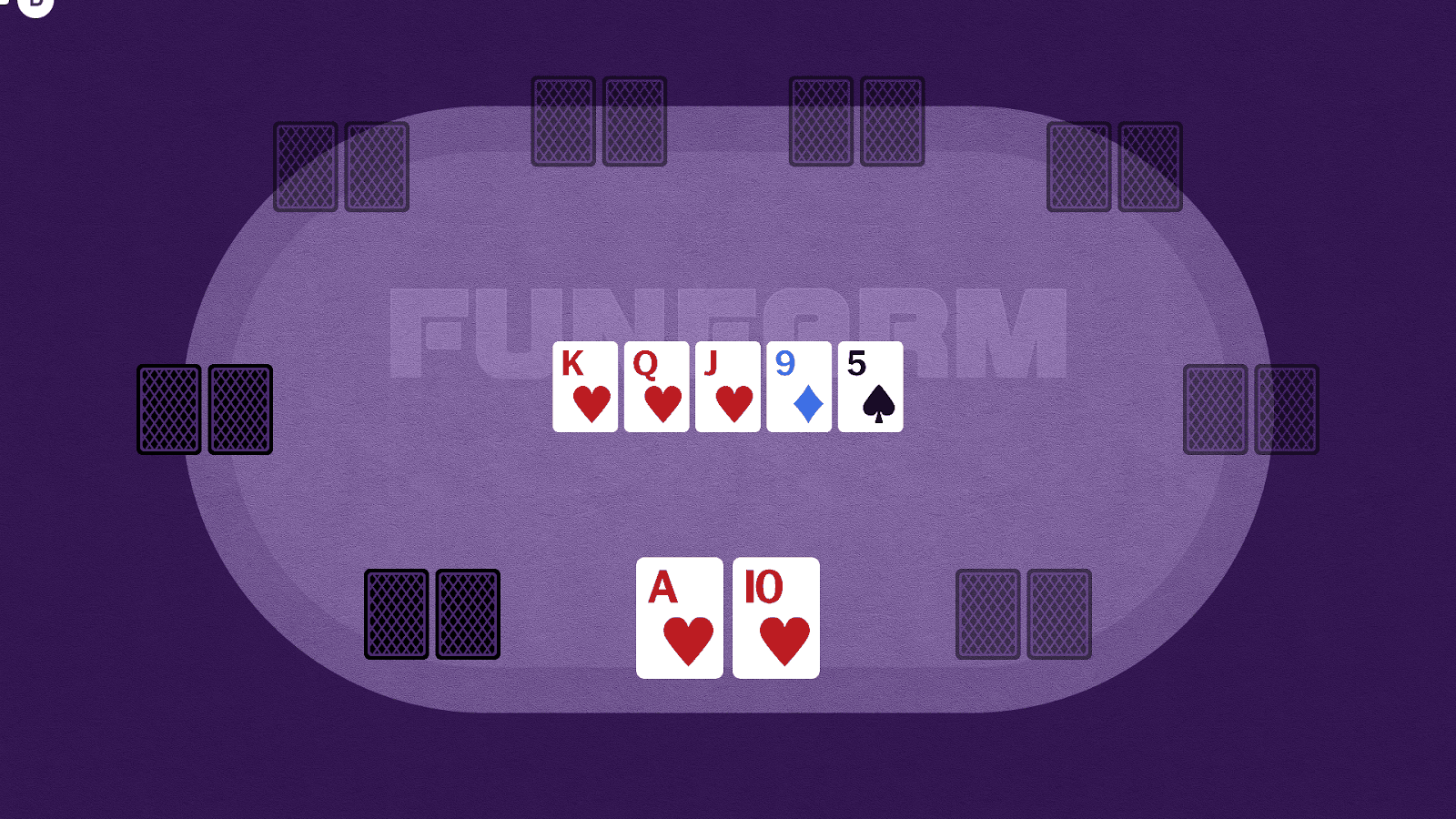
That is, five sequential cards of the same suit from ace to ten. The probability of making such a hand is extremely small — roughly 1 in 649,000.
The difference between a hand and a combination
In training materials and poker discussions, the words "hand" and "combination" are often used as synonyms. In practice this is acceptable, however, from the standpoint of poker rules there's an important distinction between these concepts.
A combination is a specific type of card layout that has its place in the hierarchy of hand strength. Such combinations include a pair, two pair, set, straight, flush, full house, four of a kind, and others. These are what determine which hand is stronger at showdown.
A hand is the final set of five cards that we form from the available cards in the deal. In Texas Hold'em a player has two hole cards and five cards on the board. From these seven cards we always choose the best five, which form the final hand.
For practical play this distinction matters because at showdown we always compare hands specifically, not just the presence of combinations. A player can have a pair in hand, but if the board contains stronger cards, it's precisely those that may go into the final hand.
That's why experienced players always think not only about combinations, but also about which five cards ultimately form their best hand.
What happens if players have the same hands
When two players show the same type of hand at showdown, the comparison happens by strict rules.
First the main portion of the hand is compared
If it's the same — the kickers are compared
If they also match — the pot is split
For example:
Pair against pair: we look at the rank of the pair, then the three kickers
Two pair against two pair: first the higher pair, then the lower one, then the kicker
Three of a kind against three of a kind: first the three of a kind, then the kickers
Full house against full house: first the three of a kind, then the pair
Straight against straight: the highest card of the sequence
Flush against flush: cards in descending order
Suits in poker don't affect the comparison. This is one of the basic principles. A spade flush is not higher than a diamond flush just because it's spades. The comparison is based solely on ranks.
If players' best five cards are completely identical, a split pot occurs in poker — the pot is divided equally.
What a beginner needs to understand besides hands
Learning the card hands in poker is only the first step. Next it's important for a player to understand two things.
Poker is not a game where it's enough to simply wait for a strong hand. A player wins not only at showdown. He also wins when he knows the rules of poker, understands what position in poker is and is able to read the board in poker, and also learns to think in ranges rather than through one specific card.
In addition, strong and weak hands begin not on the river, but with the choice of starting cards. Not every hand deserves to enter the deal. That's exactly why, after studying the hands, it's useful to move on to the topic of starting hands in poker. We've carefully prepared an article for you on this topic — go take a look and read it.
Conclusion
Poker hands by rank are the foundation of the entire game. Without understanding how hands in poker are formed, how the kicker works, and why one poker layout beats another, it's impossible to feel confident during the play of a hand.
But it's important to go beyond mere memorization. A player needs to not only know that a full house in poker is stronger than a flush, and that four of a kind in poker is second only to a straight flush and a royal flush. He needs to understand how these hands arise from the board structure, how often they occur, how they're compared, and how they affect strategy over the long run.
At FunFarm we build our training precisely so that a player understands not isolated facts, but the whole system of the game in its entirety. Follow the link and become part of our friendly team.
FAQ
What is the strongest hand in poker?
The strongest hand in poker is a royal flush. It's A-K-Q-J-10 of the same suit. It can't be beaten by any other hand.
What is the most frequent winning hand?
In practice, the most frequent winning hand at showdown is one pair. This is because strong layouts like a flush, full house, or four of a kind occur considerably more rarely. That's why it's important for a beginner to learn to play not only strong hits but also medium hands correctly.
Do suits affect hand strength in poker?
No. Suits in poker are equal. A spade flush is not higher than a heart flush just because of the suit, and a royal flush of any suit has the same strength. The comparison is always based on the ranks of the cards, not the suit.
What are the nuts in poker?
The nuts is the best possible hand on a specific board. For example, if the table is 9♠️10♠️ J♠️, then A♠️K♠️ gives the nut flush. The nuts depends on the board structure and doesn't exist on its own apart from the hand.
What happens if two players have the same hands and kickers?
If two players share both the hand and all the cards involved in the comparison, a split occurs. The pot is divided between them equally. Such situations most often arise when the best five cards are already on the board or when both players use the same hand structure.
Are a set and trips the same thing?
Formally yes: both a set and trips are three of a kind. But in poker terminology there's a practical difference between them. A set is three of a kind made from a pocket pair and one board card; trips is one card in hand and two matching ones on the table.
Read next
Push/Fold in Poker: Short-Stack Strategy and Nash Charts
Rake in poker: how rakeback is calculated
All-in in Poker: Rules, Strategy, and Situations for Playing Your Whole Stack