Top 5 Postflop Mistakes in Poker: How to Value Bet and Stop Tilting
What mistakes do players make postflop? How do you bet correctly with a strong hand? We explain in this article.
Reviewing your mistakes is an effective way to learn. However, poker produces thousands of unique situations, and reviewing them all takes an enormous amount of time. By following a few simple principles, you can avoid many losses. Let's discuss the 5 biggest postflop mistakes.
Preflop or postflop: which matters more?
Beginners start learning poker with preflop. A good starting-hands chart will protect a player from many problems.
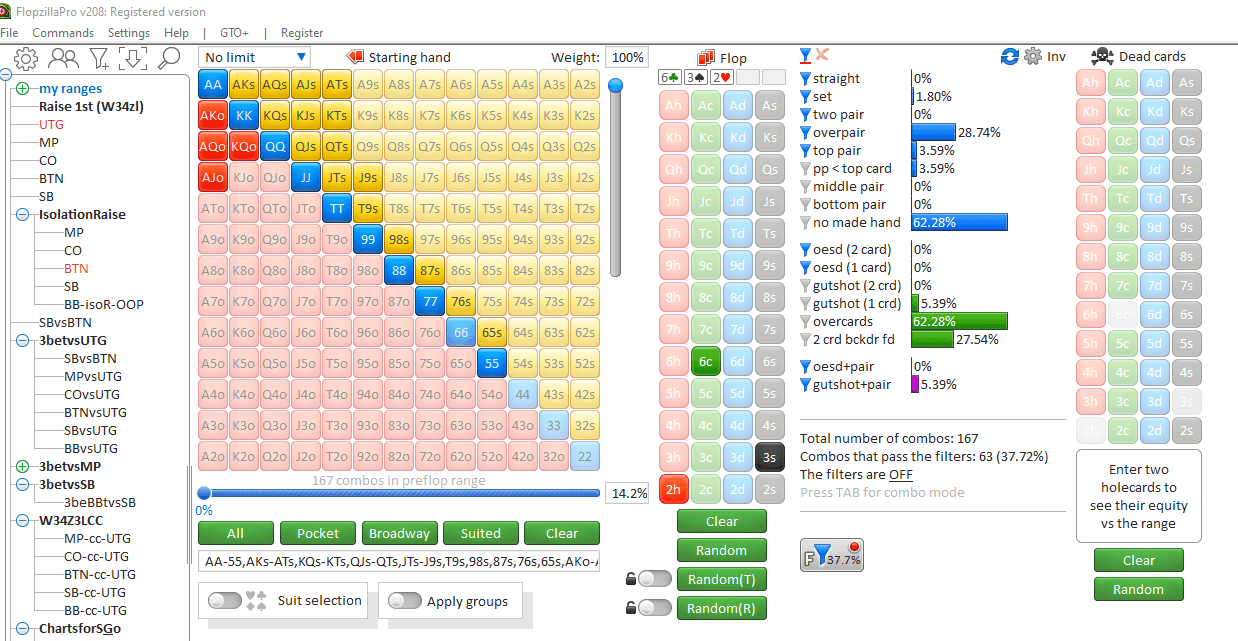
Postflop gives players more trouble. Much of it stems from poor hand selection preflop
Strong ranges give a player an edge postflop. It's easier to play an overpair or top pair with a good kicker than third pair with a gutshot. Professionals use several charts depending on position and tournament stage. A player is constantly "juggling" different ranges. Memorizing all the charts takes more than an hour.
Correct ranges form the foundation, but players make their key decisions postflop. It includes the flop, turn, and river. A fatal mistake can be made at any betting stage. Once the community cards come out, a player must answer dozens of questions:
What type of opponent are we up against?
Should we make a c-bet?
What bet size should we choose?
Which hands could the opponent have entered the pot with?
How do we respond to the opponent's counter-aggression?
Is it worth bluffing on the flop, and which turn cards are suitable for a second bet?
A balanced strategy doesn't make a player's life any easier either. To beat strong opponents, a player must follow GTO principles and stick to the correct frequencies of bets, calls, and raises. If working on preflop ranges costs hours of your life, then a solid postflop game comes only after years of training in calculators and solvers.
Realizing an edge over opponents is easier after the community cards come out. A skilled player can pull off a great bluff or provoke an opponent's aggression. But a bad decision also costs more. That's why it's useful to break down the key postflop mistakes players make.
Mistake #1: too much faith in overpairs and top pairs
Many players believe that with aces they'll always take down the pot. AA delivers its maximum edge preflop. Against any other pocket pair it's 82%. Playing for stacks before the flop, aces will win 4 times out of 5. Postflop, AA's odds drop. If a player goes all-in with aces on the flop and is called by someone with a flush draw, the pocket pair holds 65% of the time. AA is the best starting hand preflop, but in the hand ranking it only beats high card. Aces lose to: two pair, sets, straights, flushes, full houses, quads, straight flushes, and royal flushes.
For a tournament player, folding an overpair or top pair is even harder. The classic situation: blinds are rising, stacks are melting, good hands haven't come for 15-20 minutes. When a decent combination is finally dealt, the player wants to earn the maximum. In the chase for a double-up, the player ignores the board texture, the opponents' responses, and their own reads. Sometimes a player realizes that on the river their pair is in bad shape, but can't find the fold because of the pot size. In a losing spot the player invents a reason to call, sees a better hand, and exits the tournament.
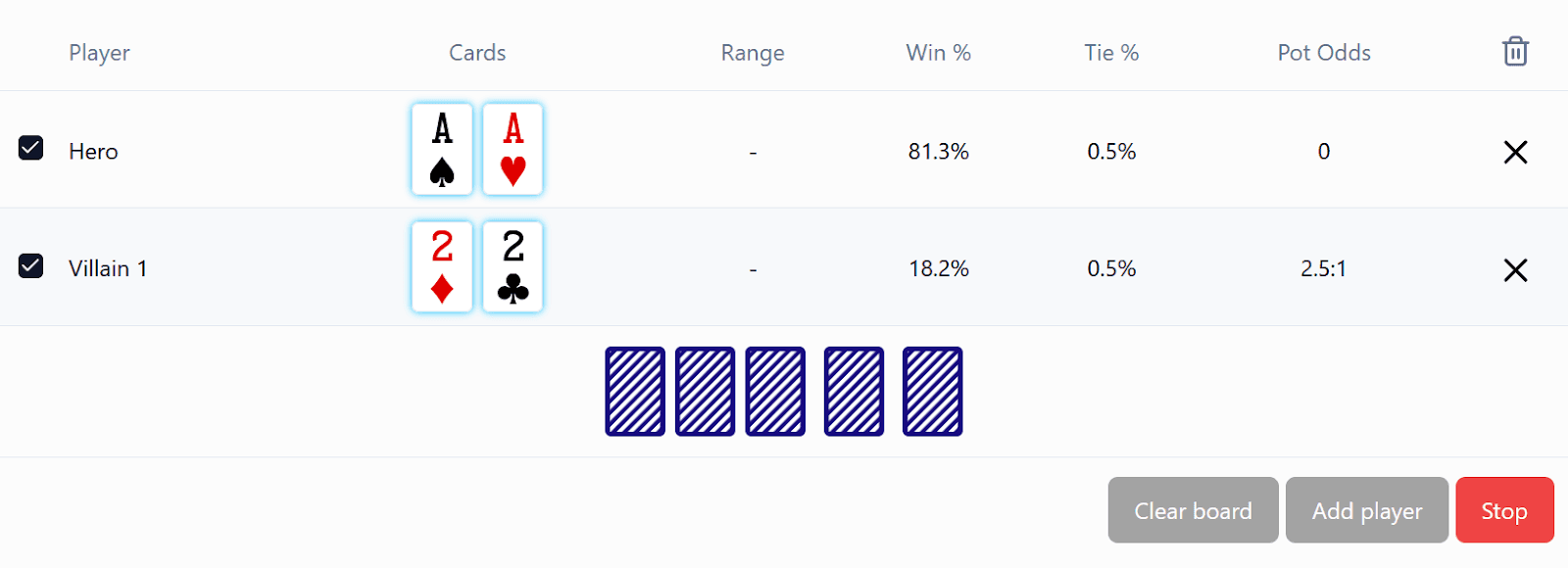
Poker's top starting hand doesn't guarantee success even preflop. Once the community cards come out, the odds of winning drop
Big pots for strong hands, small pots for weak ones. This "old-school" master principle is still relevant today. Control the pot size and don't overplay strong but vulnerable hands postflop.
Mistake #2: catching bluffs from unknown opponents
Catching an opponent bluffing always feels good. However, you can't call a big bet or a push without solid reasons. To respond to an opponent's aggression with a weak hand, you need excellent hand-reading skill or talent on Stu Ungar's level. Stats from a poker tracker or notes also help. A strong player can read an opponent thanks to experience. If a player has reviewed dozens of similar situations, then a call becomes a reasonable decision.
Beginners want to catch opponents' bluffs too. The only problem is they have no notes, no stats, no many hours of analyzing hands in software, and no experience playing hundreds of tournaments. They resort to arguments like: "I don't believe him, so I'm calling." In a specific situation this decision might work, but over the long run it leads to losses. Play safe and don't risk chips in dubious pots. Winning a tournament is hard enough as it is — don't make the task harder with risky moves. No convincing arguments for a call — hit fold.
Let's separately note hands with opponents' check-raises. In tournaments most check-raises are for value. After such a line on the flop there's almost always a bet on the turn. If you're not ready to play for stacks, it's better to fold your hand on the flop.
Mistake #3: big bluffs against unknowns
Strong professionals spot the right situations for a bluff. They know how to convincingly represent a top hand and force an opponent to fold. Lower-level players often lose money on bluffs. In most cases the reason is a mistaken read of opponents. A weak player will rarely fold top pair. They'll never fold two pair or a better hand. No matter how convincingly a player imitates the nuts, the amateur is no longer leaving the pot.
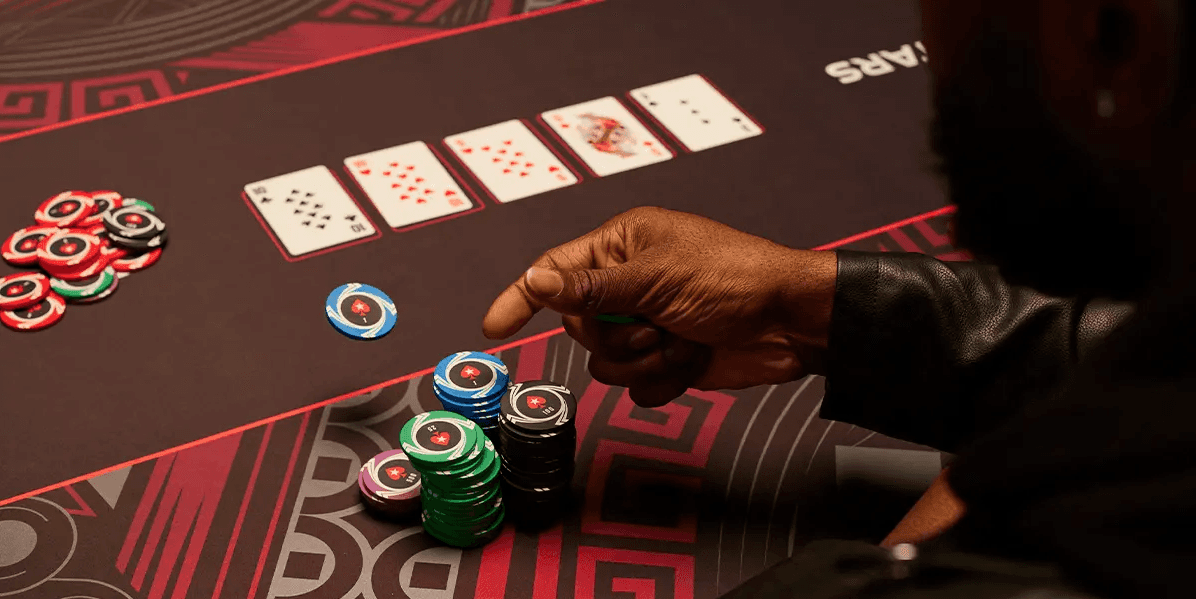
When an amateur puts half their stack into the pot, there's a good chance they'll commit the rest too
A weak player is ready to call 1-2 streets with a medium pair. On the flop they won't fold to a continuation bet. Often even a bet on a "scary" turn card won't convince them. Plenty of chips in the stack, the price of the call is small — they can call a river bet too. Amateurs often think the same way. As a result, the player gives away dozens of blinds in a situation where they could have stopped at a flop c-bet.
Mistake #4: small bets with strong hands
Most starting hands in poker are trash. When a player is dealt a decent combination preflop, they want to win the maximum number of chips. However, at the moment of truth the opponents are often the ones sitting with trash. To earn anything at all, the player reduces the bet size. For example, a player got AA preflop, raised, and was called by the SB. The board came A82. A set of aces and the opponent's passive preflop call almost rule out top pairs in the opponent's range. So the player bets a quarter of the pot hoping for a call from second pairs. Let's look at 2 bet-sizing options.
Suppose it's an early tournament stage with blinds at 10/20. Preflop the player raised to 3 BB, so by the flop there are 140 chips in the pot. Three streets of 1/4-pot bets give a final pot of 490 chips. The opponent contributes 11 blinds. Take the alternative approach with 3 value bets of 3/4 pot. It leads to a final pot of 2,170 chips. The opponent pays more than 50 blinds. With a weak hand the SB will almost always fold to any turn bet. With strong hands they'll pay off 2-3 streets. That's why bigger bets are more profitable.
Mistake #5: playing GTO instead of an exploitative strategy
In the era of solvers, professionals strive for balance. GTO helps in the fight against strong opponents. However, tournaments are full of weak opponents. Against them, exploitative poker works more effectively. Caught a good hand — bet big. Missed — check/fold and don't lose extra chips. Recreational players don't look at bluff and value-bet frequencies, don't take notes, and don't use trackers.

Top poker players switch between balance and exploitation at the right time
What's the point of following GTO principles and firing 3 barrels as a bluff if the opponent is ready to go all the way with top pair no kicker? It's smarter to adapt your strategy to the field's tendencies and "print" money. Don't abandon balance entirely. Follow GTO principles against opponents with no obvious weaknesses. Learning a balanced strategy is useful. At high stakes you can't do without GTO.
FAQ
How do I improve my postflop play?
Many postflop mistakes are born from poor starting-hand selection. The best way to avoid trouble with marginal cards on the flop is to fold them preflop. To outplay opponents postflop, you need systematic work. Analyze hands in calculators or solvers. Work with a coach. Watch instructional videos.
Is it worth bluffing in tournaments?
To pull off a successful bluff, you need a suitable board, bet sizing, and opponent. We know nothing about most opponents in a tournament. That's why we don't recommend making big bets counting on an opponent's fold. In cheap tournaments, limit yourself to bluff c-bets and preflop 3-bets.
Do I need to play GTO in tournaments?
On paper, GTO and tournaments are a perfect match. A balanced strategy lets you play successfully against unknown opponents. In tournaments they're the majority. In real life, an exploitative strategy is more profitable. If you see obvious mistakes in an opponent's play, there's no need to balance your check, raise, donk, or check-raise frequencies. Against strong opponents, use GTO.
Read next

How Not to Lose All Your Money: 7 Rules of Bankroll Management
What Freerolls Are in Poker and How to Play Them
Burnout in Poker: 7 Signs It's Time to Take a Break