Top 6 Preflop Mistakes in Poker: How to Improve Your Strategy and Push/Fold
What mistakes do players make preflop? How can you improve your push/fold? We explain in this article.
The preflop in poker is the first betting round, which begins right after the hole cards are dealt and before any community cards appear on the board. Players and coaches devote enormous attention to postflop play. How do you thinly extract value on the river? What does an opponent's check/raise on the turn mean? Which line should you choose on a flop with a draw? But beginners run into trouble even before the community cards come out. A small mistake on the preflop snowballs into a disaster by the river. Let's discuss the most expensive mistakes in more detail.
Why preflop matters
When first getting acquainted with poker, beginners study the rules. After the hand rankings, positions, and betting order, it's time for the starting hand charts.
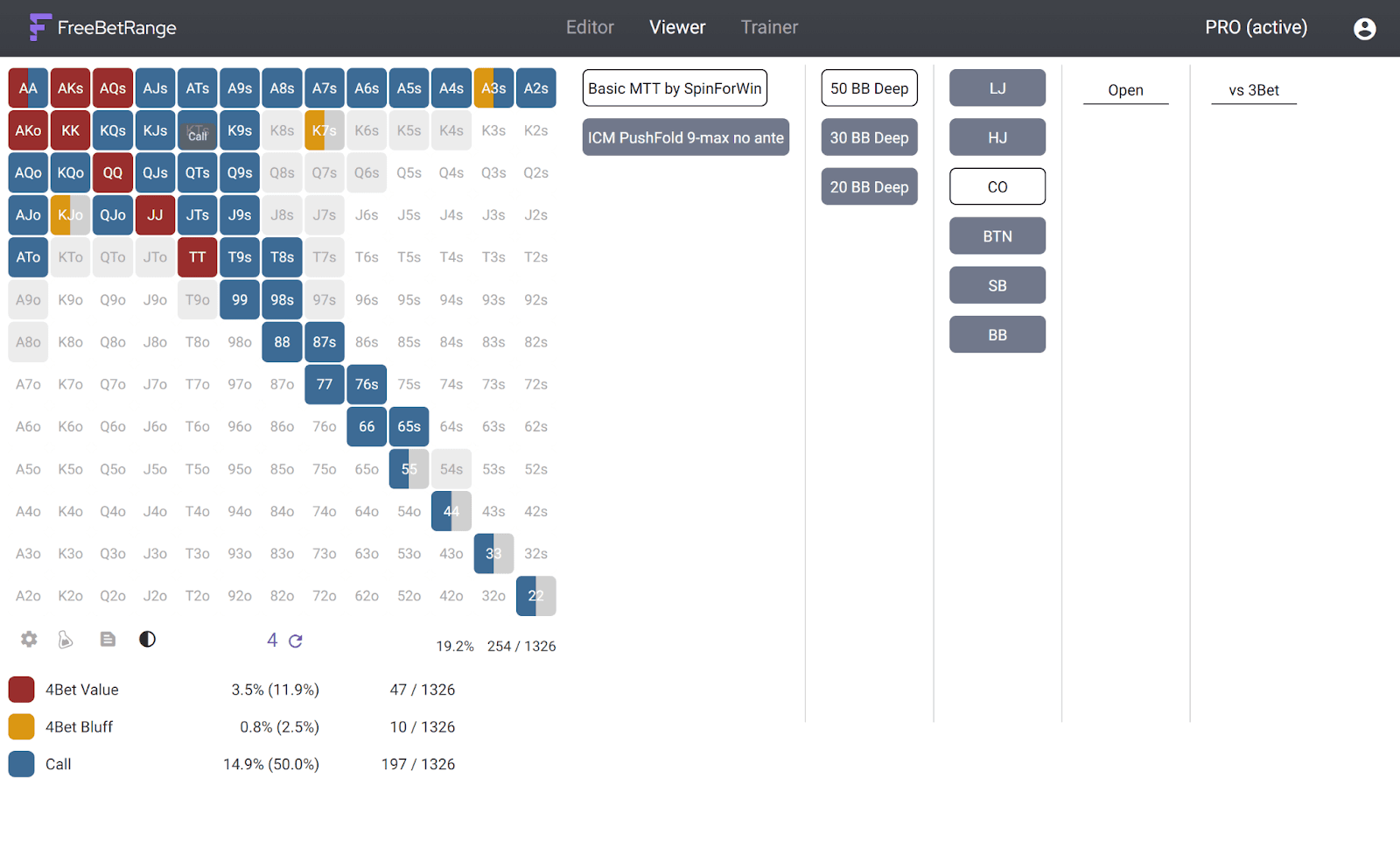
A professional uses different charts in the early, middle, and late stages of a tournament
Choosing the right cards for the preflop shields a poker player from a multitude of mistakes. Good ranges lay the foundation for future success. Charts let you enter the hand with the best holdings and simplify postflop decisions. The specific groups of cards depend on the discipline. A tournament chart won't work in cash. The reverse is true as well.
The first ranges can be found in open access. However, not every chart is equally useful. Poker strategy is constantly evolving, so solutions quickly become outdated. The free course "FunFarm Start" will give you basic knowledge about tournament poker. If a student completes the program and passes the exam, they'll receive a starting bankroll of $50. With new information, it's easier to build sensible ranges.
Great bluffs and calls on the river distinguish a professional from an amateur. At the start of a career, however, it's more useful to eliminate critical mistakes. The main ones are:
Playing too many hands;
A wide calling range;
Playing with limps;
Poor blind defense;
Failing to defend blinds;
Weak push/fold.
Let's break down these mistakes in more detail.
Mistake #1: playing too many hands
Amateurs come to poker for fun. To entertain themselves, they play many hands. Bored beginners are right behind them. If over the course of 20-30 minutes you're dealt 72o, J5o, 83o, and similar trash, then the idea of raising A2o from MP doesn't seem like a bad one. Many players can't resist and start ignoring the chart. Often, playing marginal hands ends with a fold to an opponent's 3-bet. The player simply gives away 3 big blinds. If you make such mistakes regularly, the push/fold stage will arrive sooner.
Sometimes players use ranges from other disciplines. For example, a poker player is used to opening suited connectors from early positions in cash and does the same in tournaments. In a tournament, the value of chips saved is higher than chips won. So you need to choose starting hands more carefully. A poker player won't be able to top up their account before the next hand.
Mistake #2: a wide calling range
There was a time in poker when calling raises with a wide range was recommended. As the average skill level rose, the profit from calls dropped. Opponents pay off your sets less often, and draws are more profitable played aggressively.
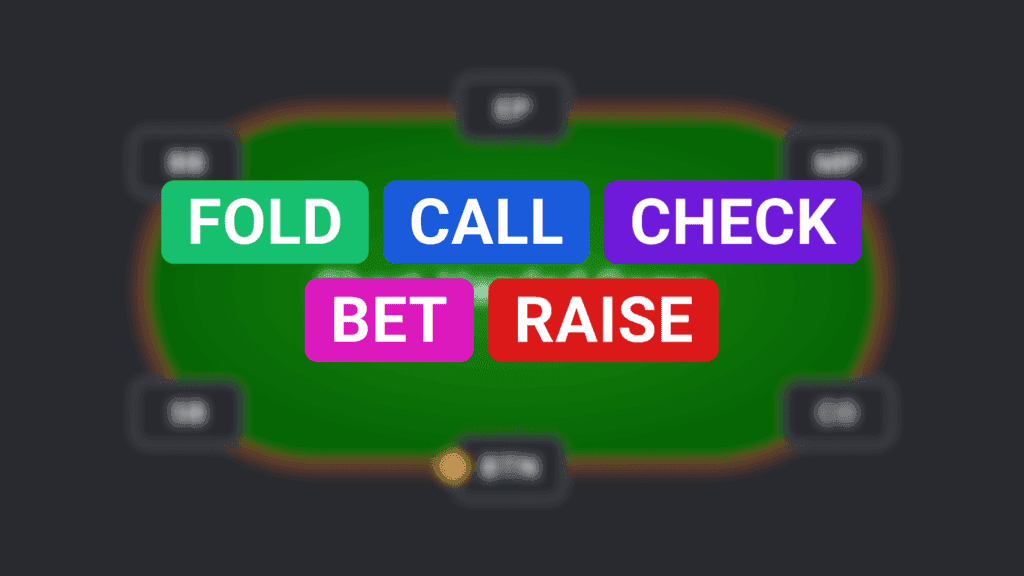
When a player calls, they lose the initiative. A passive preflop hints to the opponent that the caller doesn't have a strong hand
In tournaments, spending blinds on passive lines is even worse. Often it's exactly those blinds you'll lack to force an opponent to fold a borderline hand on the preflop. It's also worth remembering progressive knockout tournaments. Being short by a single blind can deprive a player of the reward for an opponent's head.
Put the strongest hands from your calling range into a 3-bet, and fold the weakest. An aggressive line will let you take down pots on the preflop more often. If the hand reaches postflop, a 3-bet and a bet on the flop will convince many to give up.
Mistake #3: playing through limps
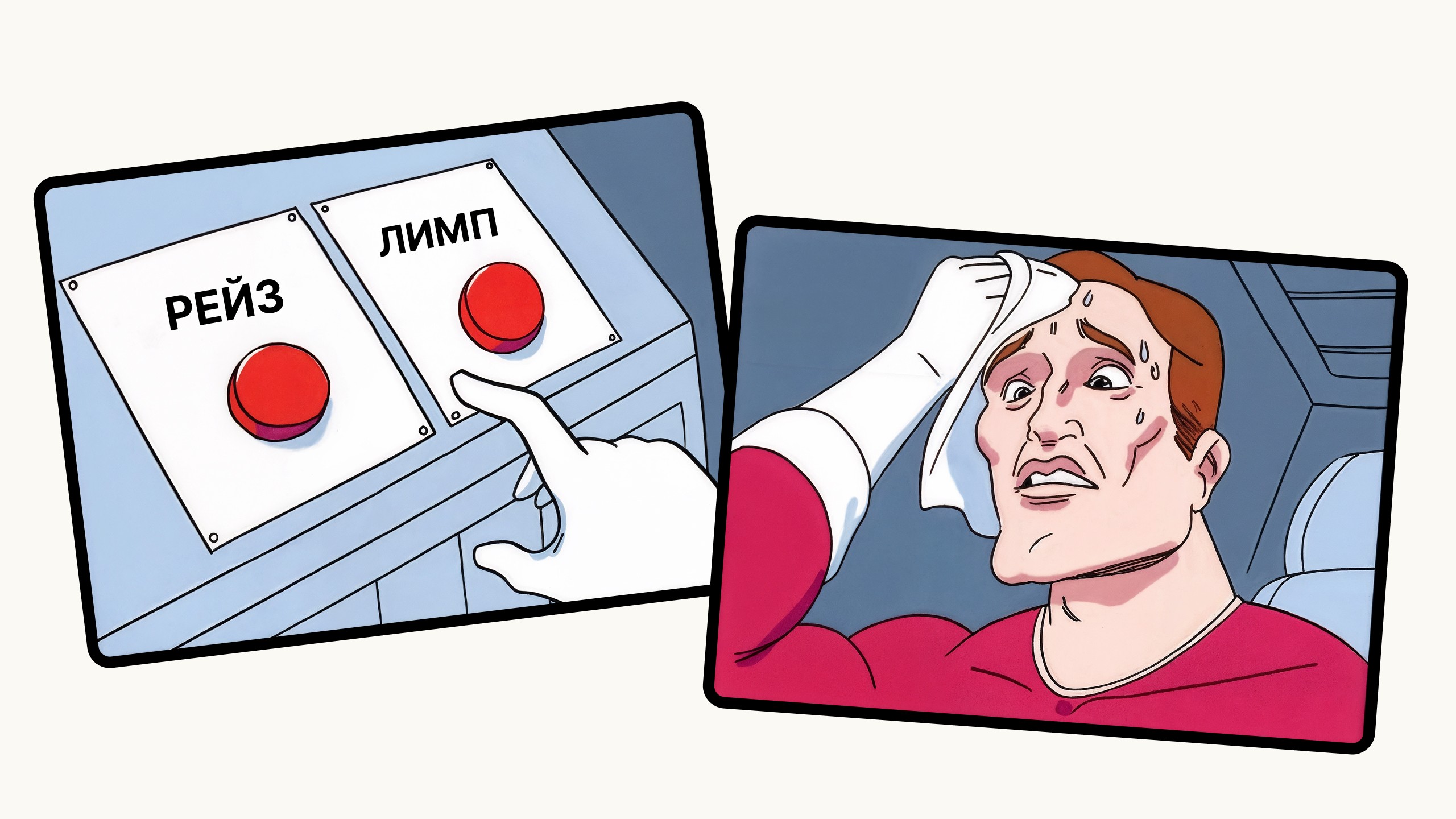
Amateurs love to see flops cheaply. So they often enter the hand with a limp. Professionals understand the pointlessness of the "limp — fold to raise" line and never use it. An additional downside of the move is the lack of initiative on postflop. With a passive action on the preflop, we've shown the opponent that we don't have a strong hand. So they'll easily take down the pot with a bet. To win a tournament or earn a reward for knocking out an opponent, you need to play aggressively and fight for pots.
In exceptional cases, a limp can be beneficial. For example, in a Mystery Bounty tournament at a table with short stacks. If we get a strong hand in early position, we can limp expecting aggression from the "short stacks." However, in most cases, choose a raise or a fold. We covered limping in more detail in another FunFarm article.
Mistake #4: poor blind defense
Good blind play allows you to preserve a working stack longer and avoid moving to push/fold. However, many poker players act conservatively on the SB and BB because they don't know how to play out of position. As a result, opponents on the CO and BTN can profitably raise any two cards. To improve your blind play, widen your 3-bet range against late positions. For example, if you previously only 3-bet JJ+ and AK, add TT+ and AQ. Gradually expand the chart with bluff re-raises using low suited aces and connectors.
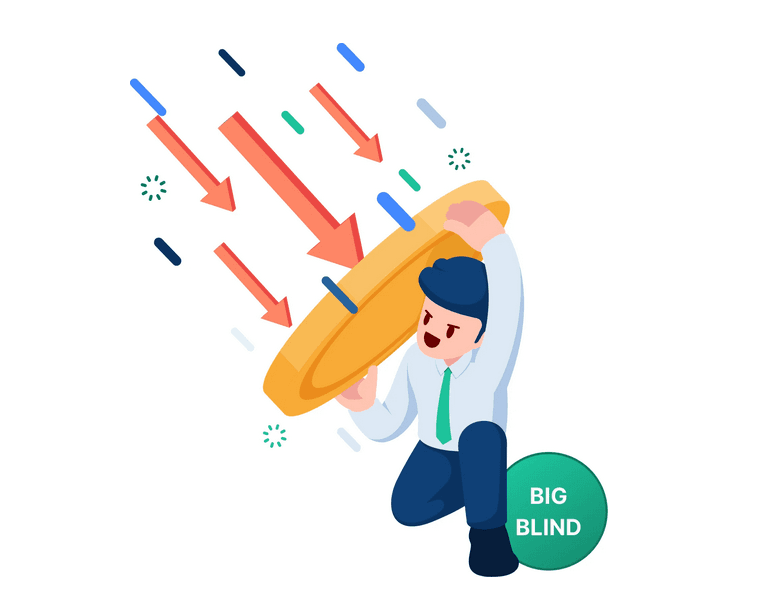
The higher a player's skill level, the wider they defend the big blind
Aggressive 3-bets on the blinds solve 2 problems:
they help win the specific hand;
they force opponents on the CO and BTN to raise more carefully.
Even if an opponent enters the pot facing a re-raise, they'll often fold to a continuation bet.
Mistake #5: failing to steal blinds
In a tournament, it's harder to gather information on opponents than in cash. We know nothing about most opponents at the table. Against unknown players, it's recommended to play reservedly. However, the lack of data combined with poor blind defense makes steals from late positions more attractive. Widen your raising ranges from the CO and BTN. There's no need to go to extremes and steal blinds with any two cards, but raising a few percentage points more can be done without any problems. Regular steals from late positions support your stack and give the player an aggressive reputation.
On platforms with a small online traffic, the percentage of familiar players is higher. Statistical software will help you gain an edge over them. Download and install Hand2Note, PokerTracker 4, Holdem Manager 3, or another tracker. Set up a HUD and add the Fold to Steal stat to it. It will point out suitable situations and opponents for steals. We covered statistical software in more detail in a guide.
Mistake #6: weak push/fold
To win tournaments, you need to know how to play with a short stack. The push/fold stage starts the moment a poker player's stack drops to 15 big blinds. A modest chip reserve leaves the player with 2 options:
go all-in;
fold the hand.
Raises, calls, 3-bets, or limps with a short stack are not allowed. There's also no room for bluffs on postflop. Many poker players don't understand the essence of push/fold and make gross mistakes. Let's break down the most common ones.
Bad pushes and calls. Most players go all-in less often than they should. For example, a poker player knows that with a 6-7 BB stack on the BTN, it's profitable to push any hand with an ace. So with Ax from late position, they'll go all-in without much thought. However, with such a short stack, pushes with mediocre hands like Q2s or 86s are also profitable. Often a player prefers to wait and ignores a +EV action. Poker players also miss out on profitable spots for calls. Closing a push from the small blind with 66 is scary, but there's no opportunity to wait for AA.
Excessive caution. Before the money, many poker players go into a deep shell. No one wants to leave with nothing after 5-6 hours of play. Instead of profitable actions, players wait for opponents to bust. The shift into wait-and-see mode is easy to understand: the lion's share of ROI comes from frequently cashing. Many players also wait it out after the bubble to get a little more money. Once a poker player is in the money, you need to change strategy and build a stack. A win brings far more than an extra 1-2 buy-ins.
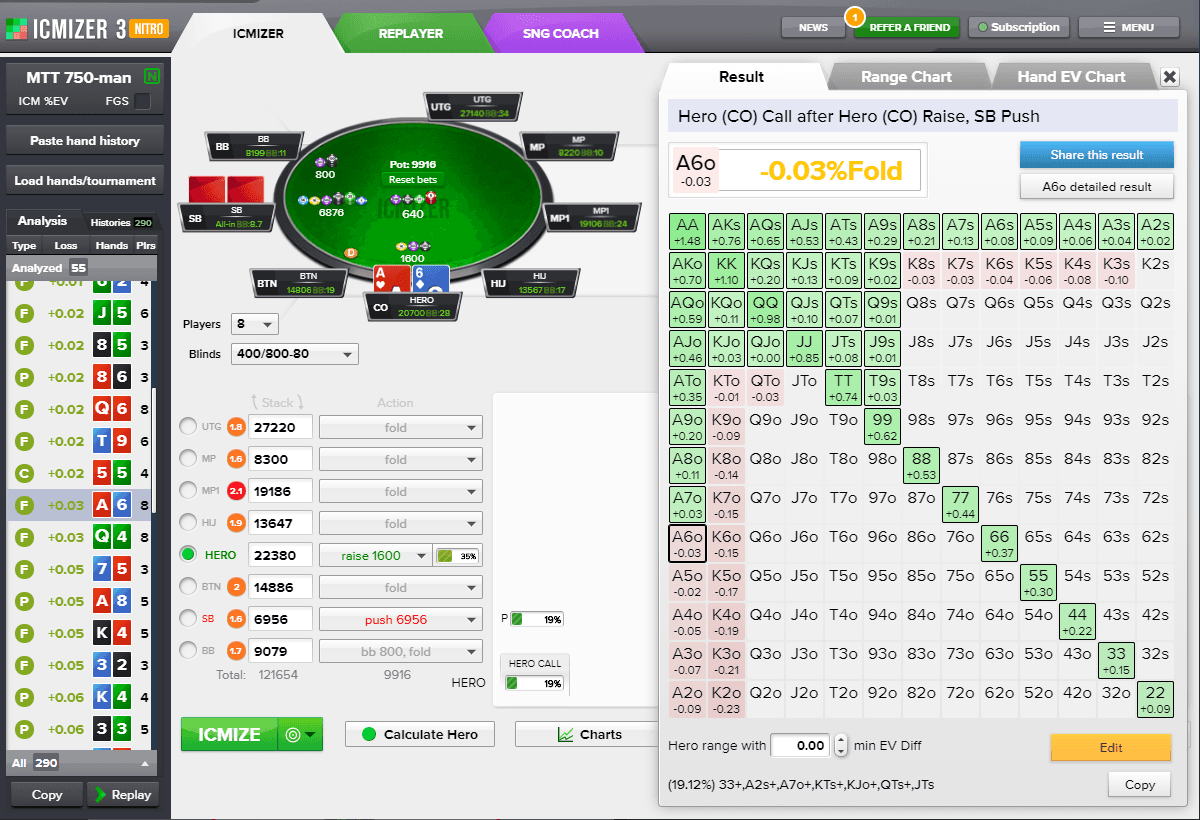
Regular training in software lets you instantly spot profitable spots for a push
Fighting the chip leader. Questionable hands against the chip leader are a common beginner mistake. Remind yourself that losing an all-in will lead to busting from the tournament. A win simply improves your overall situation. Sometimes a poker player should fold any hand, including AA. The classic example is the final table in a satellite. If a chip leader and short stacks remain in the game, give them a chance to sort things out among themselves.
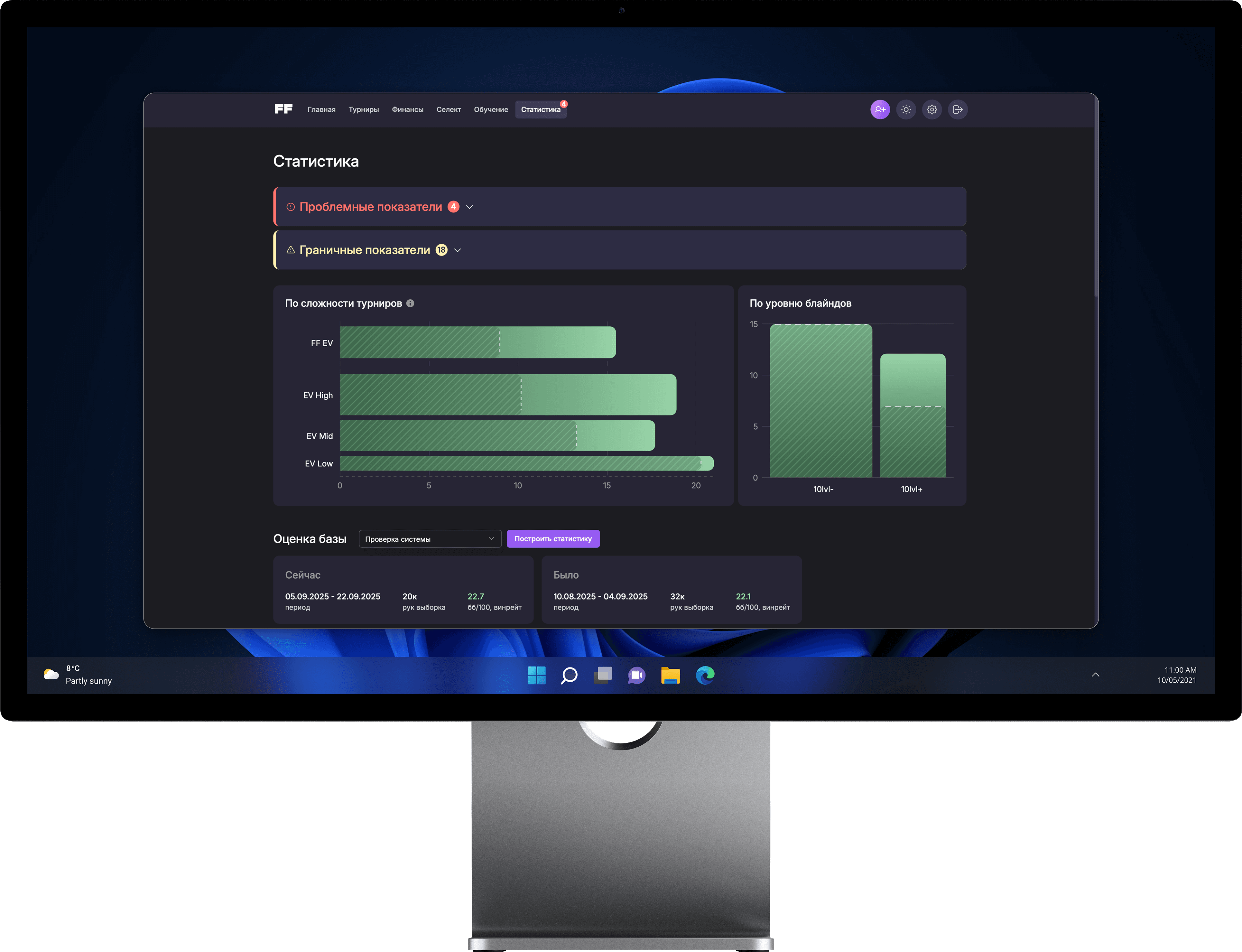
The best way to sharpen your preflop game in poker is training in software. We recommend taking a look at ICMIZER. You can load your hand history into the trainer and review your mistakes. A 7-day trial lets you evaluate ICMIZER for free.
FAQ
What is the preflop in poker?
The preflop is the first betting street in poker. On the preflop, a player: receives a starting hand, assesses its prospects in the hand, and makes a bet. Often the hand doesn't go beyond the first street. For example, all opponents fold their hands and the player on the BB takes the pot. Another way to end a hand on the preflop is to go all-in.
How do you build a chart correctly?
Beginners are advised to take ready-made ranges from qualified coaches. When building a chart, ask yourself: "Will I play this specific hand profitably over the long run?" As their skill level grows, players widen their ranges. For beginners, it's more profitable to play fewer hands.
How do you learn to play push/fold?
Mistakes in the late stage of a tournament are costly. So it's more profitable to sharpen the skill of all-ins in poker software. ICMIZER is the best trainer for this.
Read next
Top 5 Postflop Mistakes in Poker: How to Value Bet and Stop Tilting

How Not to Lose All Your Money: 7 Rules of Bankroll Management
What Freerolls Are in Poker and How to Play Them