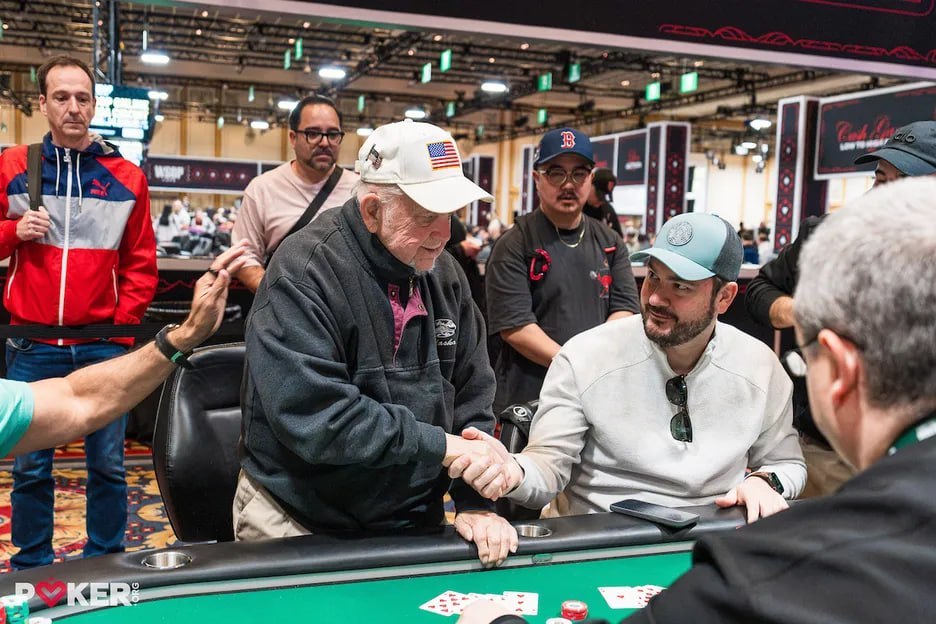
Familiar Tactics That Don't Work at the WSOP
Poker strategy tips from MTT coach Alex Fitzgerald with commentary from FirstFund coach Konstantin Gambler14.

In poker, as in any game, there are levels. Your opponents' skill grows at each one, and the set of tools needed to win becomes ever wider and more complex. The World Series of Poker is, of course, the highest level. And strategies that you can often see and use at local tournaments frequently don't work there. The well-known MTT coach Alex Fitzgerald has talked about five such tactics. We decided to break down his advice and assess how well it would apply to online play. We were helped in this by FirstFund Liga 1 coach and author of the Telegram channel "Neuhodimka," Konstantin Gambler14.
Double-barreling without a plan for the river
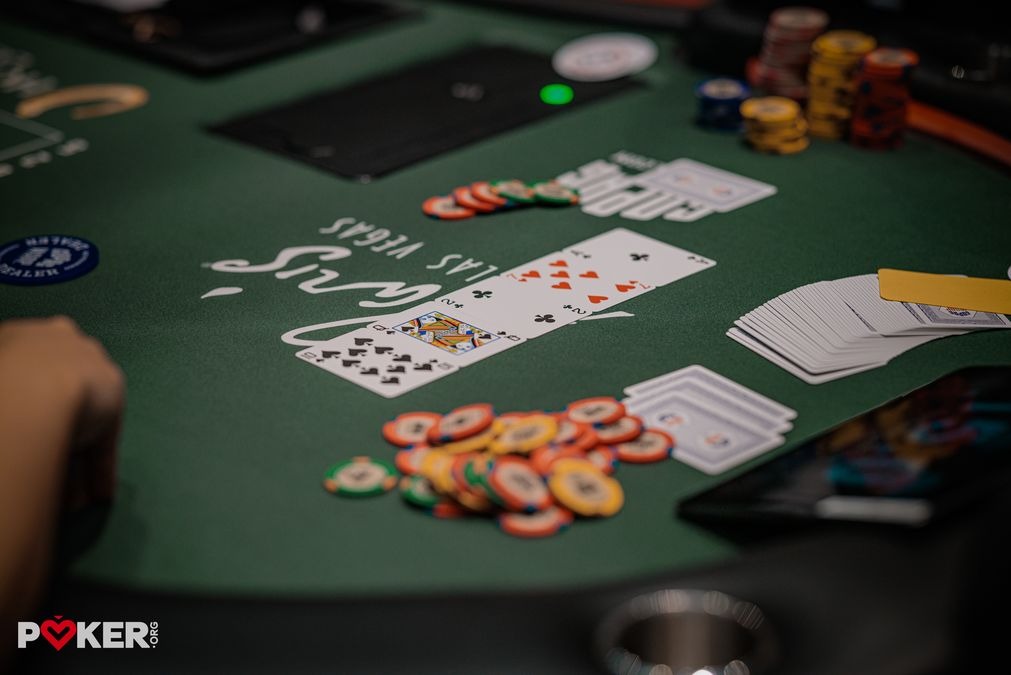
The second barrel is a very common play. And often it works, because players easily call on the flop and then give up after facing another bet. Fitzgerald warns that opponents at the WSOP are ready for double-barreling and will go to the river even with hands that other opponents would fold.
"At the WSOP, the double barrel requires a plan for the river. Either prepare in advance for a triple barrel when the board justifies it, or use a large sizing on the turn, including overbets in the right spots. Otherwise, it's not worth wasting time on standard double-barreling," Fitzgerald writes.
Konstantin Gambler14's commentary:
Without any complex concepts or tracking of frequencies, we can understand purely at showdown that opponents are reading our double barrel. If we're talking about online on a small number of tables, or live, it's advisable to watch opponents' showdowns even if you're not in the hand. Sometimes a tracker helps with this, sometimes the replay button for a played hand in the client.
If we ourselves are already in the hand, then the method is quite simple: if we've bet twice, with the turn bet being fairly large, and then on the river the opponent showed us, after a check-check, a hand we were planning to push out, then we need to reconsider our strategy. We need to "aim" at a certain part of the opponent's range so that we can get feedback if it doesn't work and adjust our approach. You could say the entry level of range management starts right here.
At the same time, double-barreling can still be effective. At low stakes, a standard good spot for continuing aggression on the turn is an overcard hitting the board. For example, you opened on the button, the big blind defended with a call. The flop is Q72, you bet 33%, the opponent called. A king comes on the turn. Here you can bet almost your entire range for 66%-75% of the pot. Simple and effective.
3-betting against everyone in sight
Constant and aggressive 3-betting at local venues often brings players success and money. The reason is that weak opponents respond to it with a call even out of position, miss the flop, and then check-fold. However, more skilled opponents are ready to fight back against such tactics. They'll use both small 4-bets, including as bluffs, and floats and check-raises to reveal your range and shift into pressure on the river. Some will even check-raise on the flop simply to make your life harder.
"Don't start 3-betting right after sitting down at the table. First study your opponents. As soon as you figure out who has the hardest time handling pressure, start widening your 3-betting range," Fitzgerald advises.
Konstantin Gambler14's commentary:
The most common mistakes with 3-betting still remain a lack of aggression and the absence of large bets on suitable boards. At low stakes, just like at high stakes, this play will only be effective on the condition that you observe your opponents. At low stakes, people generally don't much like folding, so it's not very good for the bluff part of our range. It's better to concentrate on 3-bets with the "top" of the range and direct, clear aggression postflop.
If you're at the very start of your poker journey, it's better to choose situations where you won't have tough decisions and you'll get the maximum number of preflop folds to the 3-bet. Frequent 3-bets from the big blind against the button work great. People will always open extra hands from there, and since poker is, after all, a limited number of combinations, an increase in the number of preflop raises will automatically be followed by increased folds to the 3-bet.
Predictable pot control
At local venues, checking on the turn with a medium-strength hand in position works great. Opponents start thinking you have nothing and even bluff big with trash cards. Here you call and take the pot. However, at WSOP-level tournaments, opponents perfectly understand what such a check means. If you check on a draw-heavy board, they'll realize that you most likely don't have sets, two pairs, or overpairs. With the right blocker, they can overbet on the river, putting you in a very difficult position.
"Sometimes the lesser of two evils is a bet on the turn. It's better to try making a thin value bet with a slightly increased sizing than to check and end up facing a tough decision on the river," Fitzgerald advises.
Konstantin Gambler14's commentary:
Pot control via a check remains justified when our hand isn't ready for three streets of value and is afraid of raises on the flop, either because of the board texture or because of an overly aggressive opponent. It's better to play a check than a bet-fold with a hand that will often be good enough to continue.
Personally, I determine pot-control tactics based on the hand's equity against the opponent's assumed range, but for beginners this isn't the most suitable method. Intuitively, already on the flop we should decide for ourselves how much our hand is worth and which scenarios we want to end up in. Is the hand ready for three streets and can it hold a raise? Then we definitely bet. Not ready, but can pick off bluffs after pot control? Suitable for a check in position.
The more draw-heavy the board, the more often we want to protect our medium hands with bets. In other words, the vulnerability of our combination matters to us. If the texture is completely dry, then we check all medium hands on the turn with the intention of picking off the opponent's river bluff if we started the flop with a small bet. In this situation, after a turn check, we can in principle call any hand on the river that can beat bluffs.
Automatic hero folds
At local tournaments, players generally don't bluff often enough. If someone is playing a big pot, using a triple barrel, overbets, or raises in a multiway pot, it usually means they really do have a strong hand. And in such situations you can confidently fold. However, top-class players are ready to gamble and force their opponents into tough spots. When playing against such opponents, you shouldn't assume that they make every big bet for value.
"You need to watch people carefully. Do they get nervous when they bluff? Are they relaxed when they have a strong hand? What do they show at showdown? Are they capable of a semi-bluff? You need to get evidence before making a big fold," Fitzgerald advises.
Konstantin Gambler14's commentary:
— Players really do under-bluff, but only in expensive pots. In small and medium ones, people bluff quite a lot. Of course, offline they bluff much less often on average, but there they more often overestimate the strength of their hand. For example, they might bet for value across three streets with something that can usually only be bet on two.
My advice is to play your own game; people are too wrapped up in themselves, they won't adjust to you specifically all that much. So we keep folding with discipline.
Aggressive check-raising from the big blind
A check-raise from the big blind can surprise your opponents at local tournaments. They're not used to such aggression, so they use this tactic almost unsystematically, adding bets on later streets and collecting folds. However, WSOP-level regulars know this play perfectly well and know how to counter it. They'll call the check-raise more often and do it more thinly. And here a well-executed 3-bet comes to your aid, helping you continue putting pressure on opponents.
"Add more large 3-bets from the big blind. Fewer players have experience fighting against this strategy, and many will assume that your range is stronger than it actually is," Fitzgerald writes.
Konstantin Gambler14's commentary:
At low stakes it's all the same as with 3-bets — people generally don't much like folding. So check-raises still remain a very effective play, only with good hands rather than with bluffs. They build the pot up nicely.
Fitzgerald's advice to 3-bet is geared toward live games, where people play a bit differently. At low stakes, the most profitable strategy is good extraction with value hands. It's boring, but effective.
Conclusion
In conclusion, we asked Konstantin Gambler14 to evaluate all of Alex Fitzgerald's advice. To sum it up briefly, the tactics the American MTT coach offers are nonetheless designed for live games, which differ from online tournaments. They can be adopted even by beginners, but you shouldn't expect them to become the ultimate weapon against opponents online.
Alex writes for offline amateurs who come to the WSOP simply to have a good time. Naturally, this is by no means professional analytics or advice for aspiring professionals. His target audience is a dentist from Michigan who plays in the evenings with friends and comes to Vegas to play over the weekend. He hits that specific group perfectly, so I agree with all the statements. However, poker in Vegas is currently 5-7 years behind European online rooms. That said, for the entry level the listed tactics can still be useful. But not online, of course.
Read next
The World Series has kicked off in Las Vegas: digest May 26–31

The Best Poker Documentaries Worth Watching
The Most Important WSOP 2026 Events