The Silent Enemy at the Table: How Low Self-Esteem Quietly Eats Away at Your Winrate
Together with FunFarm psychologist Tatyana Barchukova, we broke down how hidden self-esteem issues sink even strong regulars, and laid out a step-by-step protection plan for before, during, and after a session.
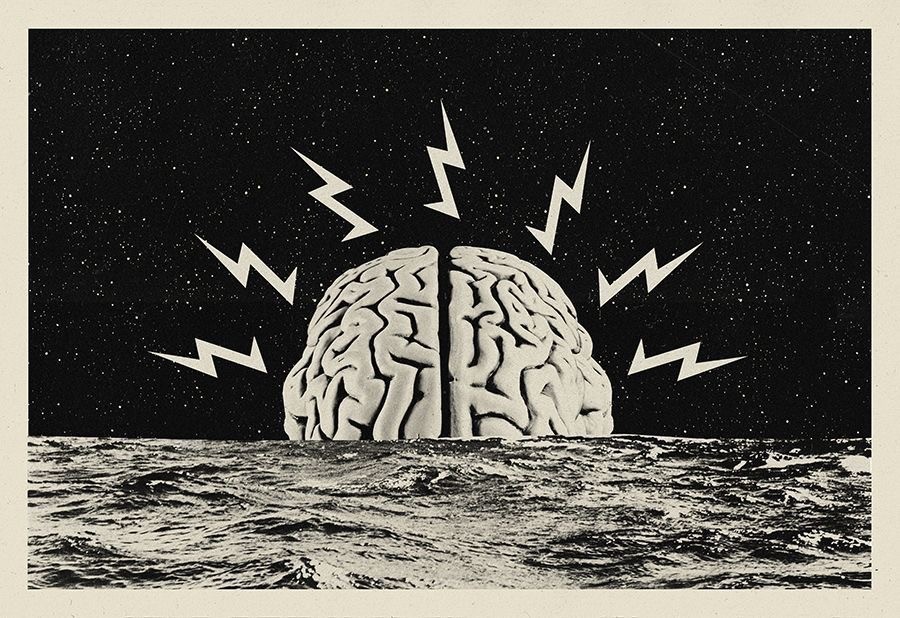
Confidence at the poker table is an invisible green light for decisive action. The moment it drops, hidden fear starts dictating losing decisions. We're figuring out how to protect your winrate and turn your mindset into a working tool.
We're exploring this topic together with Tatiana Barchukova — a social psychologist and head of the FF mental support department.
Confidence is fuel
Confidence is a fundamental component of playing poker. It's so fundamental that we usually don't notice its presence at all and rarely ask ourselves: "How confident am I right now?" An acute emotion like rage or resentment is easy to catch in the act. Confidence, however, operates covertly: we don't think about it, but it dictates our decisions every second. When you have it, you feel: "Okay, I understand the situation and I know what I'm doing." But the moment it disappears, your game falls apart. Without it, you won't go for a tough bluff, won't deliver a thin value bet, and won't be able to rely on your own logic in a difficult moment.
Overconfidence is a rare beast
Yes, blind overconfidence exists. It's perfectly described by the Dunning–Kruger effect: a beginner is just starting to get into poker, catches their first upswing, and an illusion is born: "That's it, I've got it figured out, there's nothing complicated here." Such players are often found at the microstakes. They look down on the field, are skeptical of training, and ignore bankroll management. As a result, without working on theory, their progress comes to a complete halt, and they spend years stuck in the same place. But all of this works until the first setback. As soon as a prolonged downswing begins, the player is swept into endless tilt. And because of their false confidence in their own infallibility, they blame the downswing not on themselves, but on external factors: an unfair RNG, bad software, or the stupidity of their opponents.
Much more often, the picture is the exact opposite. Poker is full of regulars who objectively know and can do far more than they think of themselves. They don't allow themselves to lean on their own experience, endlessly doubt the decisions they've made, and spend years stuck in impostor syndrome and low self-esteem.
The roots of this problem lie deep within our mentality. Most of us grew up in a cultural paradigm of "meeting standards," where from childhood we were taught to notice mistakes rather than to lean on our strengths. As a result, this anxiety about our own competence has taken root so deeply that, even with a strong knowledge base and a winning strategy in hand, a player subconsciously keeps looking for flaws in their actions.
The silent enemy at the table
Low self-confidence is an exhausting background feeling that imperceptibly influences every decision you make at the table. When you don't trust yourself, you unconsciously start playing too tight and break your own lines at the worst possible moment. This is exactly why many players, when reviewing their live-session recordings, can't logically explain their own actions — in the moment they were driven by hidden fear.
In moments like these, a fundamental cognitive bias kicks in — loss aversion. Its essence is that our subconscious motivation to "avoid losing" is much stronger than the rational desire to "win." You act against strategy not because you read the situation differently, but simply because your brain is trying to protect you from the pain of loss. And losing a hand hurts not so much your bankroll as it destroys your ego as a player.
In a calm setting, while studying theory, you understand perfectly well which action will be +EV. But at the table, in the moment, a subconscious fear of making a mistake kicks in. It instantly paralyzes your logic and forces the rational part of your thinking to "rig" the arguments in favor of a safer but losing action.
As a result, you don't show your real level. Not because you can't, but because you don't trust yourself enough to act.
When your confidence is knocked out right at the table
There's another scenario, one that unfolds right during a session. You get run over hard, your big bluff gets snapped off, or you get publicly outclassed in a tough hand. If your inner confidence was shaky even before this, a single such episode is enough to destroy it completely.
What happens next? The brain instantly switches into unconscious self-esteem recovery mode. You subconsciously strive to prove to the table and to yourself that you're no dumber than the rest. Or to prove your competence to a complete stranger from the other side of the planet — but at the cost of your own blinds and your long run. You start overcalling, unjustifiably defending weak hands, and making desperate attempts to catch an opponent bluffing where there is no bluff. You act against strategy, driven by a single goal — to recover the feeling of "I'm right anyway."
This is the tilt of a wounded ego. It's mixed not with blind rage, but with a desperate need to reclaim your status as a good player. And it breaks your game no less effectively than a classic emotional explosion.
What to do about it
Before the session: get yourself into optimal battle condition.
This is a specific task, not just "get yourself in the zone." And it has working tools.
Physiology. Your brain won't fire on all cylinders if you've just slid off the couch and immediately opened up the tables. You need a physical marker of the start. A short burst of activity — squats, push-ups, stretching — boosts blood flow and saturates the brain with oxygen. This switches your autonomic nervous system into mobilization mode, reducing background anxiety, and directly affects your confidence.
Visualization. A poker player's psyche is battered by variance. To restore confidence, before a session you need to deliberately recall your successful experiences: a perfectly executed bluff, your best cash, or a winning final table. The brain instantly reproduces the emotional imprint of triumph. You sit down at the tables not with a victim's mindset, but from a position of strength.
After the session: assess yourself honestly and separately
The key marker of professionalism is the ability to separate the result of your game from its quality. Assess every session by three independent criteria. If you mix them all together, your subconscious will start to lie: a random win will look like perfect play, while a losing session caused by variance will devalue quality decisions.
Self-control. How did your mental state change? It's impossible to play an entire session in flawless A-game. A professional is distinguished by the ability to notice a dip in concentration in time. They clearly register when they're slipping into mediocre B-game or destructive C-game, and switch modes in time if the situation at the table calls for it.
Important to remember: you can be free of anger and yet still be thinking at half capacity.
Quality of decisions. Assess your actions in isolation from the money. Did you trust your own logic? Did you clearly follow your chosen strategy, or did you break your lines under the influence of fear?
Financial result. Assess this separately and as dryly as possible. If you did everything right but the session ended in the red — that's a normal manifestation of variance. But if the loss was the result of bad decisions, you need to admit it, rather than hiding behind the stock phrase "but at least I played well."
Conclusion
Poker is a brutal environment for the human ego. It's impossible to build rock-solid, permanently stable confidence here. The variance factor is too great, and over the short run it can be damn hard to separate the influence of pure luck from your real professionalism.
That's exactly why confidence in poker has to transform from a shaky emotional feeling into a manageable working tool. You don't need to strive to "be confident" as some kind of constant, unbreakable state. Something else matters more: consciously bringing yourself to the right mental point, holding it in the moment, and honestly registering where you are right now.
Read next

Familiar Tactics That Don't Work at the WSOP

The World Series has kicked off in Las Vegas: digest May 26–31

The Best Poker Documentaries Worth Watching