What is tilt and how do you fight it?
Tilt is the number one reason players lose at poker. Our psychology guide will explain how to recognize the signs of tilt, get out of it, and keep a clear head.

Anyone who has played poker for more than a day knows the feeling: a frustrating loss with the better hand, followed by a string of wild and costly mistakes. This state is called tilt, and it's the main enemy of your bankroll — far more dangerous than any strong opponent. The good news: it can and should be controlled. This guide will show you how.
What is tilt in poker?
Definition: Tilt is an emotional or psychological state in which a player loses self-control and starts deviating from their optimal strategy because of frustration, anger, stress, or even excessive joy.
The main danger: When you're on tilt, you stop making decisions based on logic and math and start playing on emotion, which almost always leads to quick and heavy losses.
Tilt triggers: know your enemy
This section will help a player identify the causes of their condition.
Bad Beats
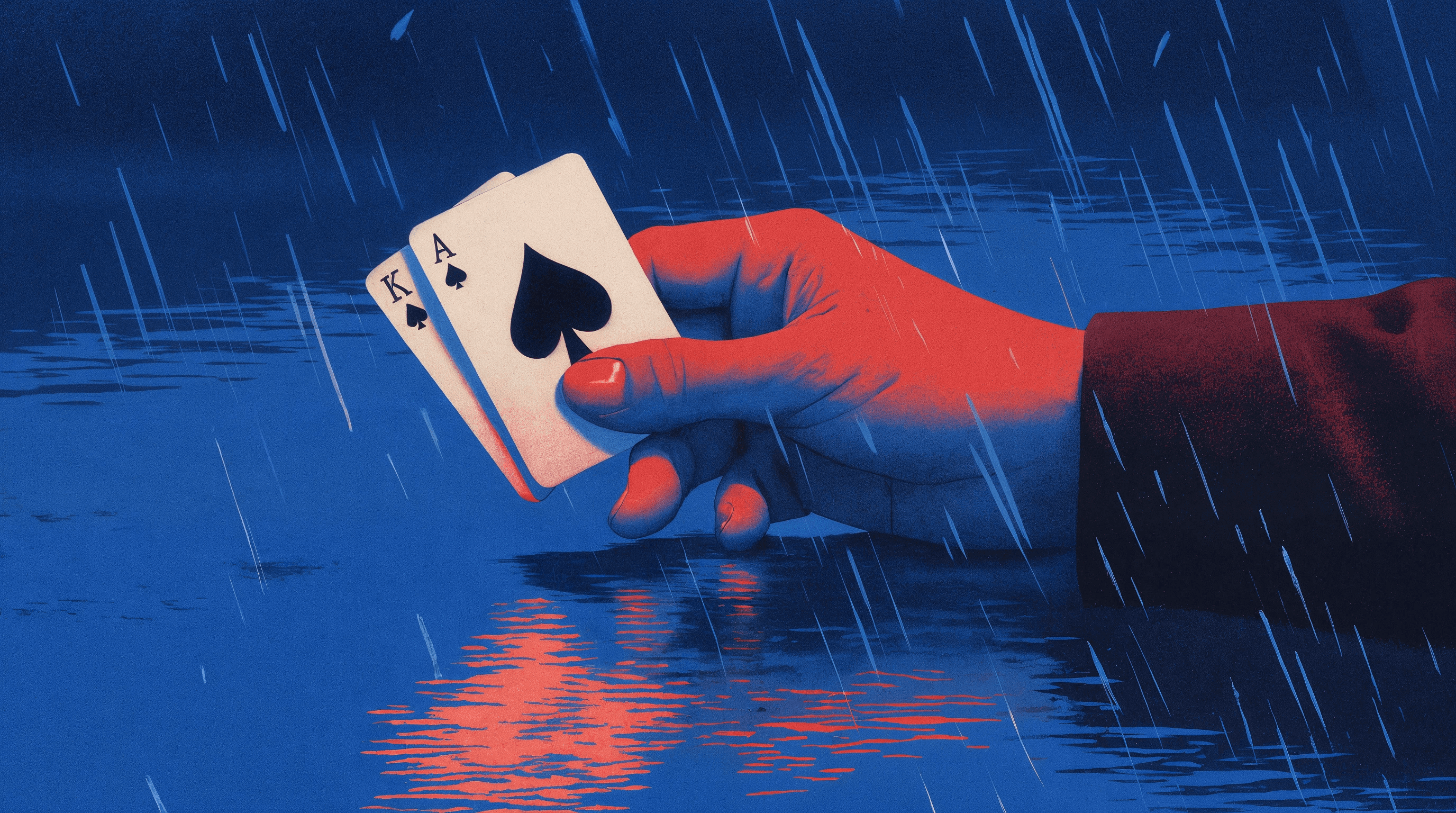
The most common trigger. Losing a hand in which you were a huge favorite to win. For example, your A-A loses to K-K when a king comes on the river.
Coolers
Losing a very strong hand to an even stronger one. For example, your full house loses to your opponent's quads. In such situations there was almost no way to avoid the loss, which creates a feeling of injustice.
Opponents' mistakes
Paradoxically, you can go on tilt when a very weak player makes an illogical call and "gets there" on their random card, beating you.
Fatigue and external factors
Lack of sleep, problems outside of poker, hunger — all of these reduce your capacity for self-control and make you more vulnerable to tilt.
How to deal with tilt — advice from a psychologist
Method #1: Recognizing the early signs
Physical signs: Rapid heartbeat, flushed face, tense muscles.
Mental signs: Thoughts like "I'm always unlucky," "I have to win it back," the urge to play every hand, increasing your bet sizes. The ability to notice these signs is the first step to control.
Method #2: The "Stop-Loss Rule"
The most reliable technical approach. Decide in advance on a loss limit for a single session (for example, 3 or 5 buy-ins). As soon as you reach it — immediately and without exception, close the tables.
Method #3: The "Step Back" technique
Feel yourself boiling over after a bad beat? Don't start the next hand. Get up from the table for 5–10 minutes. Wash your face, get some fresh air, drink some water. A physical break from the game helps break the emotional cycle.
Method #4: Logical self-analysis
Ask yourself: "Is my current decision based on my long-term strategy, or on the desire to win it back right now?" By asking this question, you engage the logical part of your brain, which suppresses emotional outbursts.
Method #5: Tilt prevention
The best cure is prevention. Never sit down to play tired, hungry, or in a bad mood. Regular physical exercise and healthy sleep significantly increase your resistance to tilt.
Tilt isn't a death sentence, but a challenge
Fighting tilt is just as much a poker skill as counting outs or reading ranges. It can and should be trained. A player who has mastered their emotions has an enormous edge over the field.
Working on your psychology is just as important as studying strategy. When your mind is clear, you can apply all your knowledge as effectively as possible. Our FF Start course includes modules not only on gameplay technique, but also on the psychological preparation needed for steady growth.
FAQ
Is there such a thing as "positive" tilt?
Yes, it's called "winner's tilt." After winning a big pot, a player can feel invincible, start playing too many hands and taking unjustified risks, quickly losing what they won.
Do professionals go on tilt?
Yes, absolutely everyone does. The difference is that professionals know how to recognize tilt at the earliest stage and apply proven techniques to stop it, minimizing losses.
Read next
Royal Flush: the strongest hand in poker

Emotional Intelligence: The Hidden Edge You Won't Find in GTO Charts
Four-Color Deck: A Cognitive Advantage for the Professional Player