# How to Play Texas Hold'em: A Complete Rules Guide for Beginners
Want to learn how to play Texas Hold'em? Our complete guide explains all the rules from A to Z in 10 minutes. Perfect for beginners!

Welcome to the world of the most popular card game on the planet! Millions of people, from Hollywood stars to financial geniuses, love Texas Hold'em for its unique blend of luck, skill, and psychology. At first glance, the game may seem complicated, but don't worry. This is the most complete and clear step-by-step guide, after reading which you'll confidently know the rules of Texas Hold'em and be able to play your first hand.
The goal of the game and basic concepts
Before we dive into the flow of the game, let's establish the main goal and basic terminology.
The goal of the game: Win the pot. The pot is all the chips that players have wagered during the hand. You can achieve this goal in two ways:
Make the best five-card hand at showdown.
Make all your opponents fold their cards before showdown.
Chips: The game money used for betting.
Pot: The total of all chips wagered by players in a single hand.
Hand: The complete cycle of play from the deal to determining the winner.
Step 1: Table positions and the dealer's role (Button)
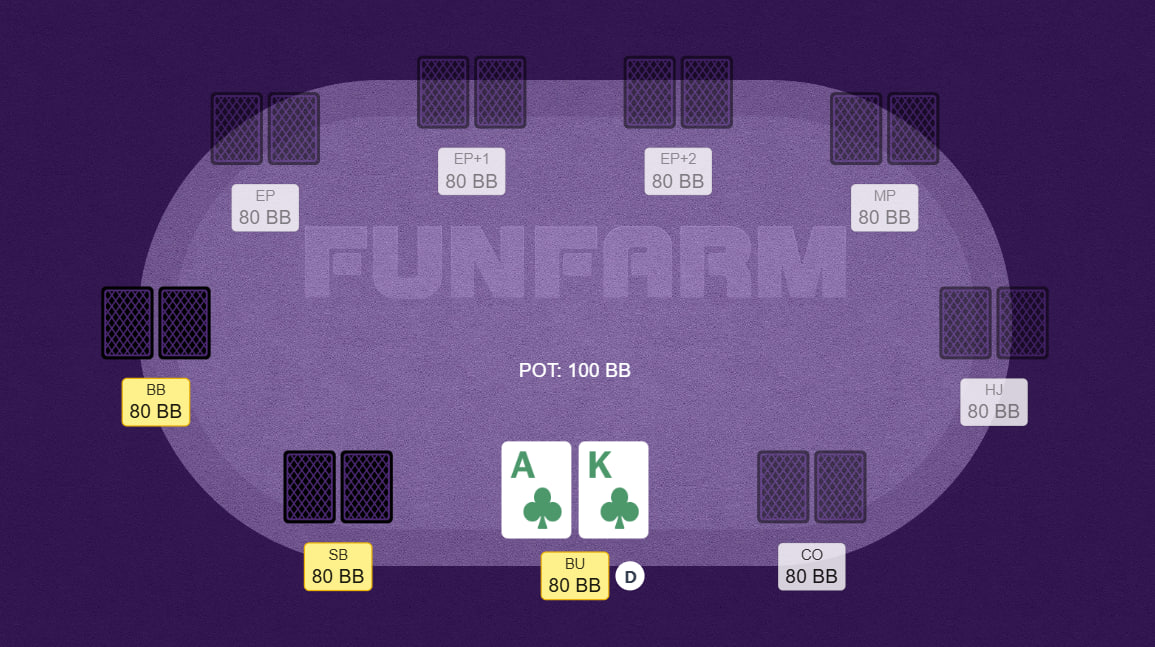
The order of action in poker is hugely important. It's determined by the players' positions relative to the dealer chip — the button. Play always goes clockwise.
Button (Button, D): A white chip with the letter "D". It only indicates the nominal dealer in the hand and determines the order of betting. After each hand, the button moves one player clockwise.
Small Blind (SB): The next player clockwise from the button.
Big Blind (BB): The second player clockwise from the button.
Step 2: Forced bets (Blinds)
So that there's always money in the pot and players have an incentive to fight for it, Hold'em has forced bets made blind — the blinds in poker. They are posted by the two players to the left of the button before they even see their cards.
The small blind (SB) posts half of the minimum bet.
The big blind (BB) posts the full minimum bet.
For example, at a tournament blind level of 100/200, the small blind posts 100 chips and the big blind posts 200.
Step 3: Dealing the cards
Once the blinds are posted, the dealer deals each player two cards face down. These cards are called "hole cards" or "starting cards". Only you can see them. All the play that follows is built around the strength of these two cards and how they combine with the community cards on the table.

Step 4: Rounds of betting – How the game flows
This is the heart of the game. The entire order of play in poker is divided into four rounds of betting, or "streets".
1. Preflop (Pre-flop) – The first round of betting
This is the first betting round, which happens right after the hole cards are dealt. The first to act is the player sitting to the left of the big blind. They have three options:
Fold: Discard your cards. You're no longer in the hand.
Call: Match the previous bet (preflop — the amount of the big blind). This action is also called a "limp", and for beginners this strategy is highly not recommended.
Raise: Increase the bet. The minimum raise is usually equal to two big blinds.
Betting continues around the table until all active players have matched the highest bet or folded.

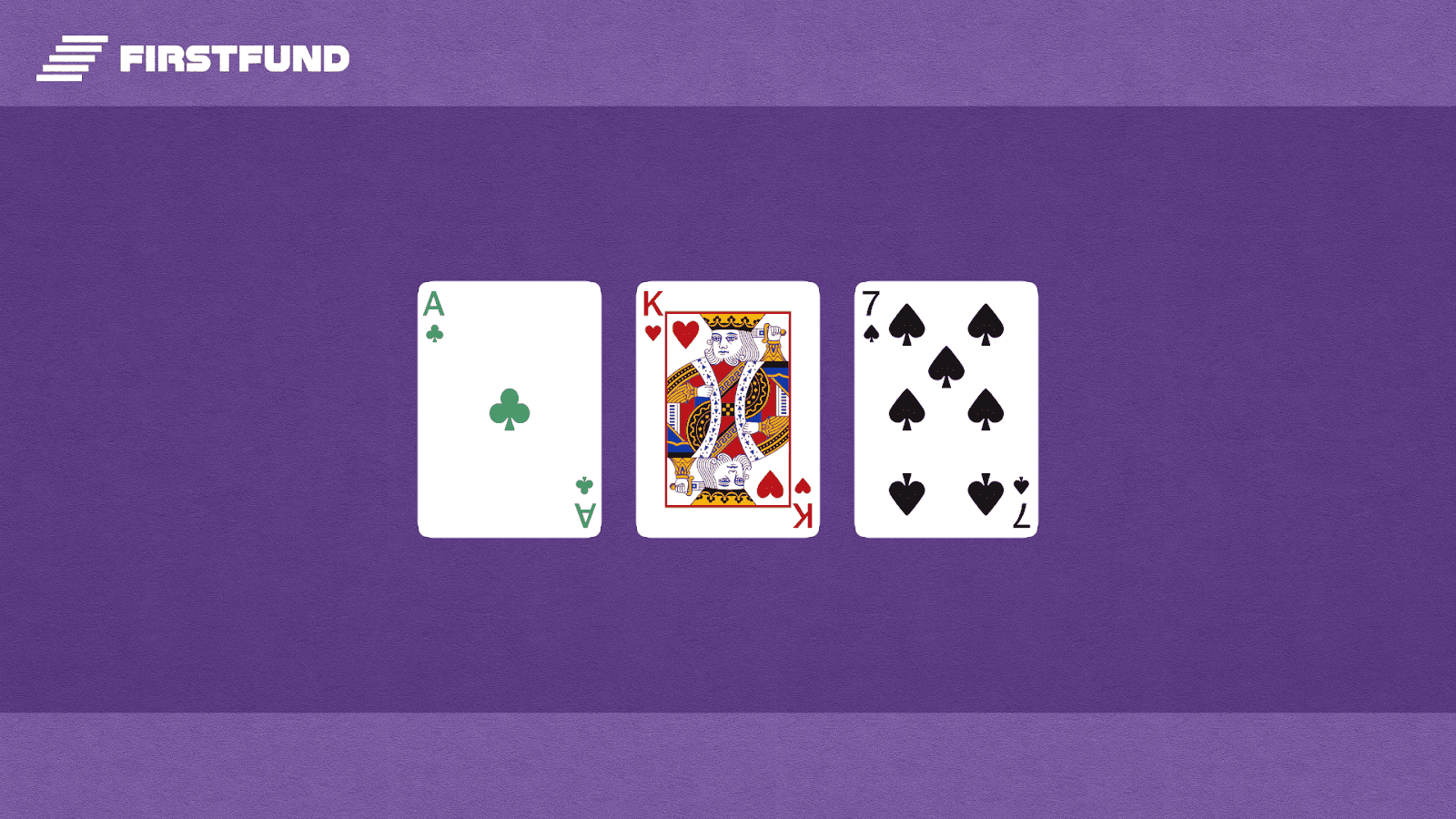
2. Flop (Flop) – Three community cards
When the first betting round is finished, the dealer "burns" a card (removes the top card of the deck face down — this applies to offline poker as protection against cheating) and lays three community cards face up on the table. This is the flop.
The second betting round begins. The first to act is the player on the small blind. Now players have a new action: Check — pass the action to the next player. This is only possible if no one before you in this betting round has made a bet. If someone has bet, the "Check" option disappears, and you can only choose Fold, Call, or Raise.
3. Turn (Turn) – The fourth community card
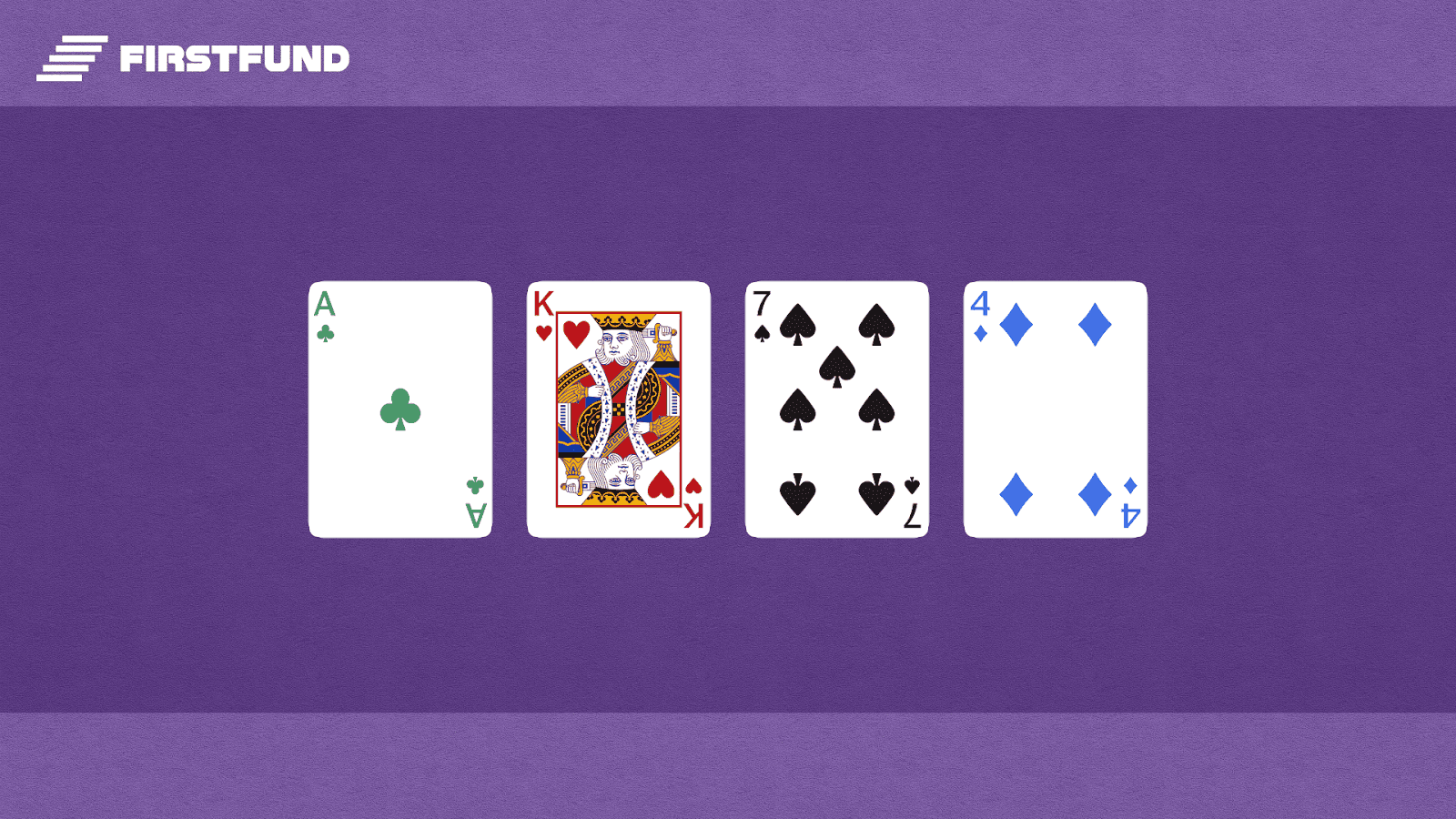
Again a card is burned (offline), and the fourth community card is laid on the table — the turn. The third betting round takes place under the same rules as on the flop.
4. River (River) – The fifth community card
The last, fifth community card is laid on the table — the river. The final betting round takes place.
Step 5: The showdown
If two or more players remain in the game after the river, the showdown takes place.
Who shows their cards first? The first to show their cards is the one who made the last aggressive action (a bet or raise) on the last active betting street. If everyone checked on the river, the first to show is the player to the left of the button.
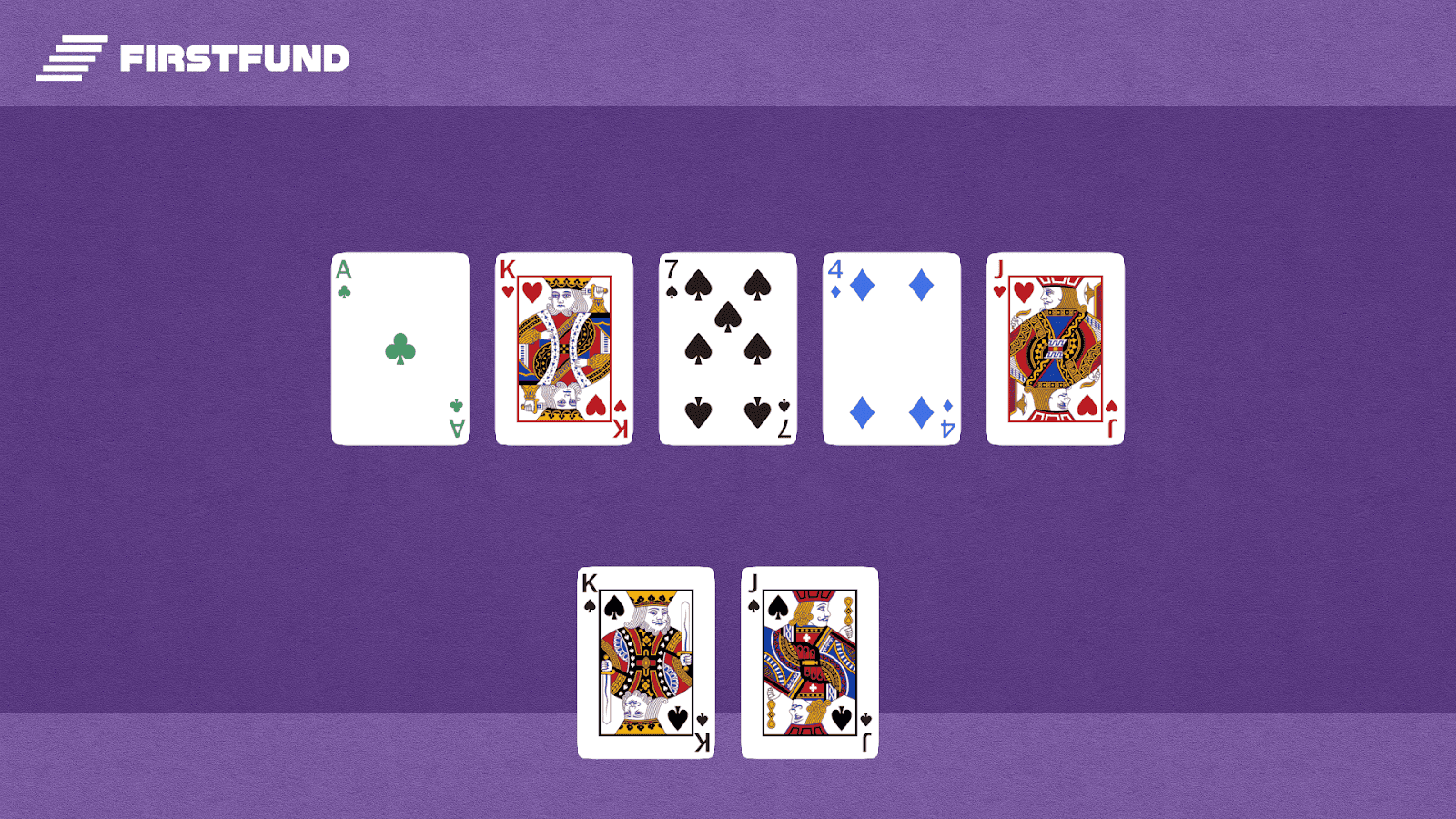
How is the winner determined? Each player makes the best five-card hand using any 5 of the 7 available cards (2 hole cards and 5 community cards). The player with the strongest hand wins the pot.
The importance of the kicker: If two players have the same hand, the winner is determined by the rank of the next card — the kicker.
Key rules and poker etiquette
Act in turn. Acting prematurely can give information to other players.
Don't show your cards. Until the showdown, your cards are a secret.
Keep your chips in view (applies offline). Your chips should be in neat stacks in front of you.
Don't discuss the hand. Until the hand is over, refrain from commenting.
Rules learned! What's next?
Congratulations! Now you know all the basic rules of Texas Hold'em and are ready for your first game. You understand the flow of a hand, know all the possible actions, and can determine the winner at showdown.
But knowing the rules is only the first step. Real poker begins when you learn to make the right strategic decisions. Our article "Starting Hand Chart: Which hands to play preflop?" will become your first strategic tool. And for those who want to dive headfirst into poker under the guidance of a coach, we created the FF Start course.
FAQ
What is all-in?
It's a bet of all your chips. You can either bet all your chips yourself, or make a call for an amount equal to your stack if your opponent's bet is larger.
Can my hole cards not matter?
Yes. If the best five-card hand is made from the five cards on the table (for example, there's a Royal Flush on the board), then your hole cards don't matter, and the pot is split among all players in the hand.
What happens if several players have the same hand?
If the five-card hands (including all kickers) are completely identical, the pot is split equally among those players (split pot).
How many chips do you need to play?
The amount of chips you sit down at the table with is called your stack. Every tournament has its own starting stack, and it's the same for all players at the start.
Read next

Bankroll Management in Poker: A Guide to Managing Your Money
Boards in Poker: A Complete Guide for Beginners
What is a starting-hand chart and why do you need it?