The Flop in Poker: How to Read the Board and Win Postflop
In poker, a great many mistakes start not on the river or even on the turn, but right after the first three community cards come out. A player sees the flop, notices a pair, a draw, or just a decent spot — and starts acting without figuring out how this board interacts with their range and the opponent's range.
This is exactly why the flop in poker is considered one of the most important streets of the entire hand. This is where, for the first time, enough information appears to move from general preflop logic* to a more precise postflop strategy*. We can already see the board texture, assess who connected better with the board, who has more strong hands, where aggression is appropriate, and where it's more profitable to play it safer for your stack.
In this article, we'll break down what the flop in poker is, how the order of action changes after the community cards come out, why board texture has such a strong influence on strategy, and how to play the flop so that you make decisions based not on feelings but on the logic of the hand.
*Board — the community cards on the table that are available to all players and used to form a combination.
*Range — the set of possible hands with which a player can take a specific action in a hand.
*Preflop — the first stage of the hand before the community cards come out, when players act only with their hole cards.
*Postflop — all stages of the hand after the flop comes out: flop, turn, and river.
What the flop in poker is and why this street matters so much
Formally speaking, the flop in poker is the second stage of the hand after the preflop and the first street of postflop play. After the first round of betting, three community cards are placed on the table at once, and each participant in the hand can use them together with their two hole cards to make a combination.
The order of streets in a hand looks like this:
preflop → flop → turn → river → showdown
And although formally there are still two more streets ahead, it's the flop that most often sets the direction for the entire hand. This is where a player first gets enough information to assess whether they connected with the board, what strong hands the opponent can represent, how many draws* exist, and what the further postflop strategy will look like.
This is what makes the flop the central point of the hand. Before it, players act mostly based on starting hands and preflop ranges. After it, more precise work begins: you need to match up board texture, ranges, pot size, position, and likely continuation lines.
*Draw — an unmade hand that is missing one or two cards to complete a strong combination (for example, a straight or a flush).
Who bets first on the flop
On the flop, the order of action changes compared to the preflop. While before the community cards come out the first to act is the player to the left of the big blind, on the postflop the first to make a decision is the player to the left of the button. In practice, this means that if the small blind is still in the hand, it's the small blind who will act first on the flop, turn, and river.
To orient yourself quickly, you need to keep track of the dealer button. It shows where the BTN position is. The player to the left of the button starts the action on the postflop, while the button itself gets a positional advantage and acts last.
This is exactly why the button is considered the most advantageous position on the postflop. The player in position gets to see the opponents' actions, assess their bet sizes, the frequency of their checks, and the overall line of play. This information directly affects the quality of decisions. On the flop, position is especially important because players don't yet have enough data about each other's hand strength, and the ability to act last noticeably simplifies strategy.
Flop texture: what dry and wet boards are

When we talk about the flop in poker, we almost always talk about board texture as well. The board is the community cards on the table. Their structure determines how easily players connect with the board, make a strong hand, or continue the hand with a draw.
The most basic division is into dry and coordinated textures.
A dry board is a board on which the cards are weakly connected to each other, don't provide a large number of draws, and rarely allow the opponent to have a strong continuation.
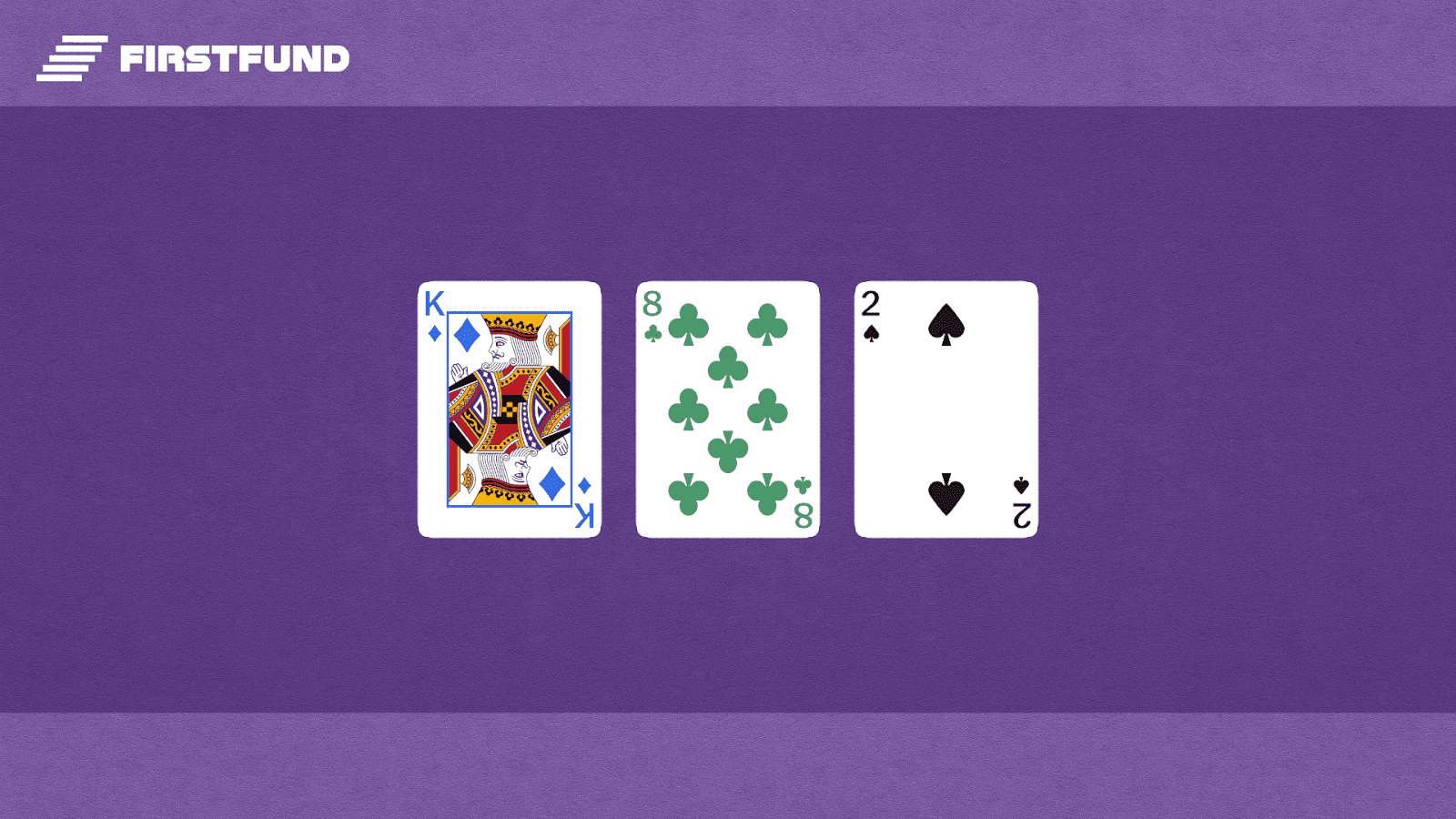
On such a texture, ranges miss more often, which means the preflop aggressor gets good conditions for a c-bet.
A coordinated flop is a board with many potential continuations: straight draws, flush draws, two pairs, sets, strong top pairs, and various combo draws.
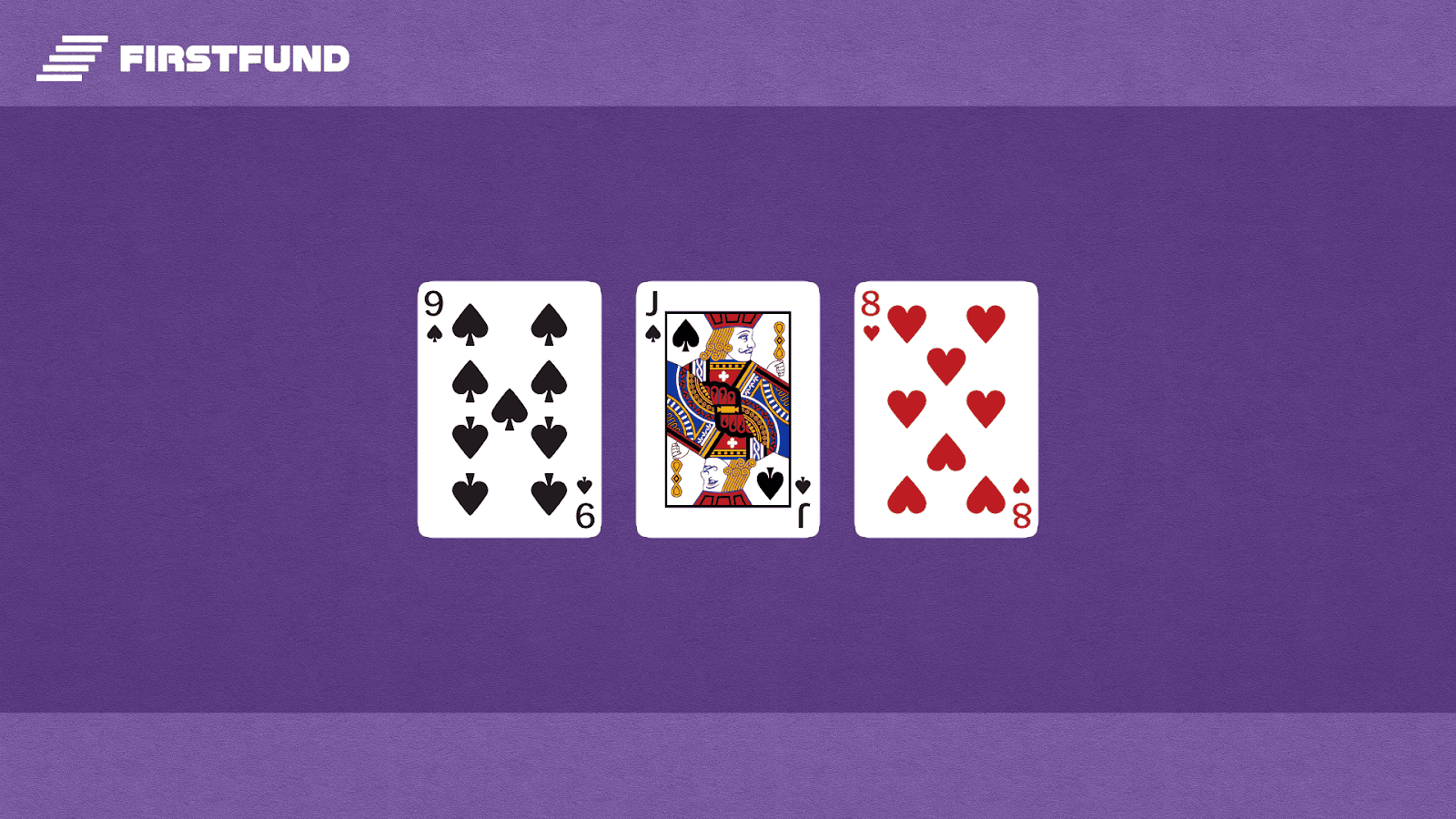
On such textures, play becomes harder, because both players' ranges more often develop on the turn and river, and each additional card on the following streets can strongly change the balance of power.
It's useful to divide coordinated flops into subtypes. These are boards with an overcard, monotone flops, paired ones, and connected ones. Such a division helps not just describe the board but better understand which hands will continue the play, which will come under pressure, and where aggression can be expected.
We covered board textures in poker in more detail in this article. If this topic interests you, head over and read it.
How to assess your chances of winning after the flop
One of the main mistakes of beginning players is assessing their hand in isolation from the board and the opponent's range. On the flop, it's not enough to understand that we have, for example, a top pair or a draw. You need to determine how strong this hand is relative to the specific texture and the opponent's presumed range.
If we have a strong made hand on a dry board, that's one situation. If the same hand is on a coordinated board where the opponent can have many draws and stronger continuations, the situation is already different. That's why assessing hand strength always starts with the question:
How does this flop interact with both players' ranges?
A separate block is outs and pot odds. Outs are the cards that improve our hand. But you shouldn't count all of them, but above all the clean outs, that is, those that strengthen us without at the same time strengthening the opponent to a stronger combination.
Let's say we have a straight draw and 6 clean outs. To quickly estimate the probability of improving, you can use a simplified rule: multiply the outs by 2 for one street and by 4 for two streets. If we're going to see both the turn and the river, then 6 outs give roughly 24% to improve.
After that, we compare the probability of improving with the pot odds. This is exactly how basic postflop strategy is built: not on the principle of "I like the hand — I call," but through the ratio of equity, the price of the call, and the opponent's presumed range.
But in practice, that's not enough. It's important for a player to assess not only their own direct chances of improving, but also what outs the opponent has left. If our hand looks strong but the board contains many possible completions*, a passive line often becomes a mistake. And vice versa — if the texture is dry and the opponent has few logical continuations, a single aggressive bet can turn out to be more profitable than a complicated play all the way to showdown.
*Completion — a situation where a hand improves to the needed combination on the following streets.
The c-bet on the flop

A c-bet, or continuation bet, is a bet on the flop from the player who was the last to show aggression on the preflop. This is one of the basic tools of flop play, but it shouldn't be used automatically.
Many beginning players perceive the c-bet as a mandatory continuation of the preflop raise. This is a mistake. Being the aggressor in itself doesn't mean we're obligated to bet on any texture. The size and frequency of the c-bet depend on two things:
how well the flop fits our range
how the opponent's range will react to it
On dry boards, the c-bet often works better, because the opponent has fewer strong continuations and we have more combinations that it's logical to represent.
On coordinated textures, without equity and a plan for the following streets, betting is much more dangerous — we more often get a call or a raise and end up in an awkward situation.
The c-bet size also shouldn't be random. It depends on the texture and the goal of the bet. If we want to push out a wide range of missed hands on a dry board, a small sizing* is often enough. But if the board is drawy and we're protecting a strong but vulnerable hand, the bet should take into account the number of possible draws and the need not to let the opponent realize their equity cheaply.
We covered the c-bet in more detail in this article. Head over to reinforce your knowledge of this essential tool for improving your game.
*Sizing — the bet size a player chooses in a specific situation.
How to play the flop
To understand how to play the flop, you need to put together a picture from several factors each time:
the action on the preflop
the board structure
the pot size
having position
Playing in position gives more freedom. If the preflop aggressor checks, we can seize the initiative with a bet, take a free card with medium-strength hands, or attack those parts of the range that don't withstand pressure well. With strong hands in position, it's often easier to extract value, and with draws it's more convenient to realize equity, because we see the opponent's action before making a decision.
Playing out of position is significantly harder. We reveal information about our hand earlier and are often forced to make a decision without the full picture. That's exactly why, out of position, it's important to treat medium hands and weak connections more carefully. Here, situations arise more often where you have to choose between a check-call, a check-raise, and a fold without being sure about the structure of the opponent's range.
Typical mistakes on the flop
Finally, we'll tell you which situations and automatic reflexes on the flop you need to treat with special attention:
1. C-betting 100% of boards. Such a strategy quickly becomes predictable and is easily exploited. If a player bets on any flop simply because they were the aggressor on the preflop, their range loses its logic.
2. Slowplaying* against passive opponents. If the opponent rarely bluffs and tends to check behind, slowly playing strong hands often leads not to extracting value but to losing value. On many textures, it's more correct to bet yourself, especially if the board contains draws or could spoil the situation on the following streets.
3. Overrating medium hands. One pair on the flop often looks pretty, but its real strength depends on the board texture and the opponent's range. If a player defends such hands too aggressively against a wide and strong continuation range, they lose EV already on the first street of postflop.
4. Lack of a plan for the following streets. A player calls a bet on the flop because "the hand isn't weak yet," but doesn't understand what they'll do on most turns. As a result, they either overpay for weak showdown value* or are forced to give up in a situation that could have been resolved back on the flop.
*Slowplay — passively playing a strong hand in order to provoke the opponent into betting.
*Showdown value — the value of a hand at showdown, its ability to win the pot without the need to bluff.
Conclusion
As you've already understood, the better a player reads the board on the flop, the more precisely they make decisions on the following streets and the less often they fall into expensive and unnecessary mistakes.
If you want to better understand boards in poker, use position more confidently, and dig deeper into topics like the value bet and the 3-bet in poker, it's important to study postflop not in fragments but as a system.
This is exactly the approach to the game that we develop at FunFarm. Submit an application to our fund and start earning with poker alongside professionals.
FAQ
What does "wet board" mean in poker?
A "wet board" is an alternative name for a coordinated board on which there are many possible draws and strong continuations. On such textures, ranges more often gain additional equity on future streets, so they're harder to play on.
Do you always need to c-bet on the flop?
The c-bet should depend on how well the flop fits your range, how it interacts with the opponent's range, and what goal the bet pursues. An automatic c-bet on any board makes the strategy predictable and vulnerable.
What is a win on the flop?
It means that the hand ended on the flop after our bet, and we took the pot.
Read next

How to Play Poker: Rules for Beginners

What is ICM in poker and how it affects MTT strategy
# What Is ABI in Poker and How to Calculate It ABI (average buy-in) is one of the key metrics for any tournament player. It shows the average buy-in level at which you play, and it helps you assess whether your bankroll matches the stakes you've chosen. ## How to Calculate ABI The formula is simple: add up the buy-ins of all the tournaments you've played and divide that sum by the total number of tournaments. **ABI = (sum of all buy-ins) / (number of tournaments)** For example, if over a session you played: - 10 tournaments with a $5 buy-in - 5 tournaments with a $10 buy-in - 5 tournaments with a $20 buy-in Then your calculation looks like this: - (10 × $5) + (5 × $10) + (5 × $20) = $50 + $50 + $100 = $200 - Total number of tournaments: 10 + 5 + 5 = 20 - ABI = $200 / 20 = $10 So your average buy-in is $10. ## Why ABI Matters ABI helps you: - **Manage your bankroll.** Knowing your ABI, you can determine how many buy-ins you have in your bankroll and whether you're playing within proper bankroll management limits. - **Track your progress.** A rising ABI over the long run shows that you're moving up in stakes. - **Analyze your results.** ABI is needed to correctly calculate ROI and other key metrics. Keep an eye on your ABI and make sure it matches your bankroll and your skill level — that's the foundation of a stable game over the long run.