# Set and Trips in Poker: What's the Difference and How to Play Them Correctly
Let's talk about sets, trips, and the difference between them.
To play poker, you need to know the strength of the hands. Most combinations are easy to remember: five cards in a row make a straight, five cards of one suit form a flush. The rules also have more complex topics. Let's discuss the set, trips, and the difference between them.
Key facts about sets and trips
A set is made up of three identical cards in this way: two — in the starting hand, one — on the community board.
Trips are also made up of three identical cards, but in a different way. Two cards come from the community board. The third — is part of the starting hand.
Sets and trips beat 3 hands: high card, pair, two pair.
Sets and trips lose to 6 hands: straight, flush, full house, quads, straight flush, and royal flush.
A set is more profitable than trips because it's harder to read.
What is a set
A set is a hand of three cards of the same rank. It's formed from a pocket pair and a match to it on the board. For example, 7♥️7♠️ on the flop 7♦️2♥️4♠️ make a set 7♥️7♠️7♦️.
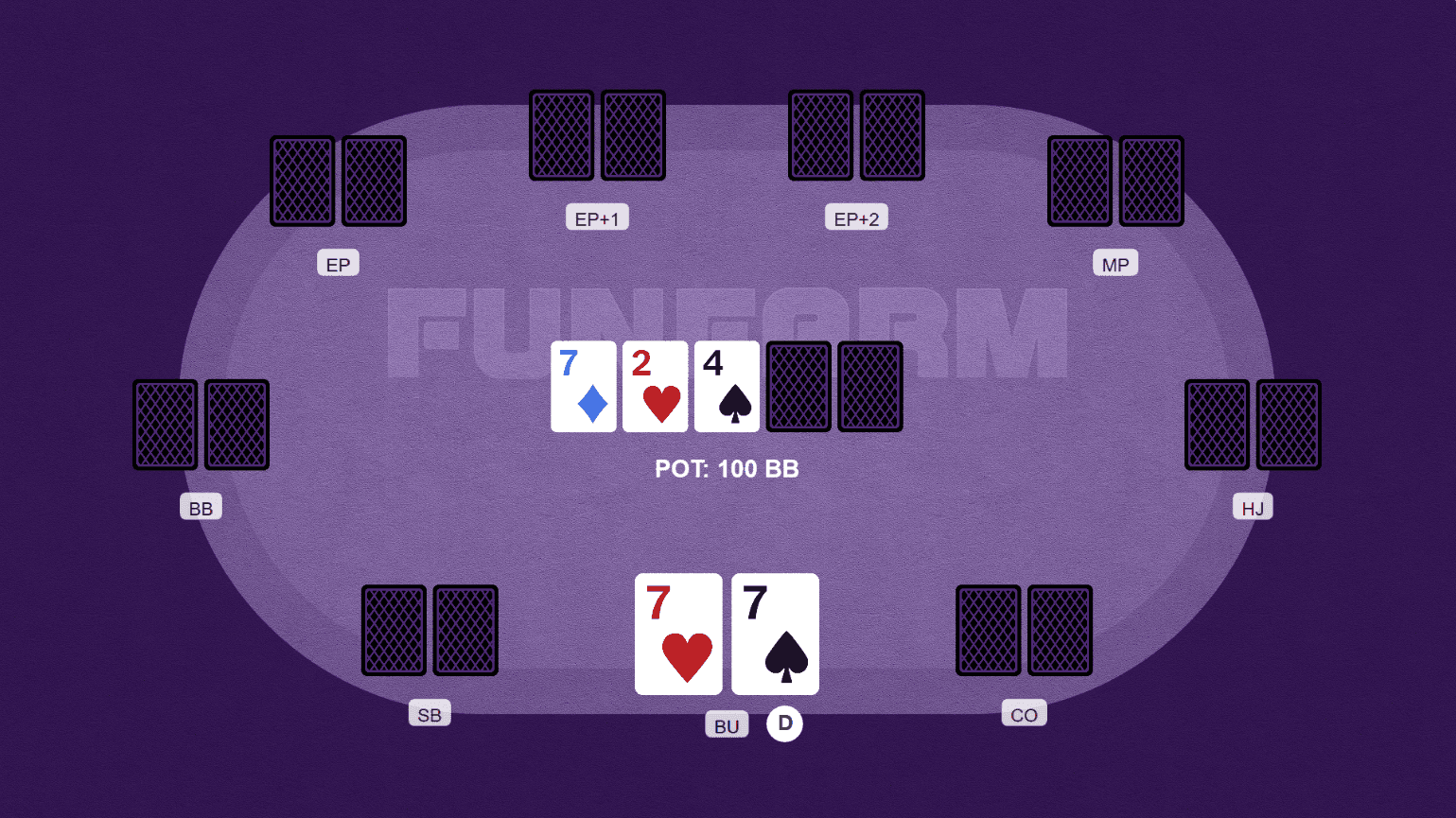
Sets and trips in poker are often confused, because both hands include 3 identical cards
A set beats 3 hands: high card, pair, and two pair. The hand loses to: straight, flush, full house, quads, straight flush, and royal flush. A set can be made in: No-Limit Hold'em, Omaha, draw poker, and Stud.
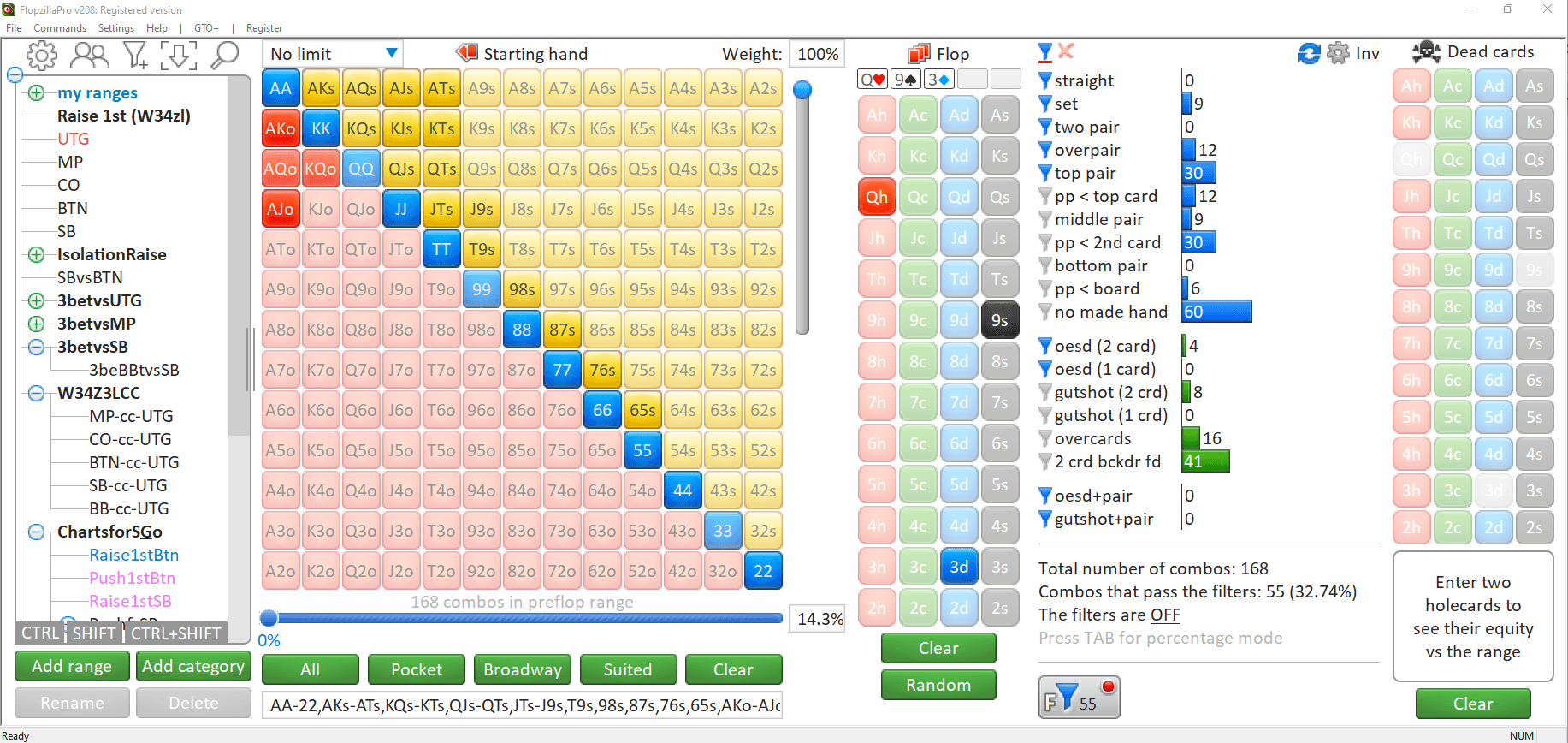
Disguise is one of the main advantages of a set in poker. A coordinated or suited board signals a likely straight or flush to the opponent. A hand of three identical cards is harder to suspect. Let's show with an example. Suppose Phil raised from early position, and Daniel called from the button. Phil opens 12% of his range. The community board comes Q93. The aggressor's range on the flop includes 42 combos of top pair or overpair and 9 combos of sets. Phil hits a hand of three identical cards 5 times less often than a strong pair. The low probability of hitting a set on the flop disguises it perfectly.
Probability of making a set
A match on the flop to a pocket pair comes 11.8% of the time. The percentage is often translated into the more understandable "1 time in 8.5 attempts." In the past, the strategy of playing low and medium pocket pairs was often reduced to "set mining." Its idea is simple: a player with a pocket pair called an opponent's raise, hit the hand, and took a big pot. If they failed to hit the needed card, they folded the pocket pair. In modern poker, the play doesn't work. Opponents stopped paying off sets and compensating for the losses from missing the flop. Many players moved pocket pairs into their 3-bet range.
Set mining in multiway pots still works. With a strong hand, the player will take a big pot
The rise in aggression also argues against set mining. Players 3-bet and squeeze more often, which reduces the prospects of a pocket pair. A passive call preflop provokes aggression from opponents. In most situations, the player will be forced to fold. A medium or low pair has no arguments against three barrels.
How to play a set
A set is a strong and well-disguised hand, but it still needs to be played correctly. Let's break down the strategy for each street.
Flop. To take the opponent's stack on the river, you need to start building the pot right away. The bet size depends on the player's position, the board structure, and information on the opponent. On a coordinated flop with a straight draw or flush draw, we make large value bets of 3/4 pot. On a dry board, you can bet from 1/2 to 2/3 of the pot. The type of opponent affects the value bet size. If we face a loose-passive player, we can bet more. When a loose-aggressive opponent is fighting for the pot, consider the check/raise option.
Turn. The new card determines the plan for the hand. A neutral rank came? We keep building the pot, aiming to go all-in on the river. A scare card complicates matters. For example, Phil entered the hand with 8♠️8♥️. Daniel called on the BB. The board came 8♦️A♣️4♣️. Phil made a c-bet, Daniel called. On the turn came J♣️ and completed Daniel's potential flush. If Phil bets again, Daniel might raise or go all-in. Switching to a passive line won't be a mistake. On the river, Phil will hit a full house or quads 20% of the time. So you can reclassify the set as a "full house draw" and skip the bet on the turn.
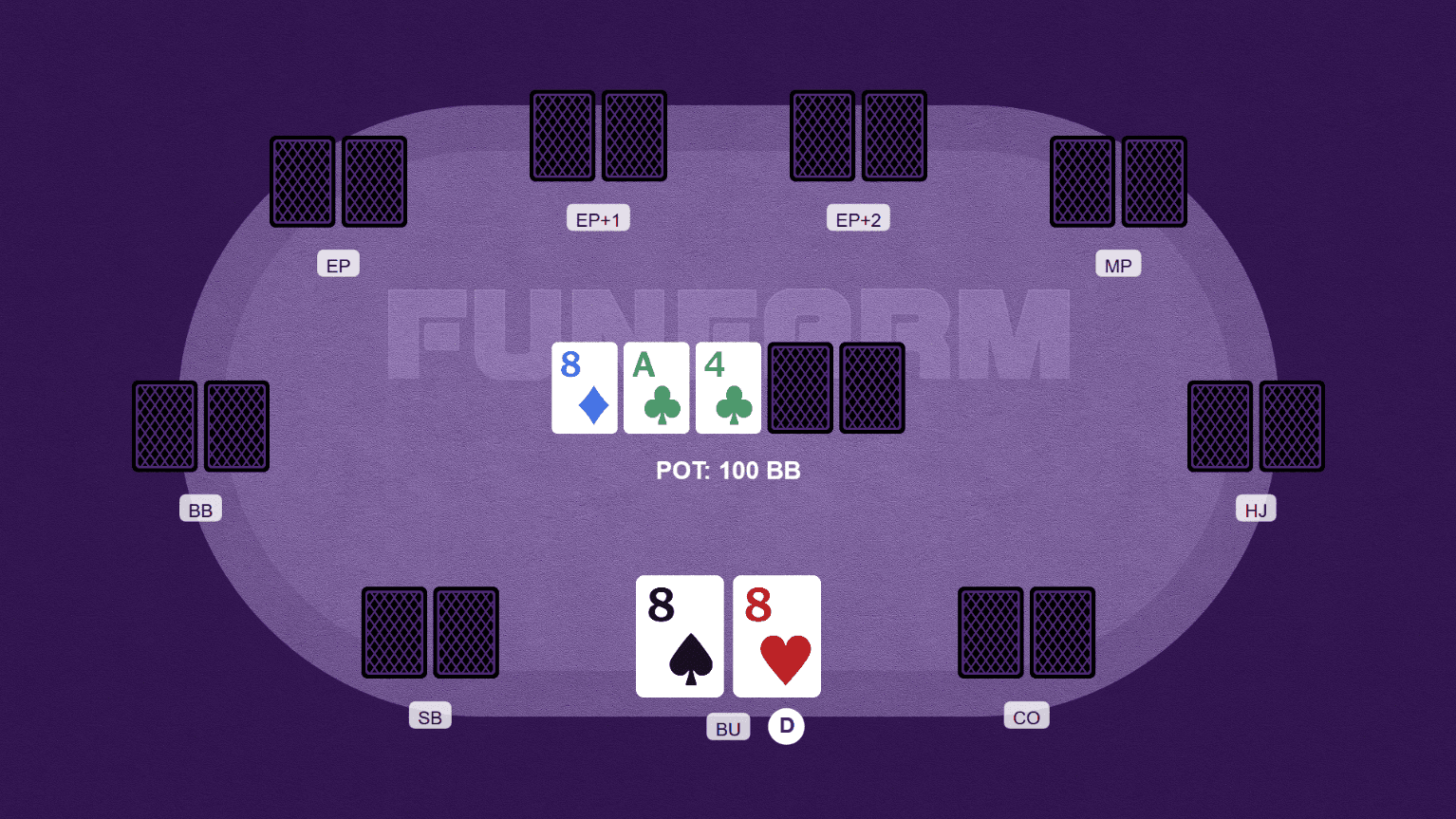
Straightforward bets work better than slowplaying. They make draws pay and don't give the opponent free cards
River. On a safe card — we extract value. If the last rank completed a draw, then we choose a cautious line with a modest bet or check. With a full house or quads on a coordinated board, we go all-in and profit from the opponent's flushes and straights.
On suited boards, we act more carefully. The probability that the opponent hit a flush on the flop is minimal, but not zero. If the opponent shows high aggression, you can think about pot control and reconsider your strategy for the turn and river. The recommendations to act more cautiously also hold for boards with three consecutive cards toward a straight.
In the rarest of cases in poker, a set loses to a higher set. There's no point keeping the probability of a cooler in mind. Play the hand aggressively: in most situations, opponents will show weaker hands.
What is trips
A hand of three identical cards. A player gets trips when two repeats of one of the ranks in their starting hand come on the board. For example, a poker player entered the pot with K♦️T♥️ and got the flop T♦️T♠️6♣️. As a result, they hit trips T♥️T♦️T♠️. The hand is stronger than: high card, pair, and two pair. It's beaten by: straight, flush, full house, quads, straight flush, and royal flush. Trips in poker is valued less than a set: on a paired board, the hand is easy to read.
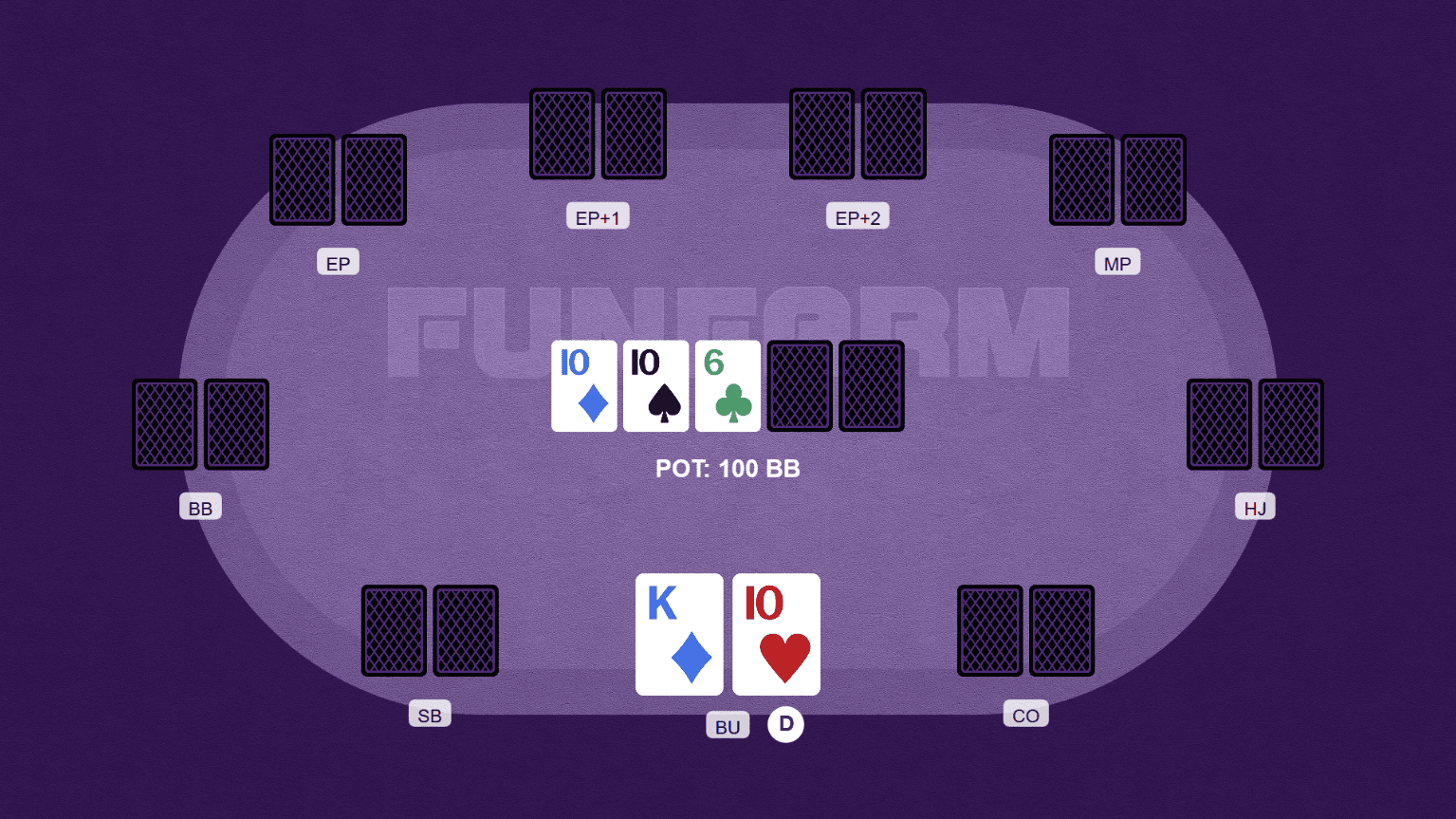
In hands with trips, the kicker plays an important role
The hand creates additional risks, because the opponent can also hit trips. Take the previous example. If the opponent holds A♠️T♣️, then their hand is ahead of K♦️T♥️ thanks to the kicker. So value bets with K♦️T♥️ at showdown can turn out to be paying yourself off.
In rare cases, the hand can be made up entirely of community cards. The chance of getting three identical ranks on the board is 4.5%. If in a hand with trips on the table the opponents reach showdown, the pot goes to the owner of the best kicker.
How to play trips
Trips in poker is harder to play than a set. Two factors work against the player:
the hand's obviousness to the opponent;
the chance of running into trips with a better kicker.
With trips, you can't bet and raise without regard for the opponents' actions. Let's look at the plan for each street.
Flop. We evaluate the board structure and the strength of the kicker. For example, K♣️Q♥️ on the flop K♦️K♠️5♣️ make one of the top trips. If the player raised from late position and an opponent called on the BB, then the opponent has a huge number of weaker kings in their range. We choose a straightforward bet to extract value from worse trips and pocket pairs. Hands with a five also won't leave the pot on the flop. On a coordinated table with two cards toward a flush or straight, you can make larger value bets.
Turn. The plan of action depends on the new card. On a neutral one, we keep betting. A card toward a flush or straight is a good argument to reduce the value bet size or check. A raise or check-raise from the opponent indicates a strong made hand. We try to hit outs for a full house or quads. Against a big bet or push, you can also consider a fold.
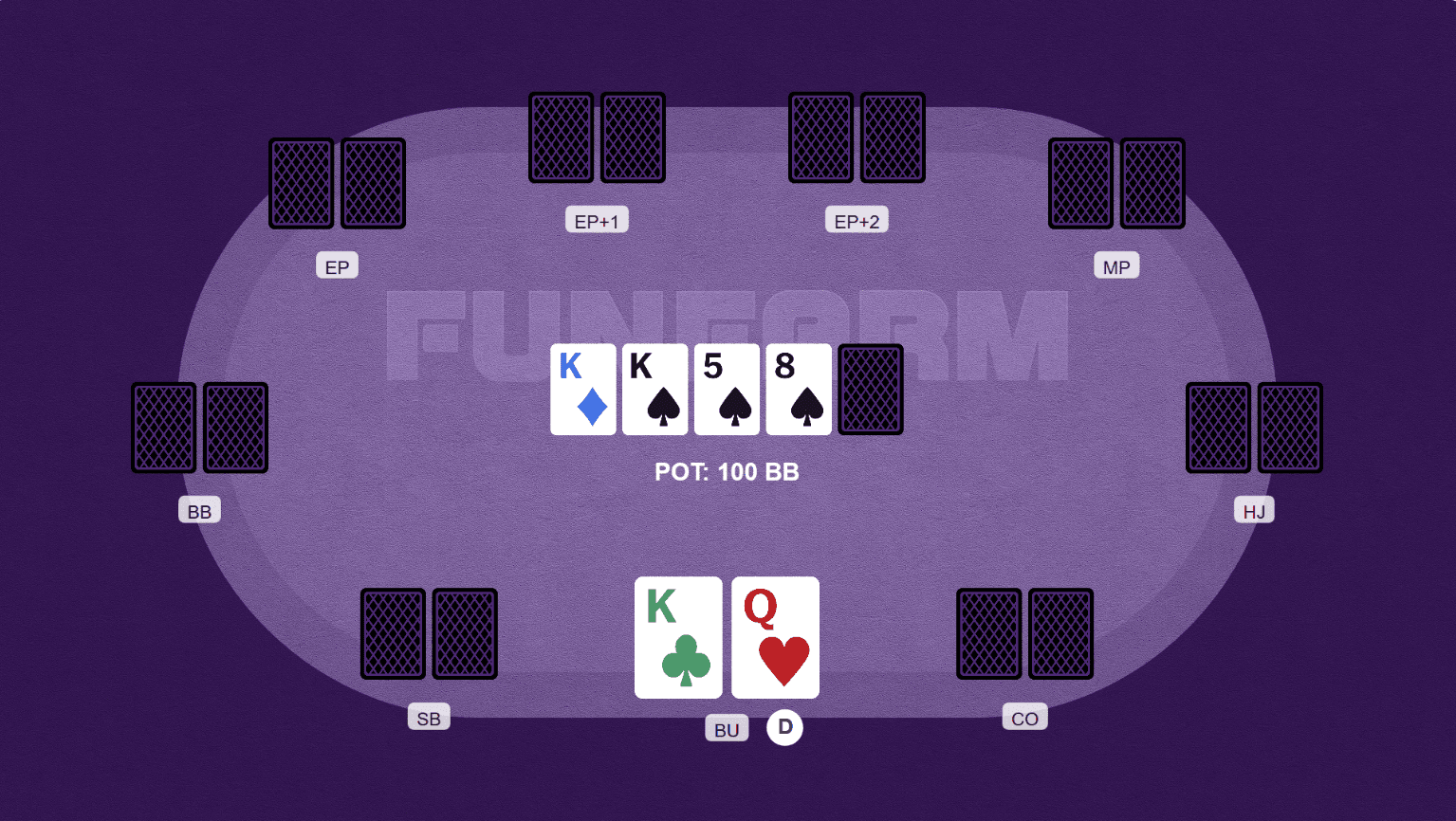
If the turn card completed a draw, then trips has 10 outs to improve to a full house or quads
River. Not many worse hands will call a third bet. If the opponent raised on the turn and continued the aggression on the river, then it's better to fold trips. With a full house or quads, we play for the stack.
In hands with trips, a lot depends on the opponent's playing style. A loose-passive opponent will pay off 3 streets of bets without any problem. A raise from a tight-aggressive player indicates a strong hand. To play trips successfully, avoid cookie-cutter decisions and analyze your opponents.
Key differences between a set and trips
Sets and trips in poker are regularly confused, because both hands include three identical cards. Let's break down their differences.
Obviousness to opponents. A set is formed by a pocket pair and a card of the same rank on the table. The hand is hard to read. Trips is easier to figure out: two identical cards on the board will alert any opponent. Compare 5♣️5♥️ on the flop K♣️5♦️2♥️ and 5♥️6♦️ on 5♣️5♠️K♥️. The set is disguised, which can't be said about trips.
Chance of getting a full house. Take the example above. Formally, 5♣️5♥️ and 5♥️6♦️ on the flop are equal: both hands improve with 7 cards. However, for 5♥️6♦️ a repeat of the king on the turn is hard to call an out. Often it will give the opponent a higher full house and lead to additional losses.
Probability of identical hands. Hands with two sets of trips happen regularly in poker. The number of cards in the deck doesn't allow for equal sets. "Set against a higher set" hands aren't common either.
Kicker. In hands with two sets of trips, the kicker decides the fate of the pot. A♥️J♦️ on the board J♥️J♣️2♠️ looks more promising than J♠️4♣️. In hands with two sets, the kicker isn't looked at: the pot goes to the owner of the higher rank.
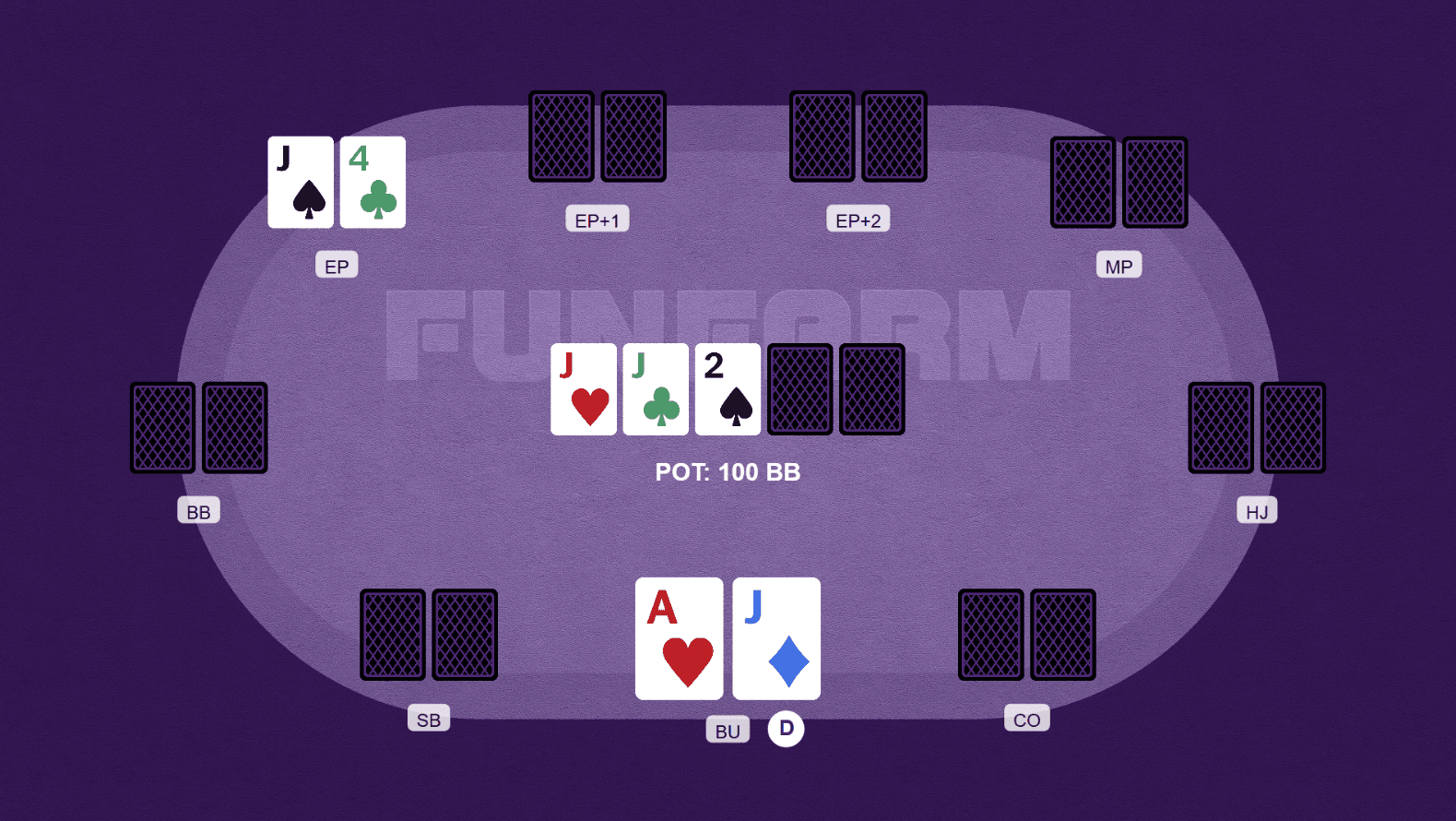
The plan for the hand depends on the specific opponent. A calling station will gladly pay off 3 streets with trips without a kicker. A regular will often fold already on the second bet
A set in poker is easier to play than trips. It's harder to read and it runs into a better hand less often. If the opponent shows aggression on a paired board, then with trips you need to act more carefully.
How to learn to play poker
Over the long run, all players get the same number of sets, trips, straights, and other hands. What distinguishes a good poker player from a bad one is the quality of how they play them. Top players constantly raise their skill level. They: review hands in software, watch training videos, discuss hands with colleagues, hire coaches. A systematic approach helps them progress. And that's exactly what FunFarm offers.
The FF Start course is suitable for beginners. It will provide a solid foundation for successful tournament play. The program includes: basic poker math, adjustments to different types of opponents, strategy for the late stages of MTTs and in push/fold. A trainer helps consolidate the material. We accept course graduates into FF Player Path. The advanced program includes 15 levels of training. In 8 months, students reach a stable income of $1,200+.
FAQ
What is a set?
A set is a hand of three identical cards. It's made up of a pocket pair and a match on the board. For example, a player's 9♥️9♦️ on the flop K♠️9♣️4♦️ makes a set 9♥️9♦️9♣️.
What is trips?
Trips is a hand of three identical ranks. It's formed by a paired board and one of the cards in the player's starting hand. For example, Q♠️9♣️ on the flop Q♥️2♣️Q♦️ makes trips Q♥️Q♠️Q♦️.
What distinguishes a set from trips?
A set is formed by the pattern "pocket pair + match on the board." Trips is formed by a pair on the community table and one of the player's cards. A set is harder to read and easier to play. In hands with trips, the kicker plays an important role.
How often does a pocket pair hit a set on the flop?
A player will hit the hand 11.8% of the time, or 1 time out of 8.5 attempts.
Read next
A cooler in poker
What a straight is in poker and how to play it
Flush in Poker: How to Play It