What sports poker is and how it works
Let's figure out what tournament poker is: how it differs from regular poker, what disciplines and tournaments exist.
Debates about the status of poker have been going on for decades. Supporters point to the key role of skill in winning and demand that the card game be included in the Olympic program. Opponents emphasize gambling and dream of banning it. To recognize poker as a sport, a separate discipline with its own rules and regulations was created. Let's discuss it in more detail.
Key facts about sports poker
Played in a tournament format. Sports status excludes cash prizes. Competition winners receive symbolic prizes.
The discipline is promoted by the World Poker Federation (WPF) and the International Mind Sports Association (IMSA).
In 2024, poker was recognized as a mind sport.
The sports version of the card game uses the TDA regulations.
In Russia, the sports discipline is developed by clubs. They offer poker without cash stakes. You can play for money in four gambling zones.
Sports poker: what it is
Sports poker sparks debate at the level of the concept and its criteria. The modern industry offers 2 points of view:
Sports poker is a game against live people. This includes any offline festivals and online tournaments. Some also include cash. It is contrasted with dealer games in casinos. If you compete against people — it's a sport; against the casino — it's gambling.
Sports poker is a card game with special rules. The dividing line is money. If the contest is for rating spots, points, or rankings — it's a sport. Any cash payouts make the game gambling and nullify the sports element.
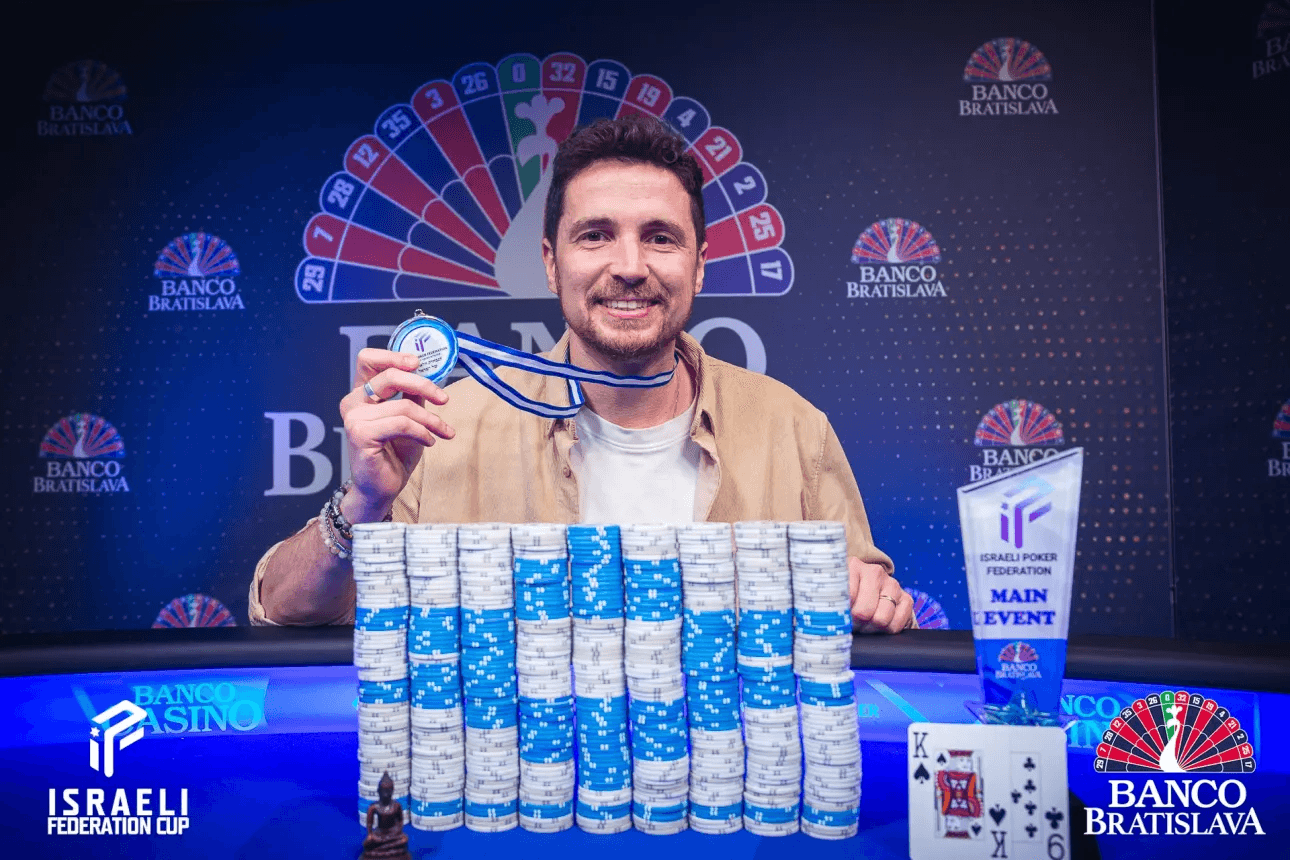
Many countries around the world classify poker as gambling. The sports offshoot makes it possible to legally organize tournaments where it is banned
In this article we'll take the second option as our basis, but with a caveat: over the long run, the result in poker depends on the player's skill. Whether they ultimately get $10,000,000 with a WSOP gold bracelet or an honorary certificate makes no difference.
What distinguishes sports poker from regular poker
Sports poker has abandoned gambling. Players don't contribute money to the prize pool. At the end of the competition, opponents don't receive payouts based on their finishing place. The participants' goal is to earn rating points or rankings. For example, the EPT champion gets a trophy and a large sum of money. The winner of a sports tournament is awarded a cup, a certificate, and a hundred rating points.
Sports poker also sets itself apart in its competition format. The fight for cups and medals takes place in MTT and Sit & Go tournaments. Gambling is more associated with cash. The versions of poker are also distinguished by the organizer. Sports competitions are run by the World Poker Federation or its national counterparts. Offline, casinos offer play for money; online, it's poker rooms and mobile apps.
We'll also count the competition regulations among the differences. Casinos can change the rules and order of play. For example, they can limit the time to make a decision or allow the community board cards to be dealt twice. Poker federations apply uniform rules in all tournaments. In the sports version, players may be subject to dress code requirements. Athletes are prohibited from wearing the branding of poker rooms, bookmakers, or casinos. At WSOP, EPT, or Triton Poker, players constantly wear T-shirts, patches, and other merch from industry brands.
The level of player skill also differs. At the sports poker table, opponents don't risk money, so they act more freely. In professional tournaments, the cost of a mistake is higher, so players think over their decisions longer and follow a careful strategy.
We've summarized the differences in a table:
Sport | Gambling | |
Awards | Trophy, certificate, rating points, rankings | Trophy and money |
Format | MTT and Sit & Go | MTT, cash, Sit & Go, Spin & Go |
Regulations | Uniform rules | Local variations possible |
Player freedom | High | Low |
The history of sports poker
The sports version of poker has been developing for a couple of decades, but the history of card games spans several centuries.
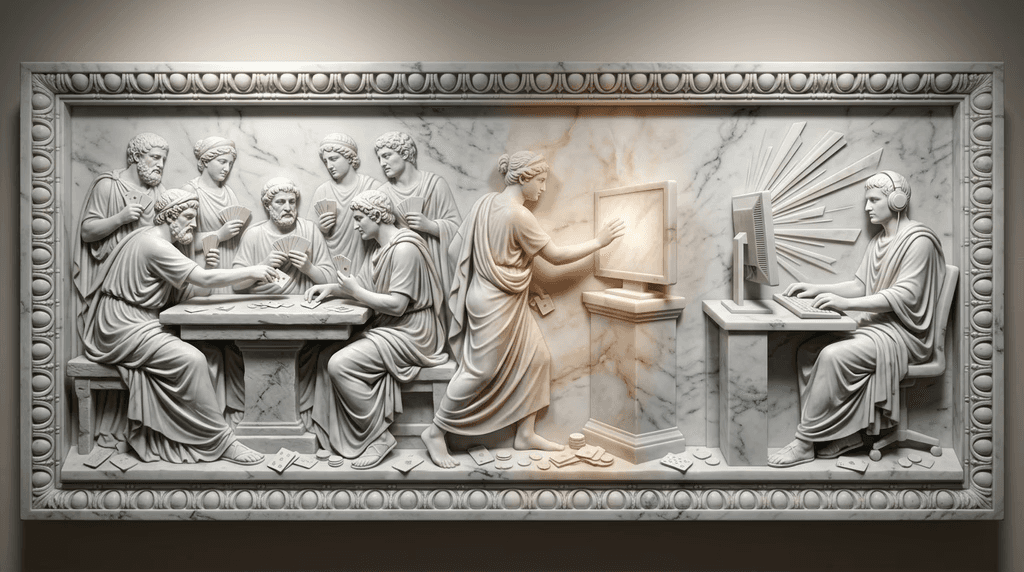
For centuries, poker was played for money. The industry arrived at the sports version at the start of the new millennium
The key stages of the journey look like this:
16th century. The "ancestors" of poker gain popularity in medieval Europe.
mid-19th century. In the USA, draw poker and seven-card stud are invented.
1872. The American consul in China — Robert Schenck — first wrote down uniform rules for five-card poker. Later he introduced the game to Queen Victoria.
1931. Gambling is legalized in Las Vegas. With the opening of new casinos, interest in poker grows.
1970. The famous player, casino owner, and gangster Jack Binion gathers the top poker players of the time in Las Vegas. Over the course of a week, they compete in various disciplines and determine the best. Thus the unofficial World Poker Championship — the World Series of Poker — was born.
1998. The launch of Planet Poker — the first online poker room for playing poker for money.
2003. Chris Moneymaker wins the WSOP Main Event and kicks off the "poker boom." Within a few years, millions of new players come to poker, and the number of WSOP ME participants reaches 10,000.
2010. Professional player Steven van Zadelhoff wins a case in a Dutch court. The judge recognizes the dominant role of skill over luck in the card game. The official decision strengthens poker's position as a sport. Later, New York State judge Jack Weinstein comes to similar conclusions.
2024. The International Mind Sports Association adds poker to the registry.
The 2024 decision opens new prospects for poker, so let's discuss it separately.
IMSA in 2024: poker is a mind sport
The International Mind Sports Association (IMSA) was founded in 2005.
The International Mind Sports Association unites 9 federations. Among them is the World Poker Federation
The organization includes federations for: bridge, chess, mahjong, draughts, xiangqi, go, esports, and card games. The association:
promotes the interests of mind sports;
develops them at the country level;
organizes the World Games under the auspices of the International Olympic Committee (IOC);
runs campaigns to include disciplines in the Olympic Games program.
The World Poker Federation (WPF) joined IMSA in 2024. In 2 years, the WPF went from a local union of several South American federations to an alliance of 39 countries. The World Poker Federation tackles the same tasks as the mind sports association. Under the WPF banner, sports competitions and conferences are organized.
Poker's new status opens its path into the Olympic Games program. However, the card game has a long road ahead. Even less controversial candidates have failed to make it onto the list of Olympic disciplines. Take chess as an example. The IOC recognized the game as a sport in 1999. The results of a chess game depend 100% on skill. However, it still hasn't been included in the Olympic Games program. The case against chess is argued with: the absence of physical activity, low spectator appeal, and difficulties organizing competitions. Each aspect applies to poker as well.
Types of sports poker
Most sports poker competitions are held under the rules of No-Limit Texas Hold'em. The key ones:
the game uses a 52-card deck;
opponents are dealt starting hands with two cards;
the players on the SB and BB make forced bets;
a hand consists of 4 betting rounds: preflop, flop, turn, and river;
the hand can end on any street;
you can win the hand with the best combination at showdown or a successful bluff;
the worst winning combination in NL Hold'em is high card, the best is a royal flush.
The sports poker program is diversified by: Pot-Limit Omaha, Short Deck, mixed games, and Match Poker. Let's discuss them in more detail.
PLO. Each player is dealt four hole cards. Two of them can be used in a combination. The final combination includes 5 cards: two are taken from the starting hand, three from the community board cards. The names of the positions and the course of betting mirror NL Hold'em.
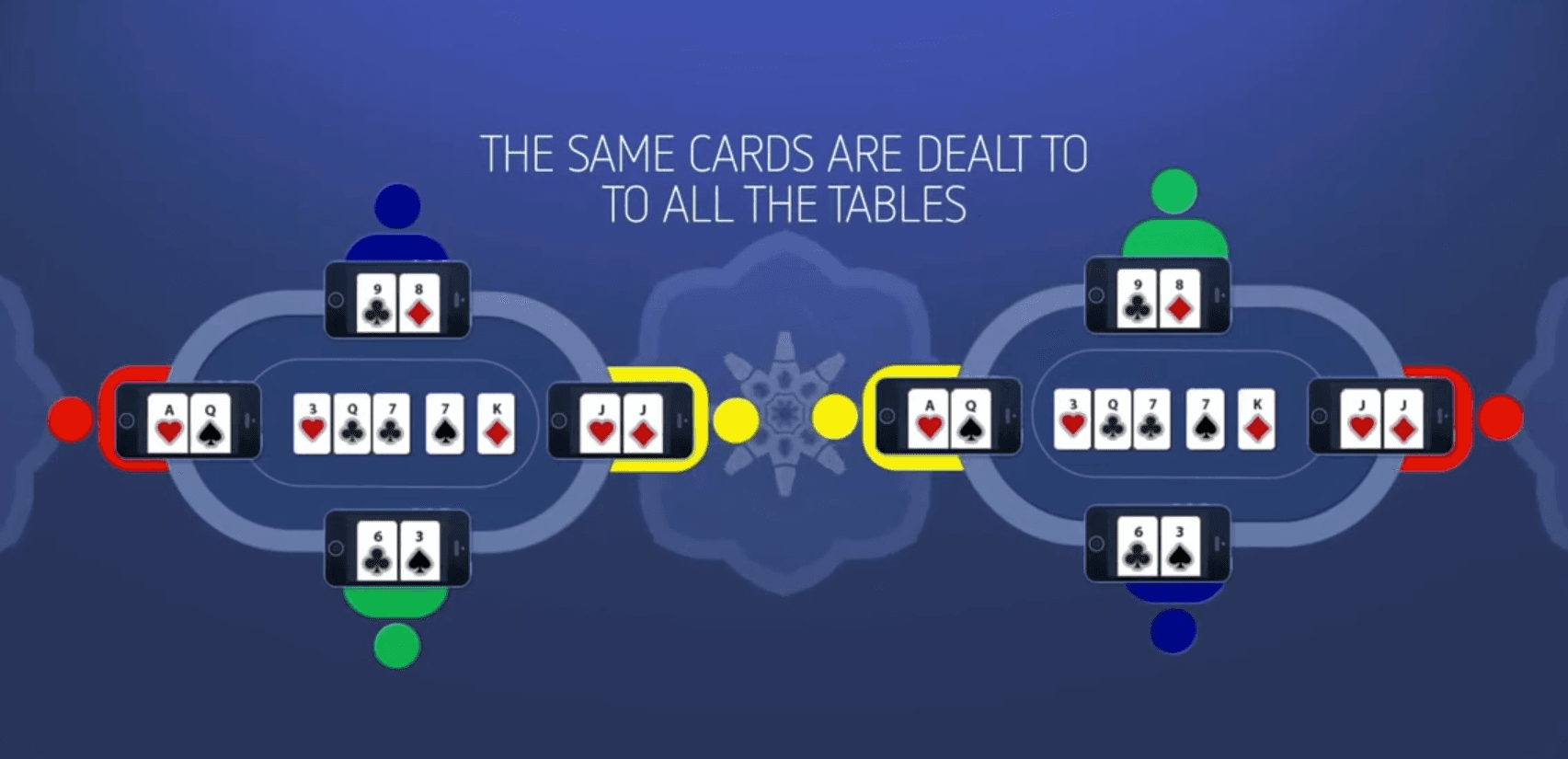
Match Poker was invented in 2017. The format didn't become a hit
Short Deck. The game uses a shortened 36-card deck. All twos, threes, fours, and fives are removed from it. The course of betting and the names of the positions match No-Limit Hold'em. Shortening the deck changed the hierarchy of winning combinations. In Short Deck:
a flush is stronger than a full house;
a set beats a straight;
the lowest straight includes A-6-7-8-9.
Mixed Games. Combines several types of card games in one competition. Each poker variant rotates after an equal number of hands. H.O.R.S.E. consists of:
H — Hold'em,
O — Omaha Hi/Lo,
R — Razz,
S — Seven Card Stud,
E — Eight or Better Seven Card Stud.
The mixed games category also includes 8-Game. Here the following rotate: lowball, limit hold'em, Omaha hi-lo, razz, seven-card stud, seven-card stud hi-lo, no-limit hold'em, pot-limit Omaha. Mixed Games is the most difficult poker discipline because it requires a high level of skill in several games.
Match Poker. A team discipline. It offers unique rules:
each player is dealt identical cards and seated in the same position;
players play out hands under identical conditions;
the winner is the one with the best result by total points scored;
The discipline is promoted by the International Federation of Match Poker, or IFMP.
Rules and regulations of sports poker
The first modern forms of poker were invented almost 2 centuries ago. Card games spread around the world and accumulated new rules. The organizational conditions also changed. Chris Moneymaker's victory at the WSOP ignited interest in poker around the world. As a result, a number of new live series were launched: WPT, EPT, RPT. A demand arose for uniform regulations for MTTs. They were developed and adopted by the Tournament Directors Association.
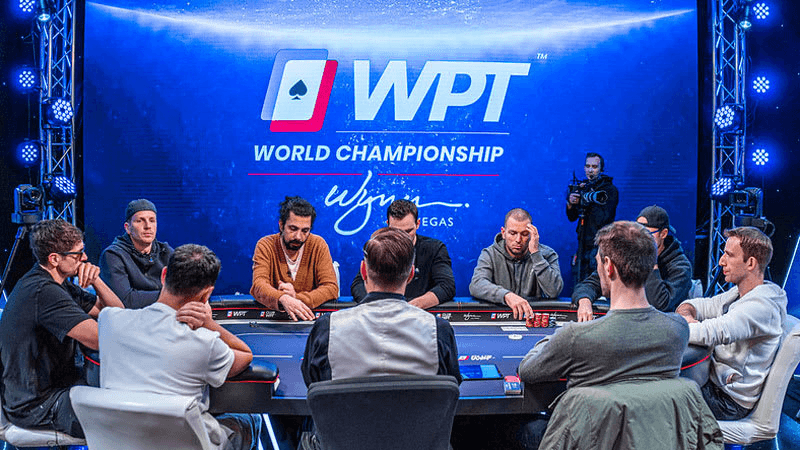
The sports poker rules are also applied at international festivals
Key provisions of the TDA standard:
Unambiguous terms. Players must use official terms: bet, raise, call, fold, all-in. The rules don't recommend declaring bets in slang or with ambiguous gestures. The dealer may interpret the action against the player's favor.
Protecting information. The standard prohibits discussing your own or others' cards, giving advice, or criticizing how a hand is played.
Player conduct. The regulations prohibit talking at the table on the phone or other devices. Opponents must be seated at the table at the moment the cards are dealt.
Language. At tournaments in the USA and at international competitions, the official language is English.
MTT structure. Before the start of the tournament, players receive a Structure Sheet. The document lays out the rules for blind increases. For example, the first 30 minutes are played with blinds of 100/200, the next 30 minutes — 150/300, and so on. It also specifies the ante sizes and the duration of the levels.
Penalties. Sanctions are imposed on players for: showing cards during betting, stalling for time, insulting opponents, and team play. Rule violations are penalized with: a verbal warning, missing one or more rounds, or disqualification from the MTT.
If you plan to take part in a live tournament, be sure to study the TDA regulations. Preparation will help you avoid mistakes at the festival.
Sports poker in Russia: history and status
Poker as a sport began to be promoted in Russia in the mid-2000s. The movement was led by Dmitry Lesnoy.

The Federation's website was abandoned in November 2007
The full chronology looks like this:
2006. A congress of representatives from 50 Russian regions established the Russian Sports Poker Federation (RSPF).
2007. The board of Rossport recognized poker as a sport.
2007-2009. The Federation popularizes the card game in the country. The organization holds tournament series. The first stages of the Russian Poker Tour take place.
2009. The law "On the State Regulation of Activities for Organizing and Conducting Gambling" comes into force. Poker falls under the ban. Playing for money was permitted only in special gambling zones. The RSPF ceases operations.
2010. Russia's first gambling zone — "Azov-City" — launches.
2017. The most popular gambling zone, "Krasnaya Polyana," opened in Sochi.
The decision to equate poker with roulette and slots slowed the development of the discipline in the country. Card game fans moved online.
Where to legally play sports poker in Russia
Sports poker was revived in 2024 in a club format. They operate according to the following scheme:
Players pay fees for organization. This refers to hiring a dealer, renting a table, and providing chips. On its official website and social media, the club separately states that it offers poker not for money.
Opponents are given an equal number of chips. They cannot be exchanged for real money.
The tournament takes place. In most cases, the MTT is run as a freezeout. Formats with chip rebuys cannot be used.
Winners receive commemorative prizes. Champions are: awarded cups, given merch, and credited with rating points.
Clubs with play not for money welcome guests in: Moscow, St. Petersburg, Ufa, and other Russian cities.
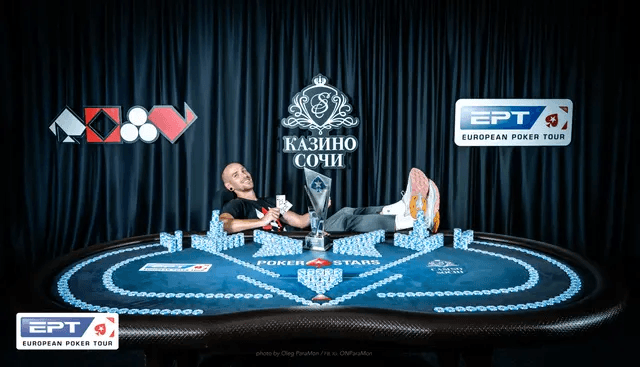
Krasnaya Polyana has also hosted international festivals, such as the EPT
You can legally play for money in four gambling zones:
Krasnaya Polyana. The most popular place to play poker opened in Sochi. Krasnaya Polyana's success was ensured by its excellent geographical location. In summer, tourists are drawn by the sea; in winter, by ski resorts. Sochi regularly hosts stages of the Russian Poker Festival and the Sochi Poker Festival.
Yantarnaya. A gambling zone in the Kaliningrad region. Its remoteness from the rest of Russia and weak infrastructure reduce Yantarnaya's appeal to players. The main local festival is the Amber Poker Championship.
Primorye. A gambling zone an hour's drive from Vladivostok. A potential leader in the number of casinos in Russia: two more gambling establishments are planned to compete with "Tigre de Cristal" and "Shambala." Primorye regularly organizes the Russian Poker Cup and Shambala Poker Series.
Sibirskaya Moneta. A gambling zone in the Altai region. Every quarter it holds its signature festival, the Altai Palace Poker Series.
We covered poker in Russia in more detail in a separate article.
How to learn to play poker
If you plan to become a world champion or win Olympic gold in sports poker, it's time to start training. Training is the only way to increase your chances of success. People study poker in various ways: reading books, watching video courses, reviewing hands in software or with other players. Self-study produces results, but it takes a lot of time. Finding the optimal method eats up months of your life. A systematic approach will speed up your progress. The FunFarm school provides it.

We provide students of advanced courses with money to play and free software
The FF Start course will help you lay the foundation. In the program we cover: poker math, types of opponents, strategy for the late stages of MTTs, and push/fold. The final stage of the course is an exam. We invite graduates to the next level in FF Player Path. Over 8 months, students work through the microstakes and reach a decent level of income.
FAQ
Is sports poker played for money or not?
Sports poker is contrasted with classic casino play. The key difference between them is the prizes. In the sports discipline, awards are certificates, cups, and accessories. Regular poker implies cash payouts.
Can poker be considered a sport?
Yes. In 2024, the International Mind Sports Association (IMSA) recognized poker as a mind sport.
How does sports poker differ from a cash game?
The sports version uses MTT and Sit & Go formats. Lose your chips — you leave the tournament. In cash, the game is played for money, and a participant can buy more stack and continue the session.
Is poker included in the Olympic Games program?
Poker isn't yet played at the Olympic Games. The IMSA decision provides the opportunity to make it into the program in the future. Don't expect quick success — the IOC recognized the less controversial game of chess as a sport in 1999, but it still isn't played at the Olympics.
Read next
Satellites in Poker — How to Get into a Big Tournament Cheaply
Heads-Up Poker: How to Win in One-on-One Play
How to Find a Good Poker Coach and Not Get Scammed