Types of Opponents in Poker: How to Find Weak Players and Win at Poker
A complete guide to player types in poker. Learn what VPIP and PFR are, how to identify a nit, a recreational player, or a regular at the table, and how to exploit their weaknesses for maximum profit.
Why split players into different types?
In poker, the winner isn't the one who gets a good card more often, but the one who better understands the people at the table. Every player plays in their own way: some cautiously, some too aggressively, and some just give away chips left and right. If you learn to distinguish the types of opponents, you can adjust your strategy to their mistakes. This gives a huge advantage — you start to exploit a specific player's weak points for your own profit. If your goal is to win, then you should focus on playing against opponents who are weaker than you, and avoid big pots against strong opponents.
Let's define our vocabulary
To make the article clear, we'll explain a few terms in advance:
VPIP (Voluntarily Put Money In Pot) — the percentage of hands with which a player voluntarily puts money into the pot preflop; in other words, chooses any action other than the Fold button: calls or raises.
PFR (Preflop Raise) — the percentage of hands with which a player raised, that is, played a raise.
3bet — the percentage of hands with which a player played a 3-bet preflop, that is, raised someone else's raise.
VPIP, PFR and 3bet can be seen either in the poker client itself, or in a special poker tracker such as Hand2Note or HoldemManager3.
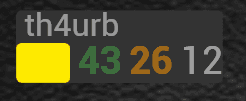
This is what a standard HUD looks like in Hand2Note: The three numbers are VPIP, PFR and 3bet. You can configure the HUD to your needs in the tracker itself, but if you're a beginner player, we recommend you use a HUD that has only these three stats.
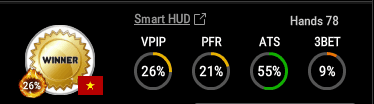
This is what the built-in HUD looks like in the GGPokerOK poker client — in other rooms it looks different, but similar.
For the VPIP, PFR and 3bet numbers to tell us anything about an opponent, we need to play at least 100-200 hands with them, but certain conclusions about an opponent can be drawn over as few as 30-50 hands.
Passive amateur
Who this is: A player who seeks to play a lot of cheap hands, often enters the game with any cards, plays cautiously, but rarely folds to bets if they managed to make some kind of combination.
How to recognize them: Approximate VPIP/PFR/3bet 40+/10+/5. The figures are approximate; it's enough to understand the principle: high VPIP, low PFR, very low 3bet. Such a player often enters the game by calling and very rarely by raising.
How to play against a passive amateur:
This type of opponent will bring you the most profit at the table, so aim to play as many hands with them as possible. To do this, use the isolation strategy: if a passive amateur entered the hand with a bet of 1bb, then raise that bet to 3.5 big blinds with all the hands you would want to play if the amateur weren't in the hand. This bet size will let you "isolate" the amateur from the other players at the table and play with them one on one, since it becomes unprofitable for the rest to continue in the hand.
Passive amateurs are unyielding. They have a poor sense of the strength of their hands, so they often pay off bets with weak combinations. Actively use 3-bets with the strongest hands in your range. Build the pot and use big bets to win more when you have a good hand, but give up on expensive bluffs.
If a passive amateur starts showing aggression, raising your raises or betting themselves — trust them and part with medium-strength hands and worse.
Aggressive amateur
Who this is: Also an incompetent player, but unlike the passive amateur tries to play as many hands as possible using active actions: raises, 3-bets and big bets.
How to recognize them: Approximate VPIP/PFR/3bet 52+/27+/16. The figures may vary, but such a player will always be distinguished by huge VPIP and PFR.
How to play against an active amateur:
Aggressive amateurs have a poor understanding of positions in poker, so they often play out the same and very wide range of hands in any situation. At the same time, they never fold to aggression and often show it themselves. Give up bluffs against aggressive amateurs and focus on getting paid with your strong hands. Because your opponent plays a lot of weak hands, you can consider even top pair a strong combination.
Remember that you're playing no-limit poker and can use any bet sizes. Aggressive amateurs are the type of opponent against whom you can use unusual, expensive lines with strong hands. For example, a preflop all-in with strong pocket pairs against their raise even with a very big stack, or postflop bets larger than the size of the pot (overbets) when you have a good combination (a set or better).
Don't respond to an aggressive amateur's bets with weak combinations; remember that all your profit at the table against them is concentrated in pots where you have a good hand.
Nit
Who this is: A very cautious player who enters a hand only with the strongest hands. They can patiently fold cards for hours, waiting exclusively for premium combinations.
How to recognize them: Approximate VPIP/PFR/3bet 16/12/3 or less. This opponent very rarely participates in hands, so their stats will be distinguished by low figures.
How to play against a nit:
Nits rarely take part in hands, so we can often steal their blinds with a raise from late positions (cutoff and button)
Pay close attention to their preflop raises and 3-bets: most often in such a situation they have a strong hand.
Postflop, such a player has a hard time parting with the hand they waited so long for, so bet a lot with good combinations, but cut back on bluffs. Pay close attention to their aggression and fold your cards if you don't have a nut combination.
Weak regular
Who this is: An experienced player who has already studied the basic strategies, but still plays predictably and makes a lot of mistakes.
How to recognize them: Approximate VPIP/PFR/3bet 24/17/5. Plays according to familiar patterns, beats amateurs, but loses to stronger opponents.
How to play against a weak regular:
This type of player folds well to a 3-bet, so use 3-bets not only with strong hands but also with bluffs. Weak combinations with an ace work well for this, for example A5, A2, A3
Regulars understand the advantages of position in poker well, so they raise a lot from late positions (cutoff and button) to steal blinds and play in position postflop. Play carefully in the big blind and don't skip defending your blind with a call or 3-bet.
Postflop, weak regulars tend to fold to aggression, but don't bluff often enough themselves. Their bet sizes honestly describe the strength of their hand: the larger the bet size such an opponent uses, the better their hand. Playing against them out of position, believe their big bets. In position, play more aggressively, bet a lot and often both with good combinations and as a bluff, while folding easily when meeting counter-aggression
Pay close attention to their bets on the river: weak regulars very rarely bluff on the last street, and a bet from them is a sign of strength.
Strong regular
Who this is: An experienced and aggressive player who understands table dynamics, knows how to bluff and adjust to opponents.
How to recognize them: Approximate VPIP/PFR/3bet 30/22/12. They play aggressively and in a balanced way — in any betting line they have both bluffs and strong combinations.
How to play against a strong regular: it's important to understand that while you're a beginner — this is not the opponent you want to end up in a pot with. Nevertheless, sometimes you'll be forced to play hands with opponents more experienced than you. Here are general recommendations for playing against them:
A strong regular plays aggressively: raises and bets a lot. When playing against such an opponent, try not to lose a lot of chips; to do this, play good starting hands with which you can make strong combinations postflop, and give up playing weak hands.
Turn their main weapon — aggression — against themselves: Play through a check to give them the chance to bet as a bluff and call with good combinations. Try to control the size of the pot so that it isn't too big when you have a medium-strength hand — this will help you avoid difficult decisions. Such opponents will seek to put you in an uncomfortable position by betting in situations that are scary to play.
Don't be afraid to play your very best combinations aggressively yourself; this will simplify your postflop decisions. Strong regulars often pay off big bets with slightly worse hands, so it's profitable.
Conclusion
Now you know what types of opponents there are and how to build your playing strategy against them. This knowledge will let you feel more confident at the poker tables. Watch your opponents and learn to determine which type they belong to in order to choose the appropriate strategy. If you're a beginner player, focus on mastering play against the weakest opponents: amateurs and nits. This skill will bring you a significant portion of your profit at the table.
FAQ
Can you play without splitting opponents into types?
You can, if you play for fun. If your goal is profit, you need to understand which opponents you're playing against and correctly exploit their weaknesses.
I don't use a poker tracker — how do I figure out what kind of opponent is in front of me?
In that case, it's better to play only in those poker rooms that have their own HUD, for example GGPokerOK and PokerDom. In rooms without a built-in HUD, you'll have to watch the play more closely to understand the types of opponents.
Which opponents is it most profitable to play against?
In poker, you rarely get to choose the opponent you'll end up in a hand with, so it's important to understand how to play with each type of opponent. But focusing specifically on playing correctly against amateurs will bring you the most money.
Read next

The Psychology of Endurance: How to Play Poker Regularly Without Burning Out

Professional vs. Amateur: who are you at the poker table?
# Position in Poker: A Complete Guide for Beginners