Full house in poker
In this article we'll break down what a full house is, which full house is higher in poker, what the probability of making this combination is, and how to play it so you don't lose EV in situations where the hand seems automatically winning.
Sometimes a player makes a full house and immediately treats the hand as good as decided. The hand looks so strong that there's an urge to quickly build the pot, bet big, and take the maximum already on the next street. The mistake lies in evaluating the strength of the combination in isolation from the board, the ranges, and the opponent's possible hands.
A full house in poker really is one of the strongest combinations. It beats a flush, a straight, a set, two pair, and all weaker hands. But even such a combination isn't always the nuts*.
In this article we'll break down what a full house is, which full house is higher in poker, what the probability of making this combination is, and how to play it so as not to lose EV in situations where the hand seems automatically winning.
*The nuts — the best possible combination in a specific hand. You can learn more about what the nuts is in this article.
Key facts
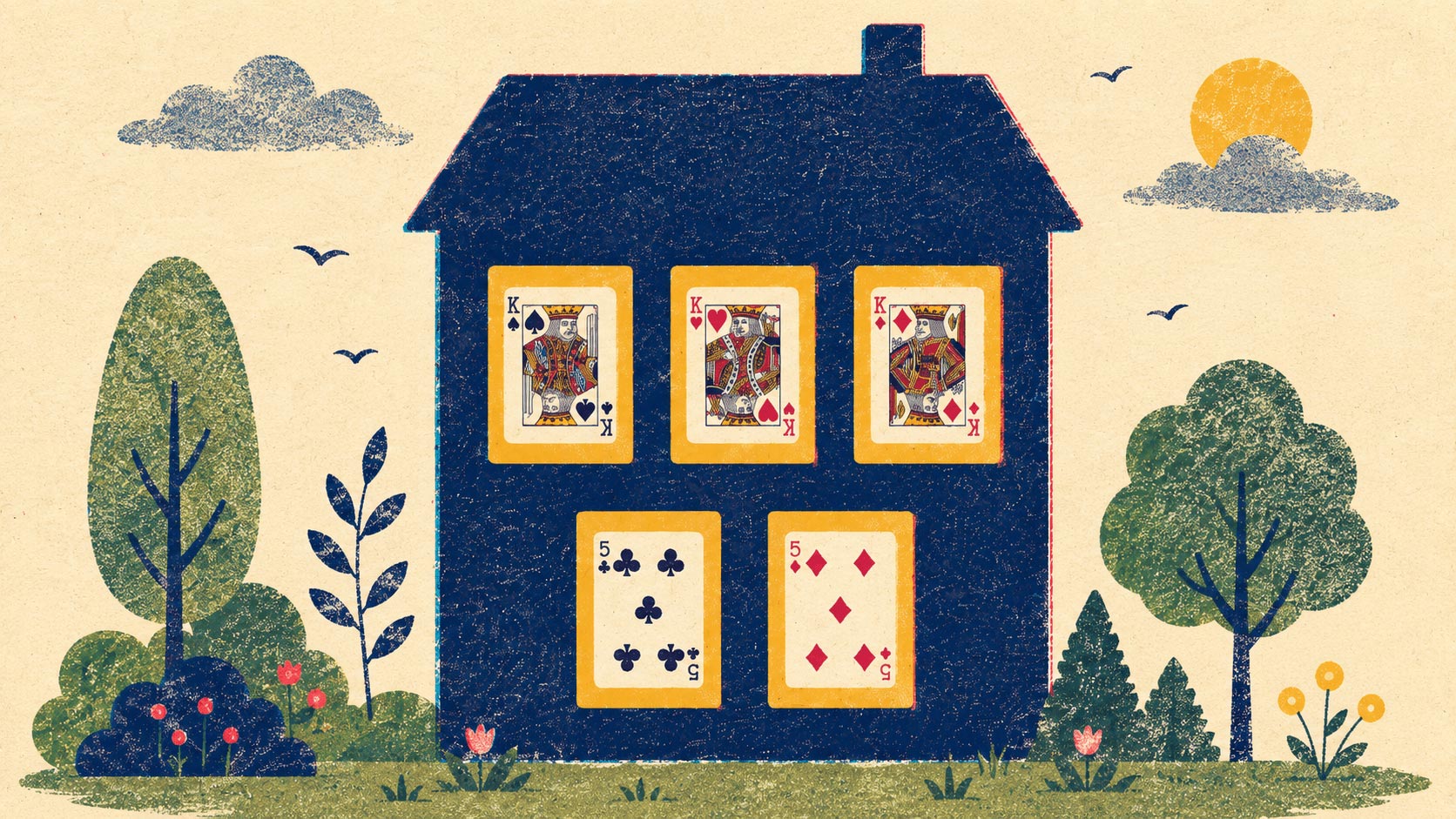
1. A full house is a combination of three cards of one rank and a pair of another rank. For example, K-K-K-5-5 or A-A-Q-Q-Q.
2. A full house is stronger than a flush, a straight, a set, two pair, a pair, and a high card. Higher than a full house in poker are only four of a kind, a straight flush, and a royal flush.
By the way, if you don't know the ranking of poker combinations, follow the link and read the article on this topic.
3. If two players make a full house, the three of a kind is compared first. If the trips are the same, the pair is compared. The kicker isn't used in a full house, because the combination already consists of five cards.
4. The probability of getting a full house in a random 5-card hand is about 2.6%. In a real hand of Texas Hold'em, the odds depend on the starting hand, the structure of the flop, and the number of outs.
And now let's go into more detail.
The full house combination in poker
A full house combination consists of three cards of one rank and two cards of another rank. At first glance the definition is simple, but in real play it's not just the mere fact of having a full house that matters.
What matters is exactly how it's made. A full house with a pocket pair, a full house with shared trips on the board, and a full house lying entirely on the table — these are hands that need to be played differently.
In Texas Hold'em, a player can use any five cards out of the seven available: two pocket cards and five community cards. That's why a full house can be made in different ways.
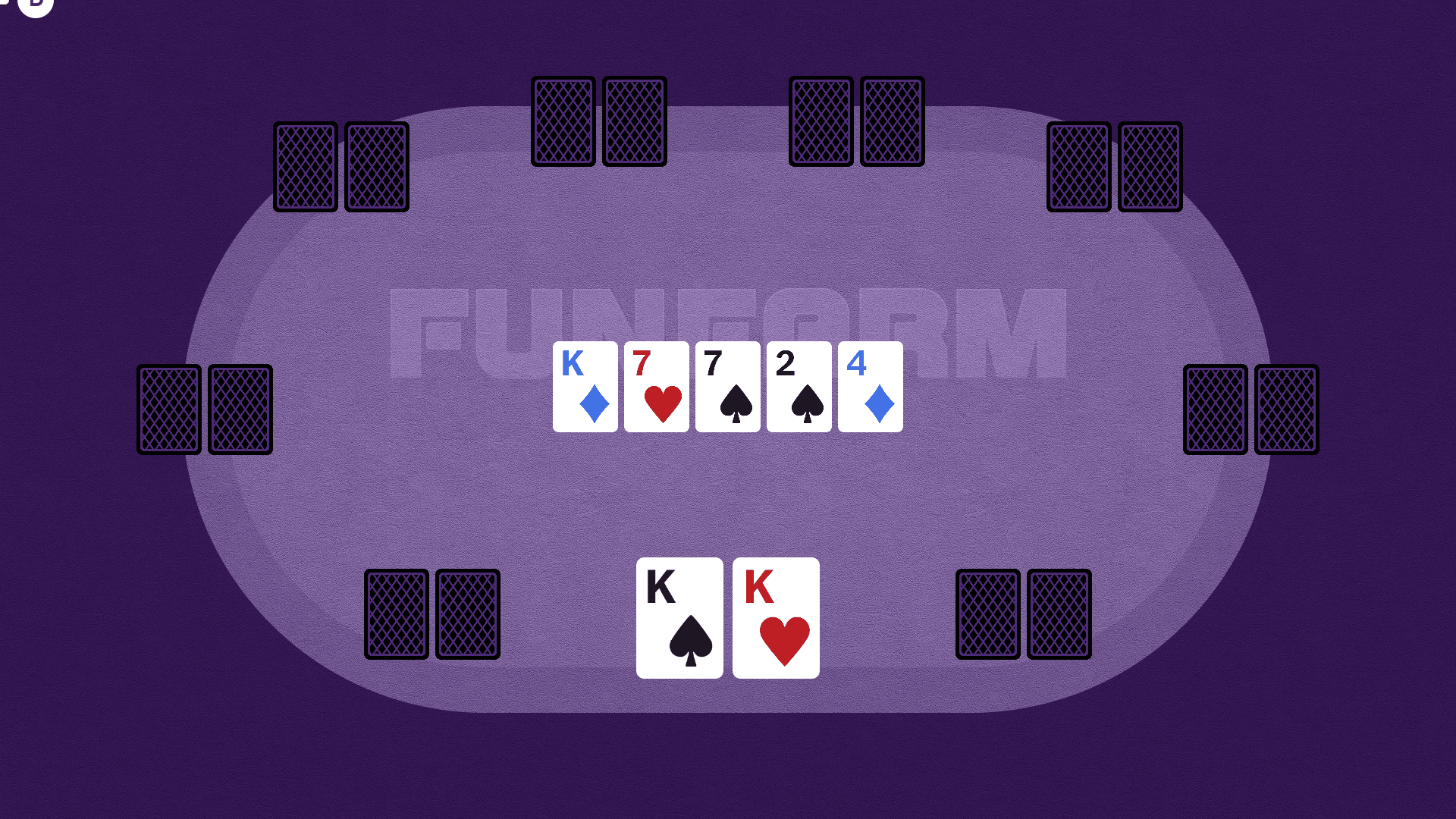
For example, we have pocket kings and this board. The resulting hand is a full house with the pocket pair. This is a strong full house, because the three of a kind consists of kings.
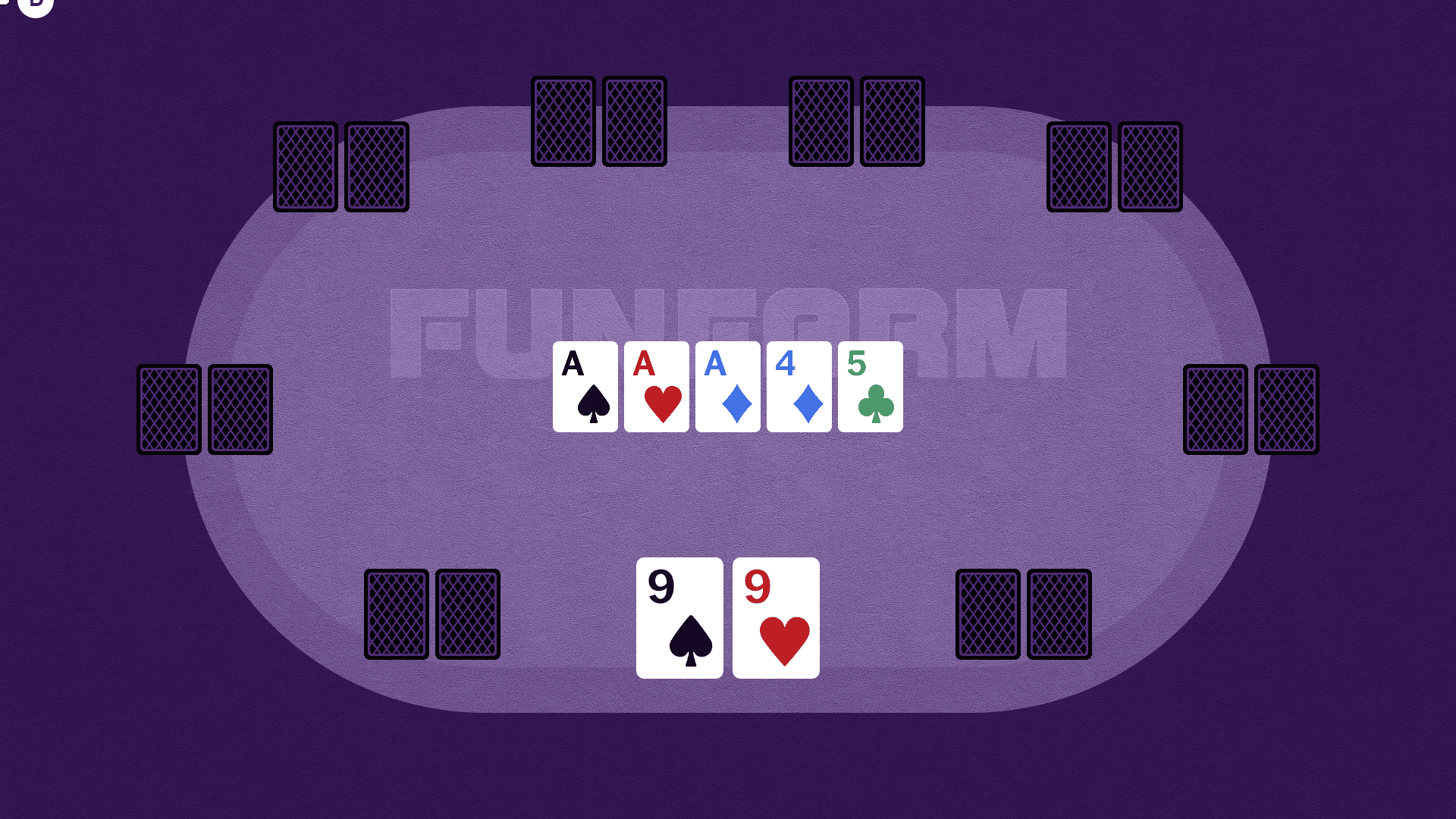
Another example: there are trips on the board, and we have pocket nines. In this case we make a full house with shared trips on the board. Formally it's a full house, but the strength of the hand already depends on the opponents' pocket pairs. A player with pocket tens, jacks, queens, or kings will be higher, because with equal trip aces the pair is compared.
This shows the main principle: a full house can't be evaluated solely by the name of the combination. We must understand which part of the hand we hold, which part lies on the board, and what stronger options exist in the opponent's range.
Which full house is higher
Comparing full houses starts with the three of a kind. This is the main rule to remember. The reason lies in the structure of the combination. In a full house, the main strength is set by the three of a kind. The pair is used only as an additional criterion if the trips are the same.
For example:
K-K-K-5-5 is stronger than Q-Q-Q-A-A
Here the first full house wins, because three kings are higher than three queens. A pair of aces doesn't compensate for the weaker three of a kind.
If the trips are equal, then the pairs are compared. For example:
K-K-K-Q-Q is stronger than K-K-K-5-5.
In both combinations the three of a kind is kings, so the winner is determined by the pair. Queens are higher than fives, so the first full house wins.
The kicker doesn't take part in comparing full houses. This is a common mistake of beginning players. The kicker is used when comparing a pair, two pair, a set, or four of a kind, but not a full house. In a full house all five cards are already in play, so an additional card can't change the result.
The highest full house in poker consists of three aces and a pair of kings. It loses only to four of a kind, a straight flush, and a royal flush.
The probability of a full house
The probability of a full house depends on which stage of the hand we're considering and which cards are already known. If you take a random five cards from the deck, the chance of getting a full house is about 2.6%.
In Texas Hold'em, practical probabilities matter more than abstract math. A player almost always makes a decision not from scratch, but already having a starting hand and seeing part of the board.
Much more often a full house appears as an improvement to an already made hand. If we have a set on the flop, the probability of improving to a full house is about 24%. This is an important figure for practice: a set on paired or potentially pairing boards has good improvement potential, but until the river it isn't always the best hand.
If we have two pair on the flop, the chance of improving to a full house by the river is about 16–17%. This means that two pair has additional value not only as a made hand, but also as a hand with improvement potential.
However, the probability itself doesn't provide a ready-made decision. It's important for us to understand which outs are truly clean, which cards strengthen the opponent's range, and how the structure of the pot will change if we continue the hand aggressively.
How to play a full house
A full house is almost always a hand for extracting value, but the way of playing it depends on its relative strength. The main question isn't whether we have a strong combination. The main question is which worse hands can pay and which better hands the opponent might have.
1. A top full house is played much more confidently. If we have the top trips and a strong pair, the range of hands that beat us narrows sharply.
In such a situation the main task is not just to bet, but to build the pot so that the opponent continues with trips, lower full houses, overpairs, or other hands that aren't ready to give up right away.
2. A bottom full house requires caution.
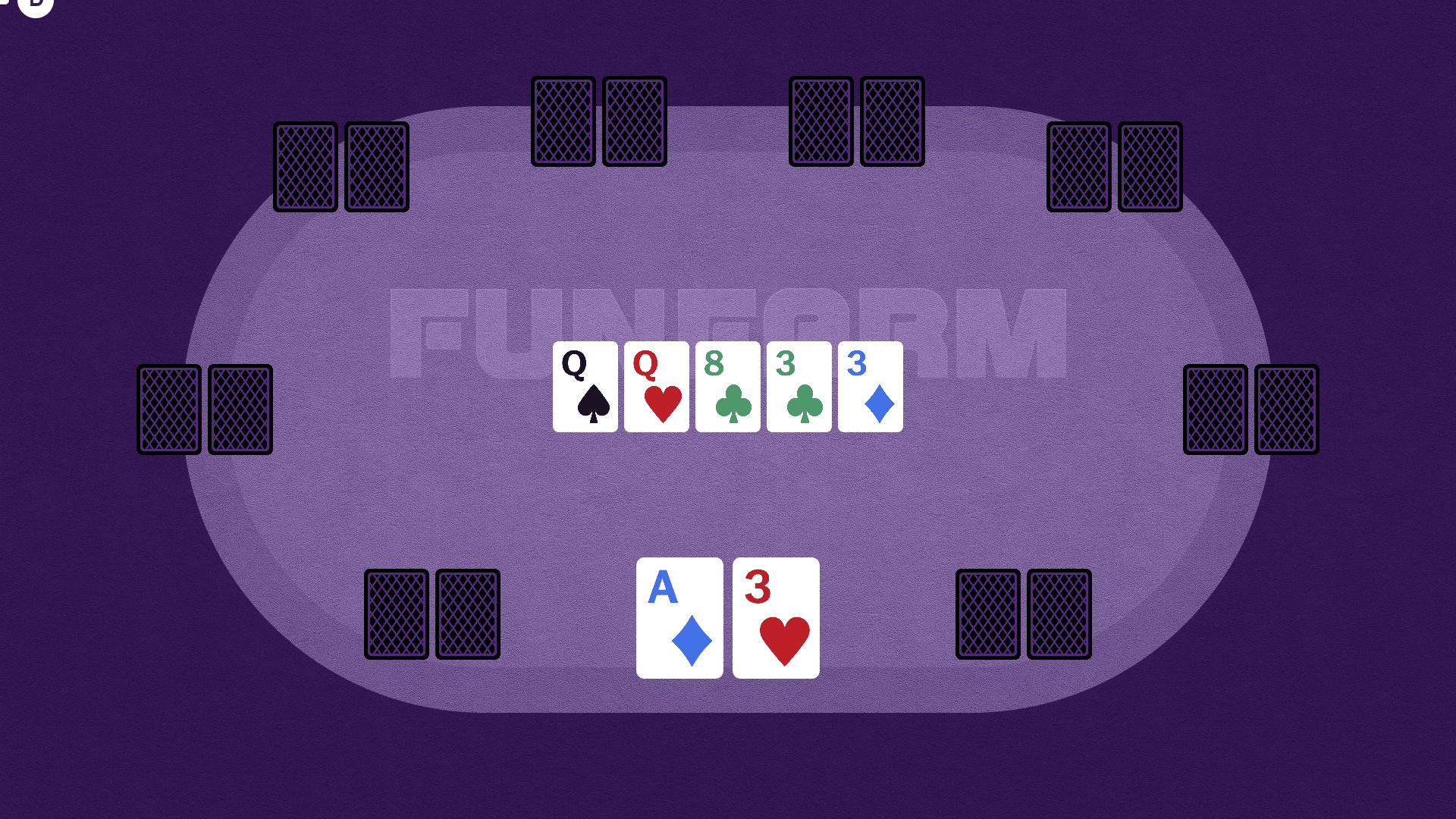
For example, if on such a board we have A♦3♥. Formally we've made a full house. But a player who has any queen, hands 88, Q8, QQ, will have a stronger hand.
3. If there are shared trips on the board, the situation changes.
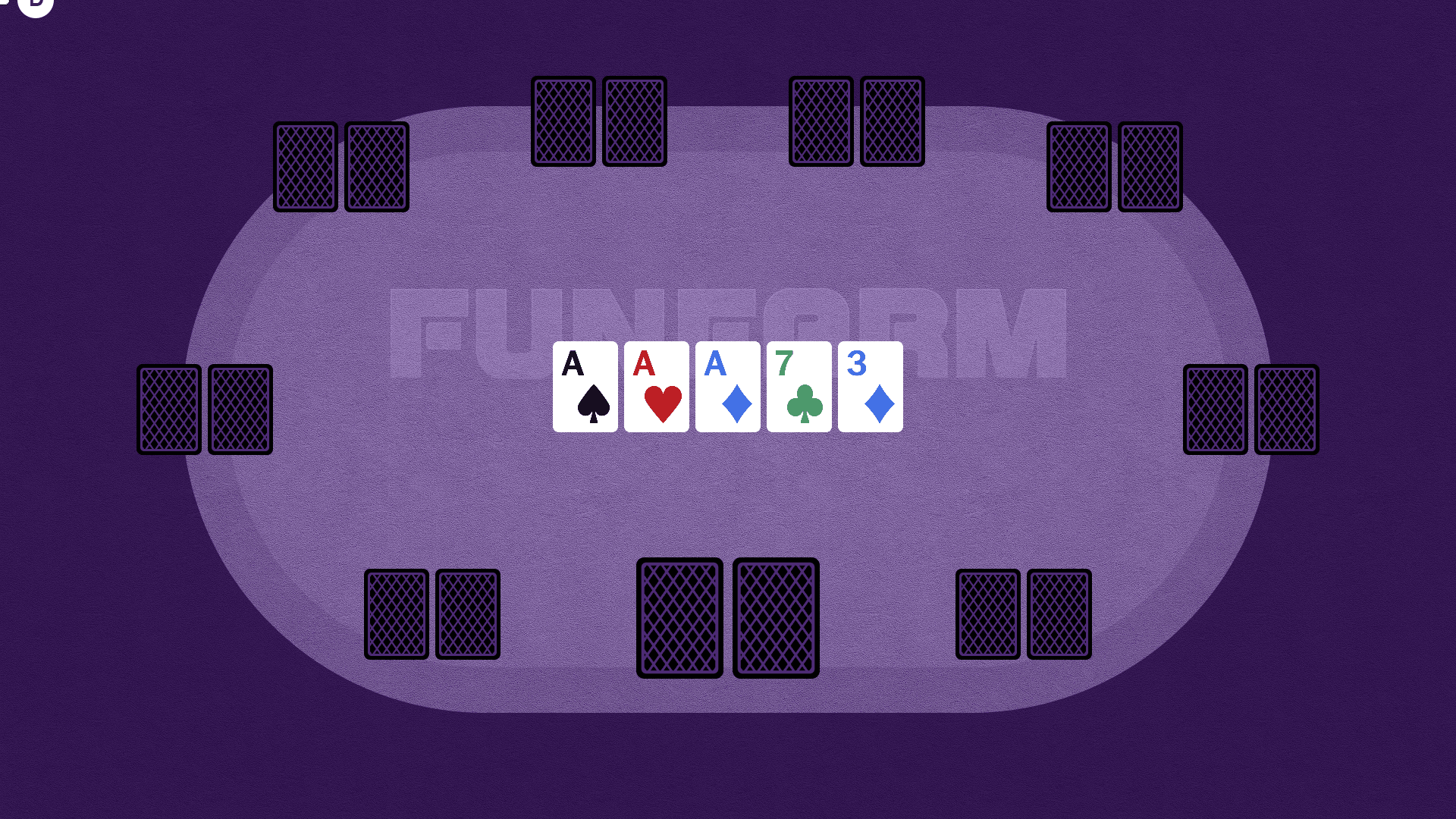
For example, on such a board anyone with a pocket pair has a full house. Here it's already important to compare exactly the pair. Such a structure often leads to overvaluing the hand, because the player sees a full house but doesn't take into account that the same type of combination is available to a wide range.
A slowplay* can be justified when we have a top full house and the board doesn't contain many cards that would scare the opponent. If the opponent is aggressive and capable of continuing to bet, a check can give him the opportunity to put in chips himself. But a slowplay becomes a mistake if the opponent is passive or the board lets him get to showdown for free with a hand that could have paid off a bet.
*A slowplay is the deliberately passive playing of a very strong hand.
We covered how to play a hand passively the right way in more detail in this article. Go and read it.
4. An overbet on the flop with a full house often burns EV. When we sharply increase the size of the pot too early, weak hands and medium hits simply fold. As a result, we leave only the strong part of the opponent's range in the hand and lose payment from hands that could have called smaller bets over several streets.
Got a question — in which cases is making an overbet a good idea? Then follow the link and read our article on this topic.
The main mistake is to consider a full house a hand with which the decision is already made. Over the long run, profit is created not by the mere fact of a strong combination, but by the precision of extracting value and the ability not to overplay the bottom part of a strong range.
Full house on the board and splitting the pot
Sometimes a full house lies entirely on the community board. For example, on the table K-K-K-5-5. If no player has a card that allows for a stronger combination, the pot is split among all participants who reached showdown*.
*Showdown — the revealing of cards at the end of a hand to determine the winner.
In such a situation, the pocket cards often don't matter. A player can hold A-Q, 9-8, or 2-2, but if the best five-card combination is the same for everyone, there's no winner.
An exception arises if the pocket cards allow improving on the shared full house. For example, on a board of K-K-K-5-5 a player with A-A will make K-K-K-A-A and be higher than the shared full house K-K-K-5-5. A player with pocket fives can make four fives, if the structure of the board allows it.
Conclusion-tip: this is exactly why on shared full-house boards you can't automatically consider the pot split. You need to check whether our pocket card or pocket pair can improve the combination relative to the board.
Typical mistakes when playing a full house
The first mistake is overvaluing a bottom full house. The player sees a strong combination and stops analyzing the opponent's range. But if, after a big bet or raise, the opponent is left mainly with higher full houses and four of a kind, our hand no longer looks so confident.
The second mistake is too early a big overbet. It can be appropriate on certain rivers, where the opponent's range contains many hands to call with. But on the flop or turn a big bet often knocks out exactly the hands we want to extract value from.
The third mistake is slowplaying against a passive opponent. If the opponent rarely bets himself, a check doesn't provoke a bluff, but simply gives him a free card or the opportunity to reach showdown without investing.
The fourth mistake is the absence of a plan for the following streets. You often want to play a full house quickly, but the correct line is built in advance. We must understand which turns and rivers change the nuttiness of the hand, which bet sizes will get paid off, and against which aggression our hand remains strong enough.
FAQ
1. How do you determine which of two full houses is higher?
The three of a kind is compared first. A full house K-K-K-2-2 is higher than Q-Q-Q-A-A, because three kings are stronger than three queens. If the trips are the same, the pair is compared.
2. Which is better: a full house or a flush?
A full house is stronger than a flush. A flush consists of five cards of one suit, while a full house consists of three cards of one rank and a pair of another. By the classic hierarchy of poker combinations, a full house is above a flush and below four of a kind.
3. What is higher than a full house in poker?
Higher than a full house are four of a kind, a straight flush, and a royal flush. Four of a kind consists of four cards of one rank, a straight flush — of five suited cards in sequence, and a royal flush is the strongest variant of a straight flush, from ten to ace.
4. Can a full house lose?
Yes. A full house loses to four of a kind, a straight flush, and a royal flush. It can also lose to a higher full house. For example, Q-Q-Q-8-8 loses to K-K-K-2-2, because three kings are higher than three queens.
5. Is the kicker used in a full house?
No. The kicker isn't used, because a full house already consists of five cards. When comparing, you first look at the three of a kind, then at the pair. If both the trips and the pair are the same, the pot is split.
6. Should you always play a full house aggressively?
Most often you should, but not always. A top full house can often be played actively. A bottom full house on a dangerous paired board requires caution, because the opponent may have stronger full houses or four of a kind. The correct line depends on the board, position, opponent type, and which worse hands are able to pay.