The Math of Bluffing: How to Calculate the Break-Even Point
Almost every player goes through the same path. At first we see the bluff as a standalone move: we bet — the opponent folds, so it worked. Then the long run starts to reveal the other side: the very same lines work in some sessions and systematically burn chips in others, and we get the feeling that bluffing depends on circumstances more than on the quality of the decision.

In practice, it's simpler and stricter. Every bluff bet has a minimum profitability condition that doesn't depend on the stakes, the field, or how we feel about the hand. This condition is set by the risk-to-reward ratio.
As a result, we'll have a practical system:
quickly assess whether we can bet according to the math
choose a sizing* that makes the bluff cheaper and more logical
understand when a single street of bluffing is enough
not turn bluffing into autopilot, but build it through ranges and textures.
* Sizing is the bet size a player chooses in a specific situation.
What is the break-even point
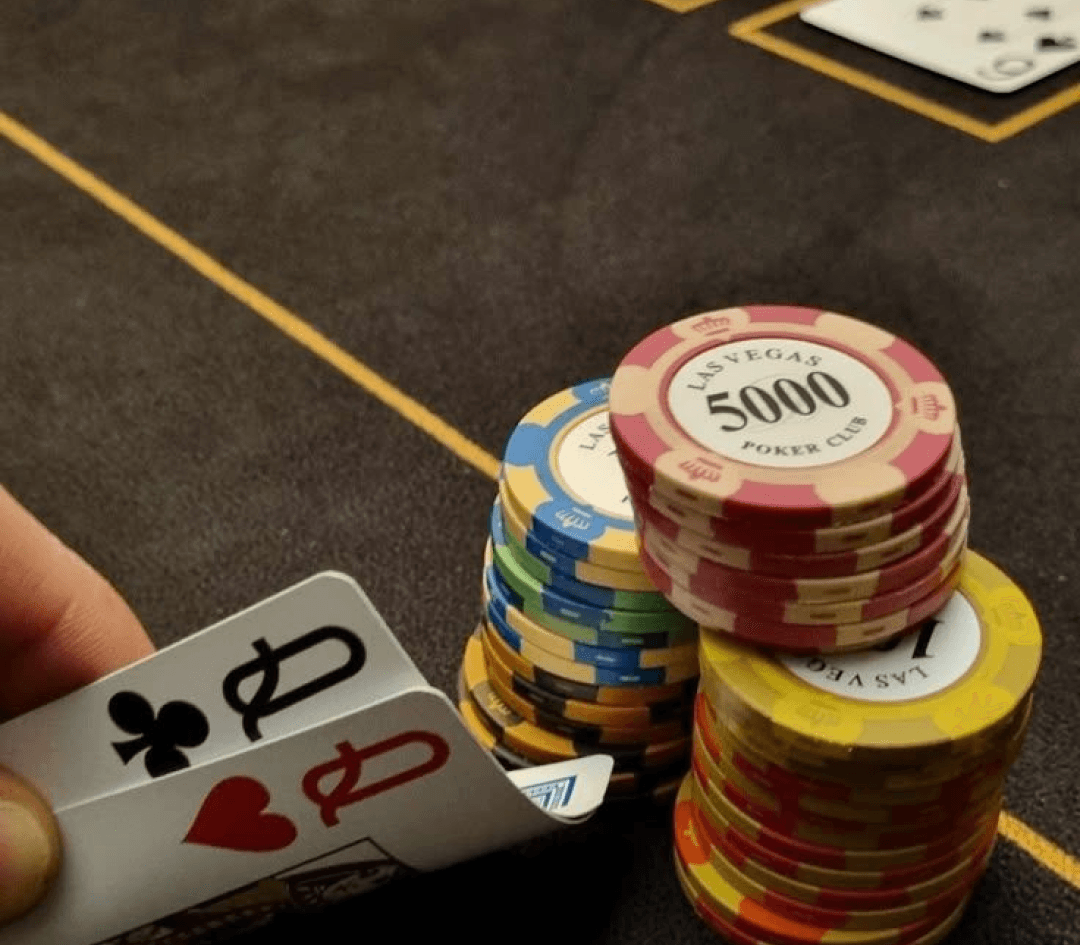
When we make a bluff bet, we pursue one specific goal: to take the pot without a showdown. In a specific action, the bet either wins the pot here and now, or it sets off a continuation where we need to understand what we're doing next.
Our price is the bet size. If our opponent folds, we win what's already in the pot. If our opponent continues, we often end up in a situation where our hand either doesn't win at showdown, or doesn't win often enough to justify putting money in the pot. That's why, in its pure form, a bluff is always a trade: we risk a fixed amount for the chance to take a fixed pot.
The break-even point (BE) is the minimum frequency with which the opponent must fold to our bet so that the bluff doesn't lose money over the long run.
How does it work? If the opponent folds:
less often than the break-even point → we play at a loss
exactly at the break-even point → we break even
more often than the break-even point → we play at a profit
The break-even point depends only on the sizing and the size of the pot. We can play low stakes or high stakes — the math is the same, only the absolute numbers change.
The break-even point formula
For a pure bluff — that is, when we assume that we almost always lose at showdown — the break-even point is calculated by the formula:
BE% = Risk / (Risk + Reward)
Risk is our bet. Reward is the pot we win if the opponent folds.
Let's take a simple example. There are 100 chips in the pot, we bet 60 chips, i.e. risk is 60, reward is 100. In this case, the break-even point is:
60/(60+100) = 37.5%
This means: if the opponent folds more than 37.5% of the time, the bet becomes profitable even given that we almost always lose when called.
When we choose a sizing for a bluff, we are effectively choosing how strict the fold-equity* requirements will be. Sometimes this decision matters more than the bluff idea itself.
* Fold equity is the probability that the opponent folds their hand in response to your bet or raise.
Why every bet requires calculation
Let's imagine a situation: we opened preflop, the big blind called. On the flop the opponent checks, and we're thinking about a bet.
There are 6.5BB in the pot, we bet 4BB. The break-even point is:
4/(4+6.5) = 38%
This number on its own doesn't decide the outcome of the hand, but it sets a direction for how it develops —
Can we expect the opponent to fold at least 38% of their range on this board against our bet?
We're not trying to guess specific hands, but we're obligated to assess the structure of the continuation range.
If the opponent is a player who continues almost always on the flop, then even a large bet won't force the opponent to fold.
But if the opponent tends to defend narrowly and continues mainly with hits and strong draws, then even a standard continuation bet of 33% of the pot* can have very comfortable fold equity.
Important: many beginner players perceive a small sizing as a sign of weakness in the opponent's eyes, although in reality it can be a precise tool if it knocks out the part of the range that's supposed to fold anyway.
* The pot is the total amount of chips or money that is in the hand and that the players are fighting for.
Break-even point standards
We don't want to turn the game into constant calculations. So we memorize a few base values that cover most decisions.
These figures are useful to know as reference points: they speed up the game and help us not overpay for a bluff in situations where a little pressure is enough.
1/4 pot → BE = 20%
1/3 pot → BE = 25%
1/2 pot → BE = 33%
2/3 pot → BE = 40%
3/4 pot → BE ≈ 43%
pot (100%) → BE = 50%
1.5x pot (150%) → BE = 60%
2x pot (200%) → BE = 67%
These values help us not only choose a bluff line but also defend against one: when someone overbets us, we can draw conclusions about the strength of the opponent's hand.
For example, if the opponent chooses a very large sizing, they are either counting on a high percentage of folds, or betting with strong value*.
In any case, a clear question arises — does their range contain enough bluffs to find a call against this bet size?
* Value in poker is extracting profit from the opponent's weaker hands.
The expected value of a bluff
When we want to assess the quality of the lines we play more deeply, it's useful to look at the expected value (EV)*.
* EV (Expected Value) is the expected value of your decision: how many chips or how much money you win or lose on average over the long run by choosing a specific action.
For a pure bluff, EV can be put into this formula:
EV = Fold% × Pot − (1 − Fold%) × Bet
A simple example to lock it in. There are 100 chips in the pot, we bet 60 chips. If the opponent's potential fold is 45%, then:
EV = 0.45×100 − 0.55×60 = 45 − 33 = +12
That is, the bet brings an average of +12 units of the pot for each such action over the long run.
This formula is simple, but it's important because it shows: the profit of a bluff grows not just from the fact that the opponent sometimes folds, but from how often they do so relative to our risk.
Important: we choose the bet size so that it accomplishes the task at hand. If our goal is to knock out the weak part of the range, and the opponent folds almost the same against 33% and 50% of the pot, then it makes more sense to bet less.
But if it's important for us to knock out marginal pairs and draws that don't give up against small bets, then a large sizing may be justified — but only if it really increases fold equity to the necessary values.
Such bluffs more often work where the opponent's range by the river inevitably arrives with a large number of medium hands that aren't prepared to call a big bet.
But if the opponent's line already on the flop and turn consists mainly of strong hits, then running a complex bluff becomes a dangerous business.
Why bluffing on three streets is dangerous
One of the most useful pieces of advice in this article is that each additional street sharply raises the requirements for the opponent's final fold equity.
For ease of understanding, let's show a hand in this breakdown:
the pot on the flop equals 1
we bet pot 1, get called → the pot becomes 3
on the turn we bet pot 3, get called → the pot becomes 9
on the river we bet pot 9
How much do we lose if we get called on the river and lose at showdown?
1 + 3 + 9 = 13
How much do we win if the opponent folds on the river?
1 + 1 + 3 = 5
That is, the required fold frequency on the river for the entire bluff to at least break even: 13 / (13 + 5) = 72.2%
This is a very high threshold — and it explains an important thing: long bluffs must be well justified by ranges. We can't just bet three streets on the off chance if we don't understand which hands actually fold on the river.
How to apply bluff math at the tables
In practice, we don't need a calculator. We need a stable order of thinking. Here's a simple algorithm of actions:
1. Determine the pot and the sizing we're planning.
2. Keep the break-even point for this sizing in mind.
3. Build the opponent's range and assess:
how many continuation hands they have
whether they have a range that's prepared to go to the turn and river
which hands should fold on this street.
4. Assess our hand
pure bluff or semi-bluff
what's the plan on the turn and river
which cards improve our position on future streets
5. Compare: expected folds against the break-even point
6. If we bet, we know in advance what we do against a call
we give up on bad turns
we continue on boards with logical continued pressure
we choose a sizing that doesn't break the logic of our line
If we condense the idea of this algorithm into one phrase, then first the math sets the threshold, then the ranges answer whether it will be met. And only after that do we bet.
This order protects us from a typical mistake — when we want to bet, and only then fit the explanation to an originally incorrect play.
Conclusion
Over the long run, the winner isn't the one who bluffs more often, nor the one who bluffs less often. The winner is the one who bluffs where the following conditions are met: the risk is justified by the reward, the opponent's range is overloaded with hands that are forced to give up, and our line looks logical and holds up to continuation.
Apply to FunFarm to understand the math of bluffing even better and start earning money with poker.
FAQ
Do we need to calculate the break-even point in real time?
To start, it's enough to memorize the typical values for 1/2, 2/3, and a pot-sized bet, and then use them as a reference. And we do the precise calculations away from the tables, when we review lines and want to understand where we're overestimating fold equity.
If a bet passes the break-even point, does that mean it's definitely profitable?
For a bet to be profitable, we need the opponent to actually fold at the required frequency in this specific spot. If we've incorrectly assessed the opponent's style, the bet may not work the way we wanted.
Why do small bets often work better as a bluff?
Because they require a lower fold frequency. If the field doesn't adjust much to sizing, a small bet gives a better risk-to-reward ratio. But against players who fold noticeably more often to large sizings, a big size may be justified.
What matters more for a bluff: the math or reading ranges?
These two factors work in tandem. The math sets the threshold and keeps us from overpaying for an attempt to take the pot. The ranges give the answer of whether this threshold will be met in reality. If we're strong in only one of these components, we either bet correctly by formula in the wrong spots, or choose "right spots with wrong sizings."
Where do we start if we want to improve our bluffs systematically?
We start with the basics: we memorize the break-even points for standard sizings and learn to explain every bluff through risk/reward. Then we add range practice: we review typical textures and lines where the field over-folds or over-calls.
Read next
GTO for Dummies: What It Is and How to Apply the Basics Without Solvers
The "Blockers" Concept: How a Single Card Changes Everything
What Is a Kicker and When It Decides Everything: Breaking It Down with Examples